
PRP hair treatment, or Platelet-Rich Plasma therapy, has emerged as an increasingly popular solution for women experiencing hair thinning. Unlike men, who often develop a receding hairline or bald spots, women typically experience diffuse thinning, where hair density decreases across the entire scalp, especially along the parting. This type of hair loss can be emotionally distressing, affecting self-esteem and confidence, and PRP offers a non-surgical, minimally invasive option to stimulate hair regrowth and improve overall hair quality. PRP hair treatment in Riyadh is becoming a popular non-surgical solution for individuals seeking natural hair regrowth and improved scalp health.
Hair thinning in women can occur due to several factors, including hormonal changes, stress, nutritional deficiencies, or genetic predisposition. One of the most common causes is androgenetic alopecia, also known as female pattern hair loss. This condition is characterized by gradual thinning rather than complete baldness. Another factor may include telogen effluvium, a condition where excessive hair shedding occurs after stress, illness, or significant hormonal shifts, such as postpartum or during menopause. PRP is effective in cases where hair follicles are still active but weakened or miniaturized, as the treatment focuses on stimulating existing follicles rather than generating new ones.
The procedure for PRP hair treatment in women is similar to that for men but may be tailored according to specific thinning patterns. The first step involves a detailed consultation with a qualified professional who assesses the patient’s hair loss, medical history, and lifestyle factors. Blood tests may be performed to rule out underlying conditions such as thyroid disorders, anemia, or vitamin deficiencies, which can contribute to hair thinning. The consultation also sets realistic expectations, explaining that while PRP can improve hair density and reduce shedding, results vary and usually take several months to become noticeable.
Once cleared for treatment, the next step is blood collection. A small amount of the patient’s blood is drawn from a vein in the arm, typically between 10 and 60 milliliters, depending on the clinic’s protocol. This blood is then processed in a centrifuge to separate the platelet-rich plasma from red blood cells and platelet-poor plasma. Platelets contain growth factors that are essential for tissue regeneration and hair follicle stimulation. By concentrating these platelets, PRP provides a powerful biological stimulus that can revitalize dormant or weakened hair follicles.
After the PRP is prepared, the scalp is cleaned thoroughly to reduce the risk of infection. Some clinics apply a topical anesthetic to minimize discomfort during injections. In many cases, microneedling is also performed before the PRP injections. This technique involves creating tiny punctures in the scalp, which can enhance the absorption of growth factors and further stimulate the scalp’s natural healing response.
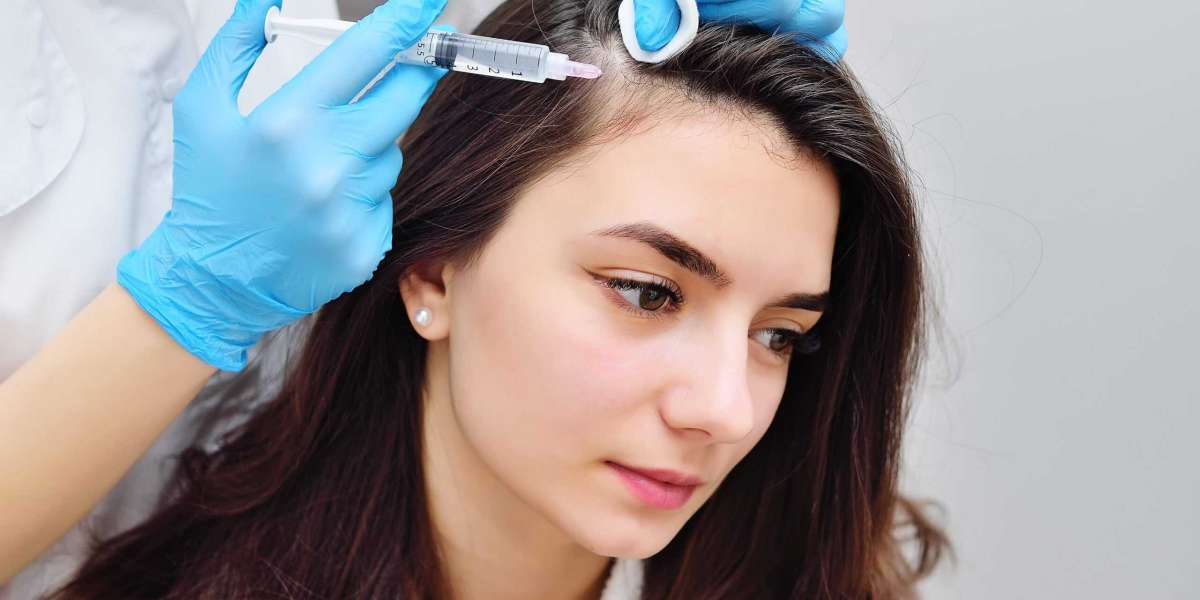
PRP is then injected directly into the areas of the scalp where hair thinning is most noticeable. In women, this often includes the parting line and the crown, where hair density tends to decrease first. The injections are performed in a systematic pattern to ensure even distribution of the plasma and optimal stimulation of hair follicles. The procedure typically takes 30 to 60 minutes and is generally well-tolerated, with most women experiencing only mild discomfort.
Post-treatment care is relatively simple. Women are advised to avoid washing the hair for a short period and refrain from vigorous exercise, saunas, or swimming for at least 24 to 48 hours. Mild redness or swelling at the injection sites may occur but usually resolves quickly. Patients are also encouraged to maintain a healthy scalp environment through proper nutrition, gentle hair care, and, if necessary, complementary treatments like topical solutions or medications.
PRP hair treatment for women typically involves multiple sessions. An initial series of three to four sessions spaced four to six weeks apart is common, followed by maintenance sessions every few months. Consistency is crucial for achieving noticeable results, as hair growth is a gradual process. Most women begin to observe reduced shedding and improved hair thickness within three to six months, with full results often visible after a year.
One of the main advantages of PRP for women is that it uses the patient’s own blood, reducing the risk of allergic reactions or other complications. The therapy is minimally invasive, requires no downtime, and can be combined with other hair restoration treatments to maximize results. However, it is important to note that PRP is not a permanent cure and works best for women with active hair follicles. In cases of advanced thinning where follicles have become inactive, PRP alone may not produce significant improvement.
In conclusion, PRP hair treatment offers women a safe, natural, and effective method for addressing hair thinning. By harnessing the growth factors in the patient’s own blood, the therapy stimulates hair follicles, enhances scalp health, and promotes thicker, healthier hair. While results may take time and require multiple sessions, PRP provides a promising non-surgical option for women seeking to restore confidence and improve the overall appearance of their hair.