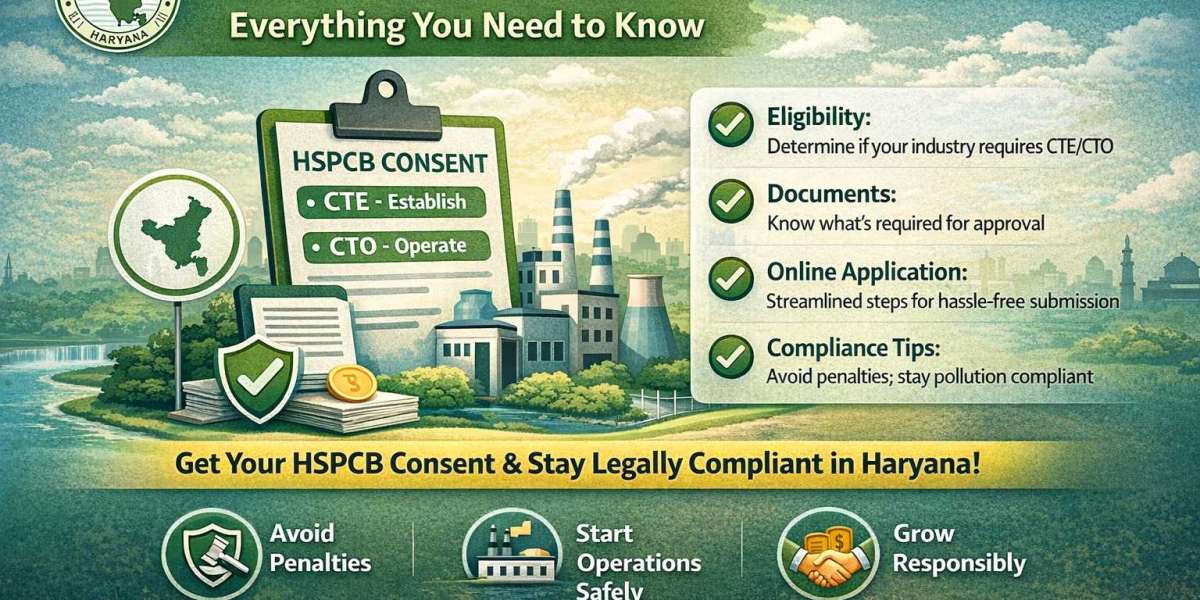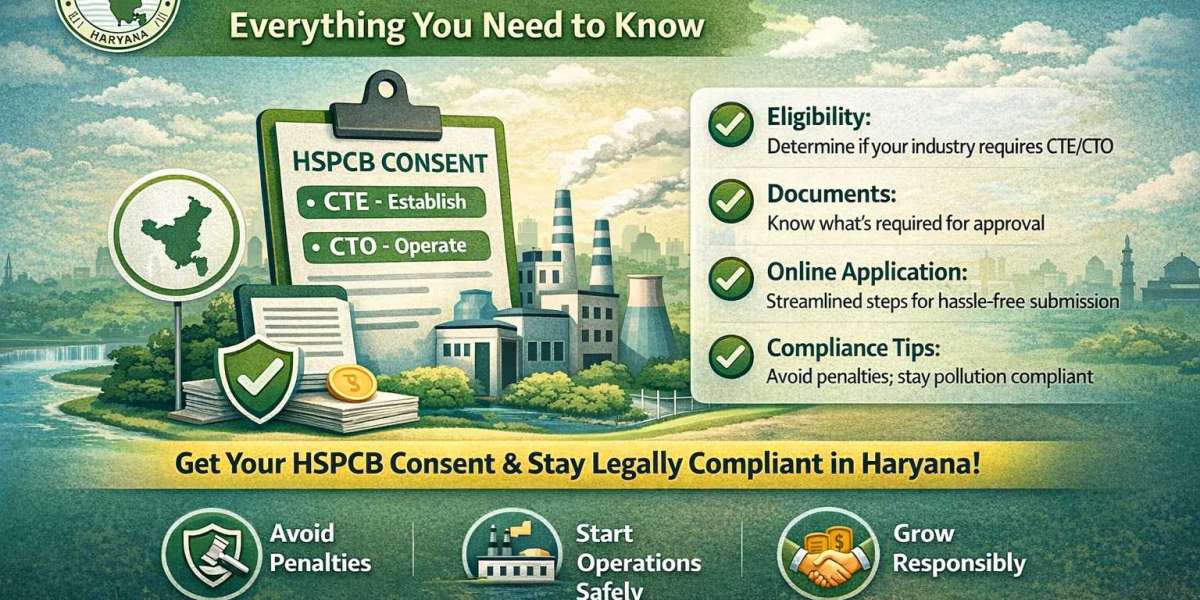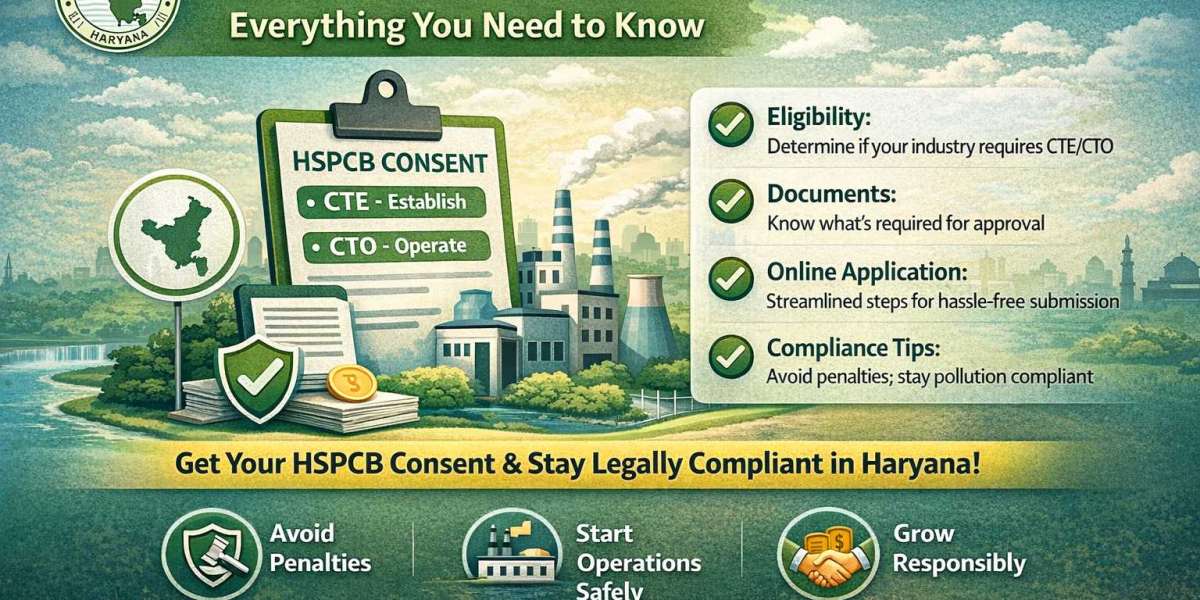

If you are planning to start or expand a business in Haryana, obtaining environmental clearance from HSPCB is mandatory. The Haryana Pollution Control Board regulates industries to ensure they comply with environmental laws related to air, water, and waste management. Without proper approval from the pollution control board Haryana, businesses may face penalties, closure notices, or legal action.
What is HSPCB?
Haryana State Pollution Control Board (HSPCB), also known as Haryana Pollution Control Board, is the state-level body that is responsible for the implementation of environmental laws in the state of Haryana. It functions as per the following acts:
Water (Prevention and Control of Pollution) Act, 1974
Air (Prevention and Control of Pollution) Act, 1981
Environment (Protection) Act, 1986
The board makes sure that industries reduce pollution and use effective waste management techniques before starting their operations.
What is Consent to Establish (CTE)?
Consent to Establish (CTE) is a necessity before establishing a new industrial unit or expanding an existing unit in Haryana.
This consent ensures that:
The proposed project is as per environmental standards
Adequate pollution control measures are planned
The site location meets zoning regulations
Without CTE approval from HSPCB, construction or installation of machinery should not begin.
What is Consent to Operate (CTO)?
Once your unit is set up and pollution control systems are installed, you must apply for Consent to Operate (CTO).
CTO ensures that:
Emissions are within permissible limits
Effluent treatment systems are functional
Hazardous waste is managed properly
Noise pollution norms are followed
Only after receiving CTO approval from the pollution control board Haryana can your business legally begin operations.
Industry Categories Under HSPCB
The Haryana Pollution Control Board classifies industries into four categories based on pollution potential:
Red Category – High pollution potential
Orange Category – Moderate pollution
Green Category – Low pollution
White Category – Non-polluting industries
Your category decides the type of documents, inspection, government charges, and validity of consent.
Step-by-Step HSPCB Online Application Process
The HSPCB has made the consent process easier by introducing an online application process.
Step 1: Online Registration
Register for a login on the Haryana pollution control board website and enter business information such as PAN, GST, and contact details.
Step 2: Select Industry Type
Select the appropriate industry type (Red, Orange, Green, White).
Step 3: Fill Application Form
Enter technical information such as:
Manufacturing process
Water usage and discharge
Air emission sources
Details of pollution control equipment
Step 4: Upload Required Documents
The list of common documents required is as follows:
PAN Card Aadhaar
GST Registration
Land ownership/lease documents
Layout plan
Project report
Details of pollution control systems
Step 5: Payment of Fees
The fees to be paid are based on the capital investment and type of industry.
Step 6: Site Inspection
In most cases, the HSPCB team performs a site visit before issuing the CTO.
Step 7: Approval Certificate Download
Once approved, you can download your consent certificate from the online portal.
Documents Required for HSPCB Consent
The following documents should be ready to prevent any delay:
Detailed project report
Manufacturing flow chart
Effluent treatment plant (ETP) details
Air pollution control device details
Water balance chart
Authorization for hazardous waste (if applicable)
Inadequate documentation is one of the most frequent causes of disapproval.
Validity Renewal of HSPCB Consent
Validity duration varies according to industry type:
Red Category – Smaller validity
Orange Category – Medium validity
Green Category – Larger validity
Renewal of the HSPCB consent on time through the Haryana Pollution Control Board website is required to prevent any kind of penalty or interruption in the business.
Common Challenges in HSPCB Approval
Many companies experience problems such as:
Inappropriate industry categorization
Mistakes in emission or effluent calculation
Missing technical documents
Non-compliance during inspection
These errors can cause significant delays in approvals.
Why HSPCB Compliance is Important
Getting consent from the pollution control board Haryana guarantees:
Protection from environmental penalties
Easy business functioning
Enhanced credibility with the government
Loan and government tender eligibility
Responsible industrial development
Environmental compliance is more than just a government requirement; it increases the credibility of your brand as well.
Expert Advice for Quick Approvals
✔ Check industry type before applying
✔ Install pollution control devices before inspection
✔ Generate correct technical documents
✔ Answer department queries on time
✔ Keep correct environmental records
Many firms hire environmental compliance consultants to facilitate easy approval without rejection.
Final Thoughts
Obtaining HSPCB Consent to Establish and Consent to Operate is a major requirement for any firm operating in Haryana. The Haryana Pollution Control Board has made it easy for firms to obtain consent through their online platform, but it is vital to be precise and compliant.
If you are about to establish or expand your industrial setup in Haryana, apply for HSPCB consent today and keep your firm compliant and future-ready.