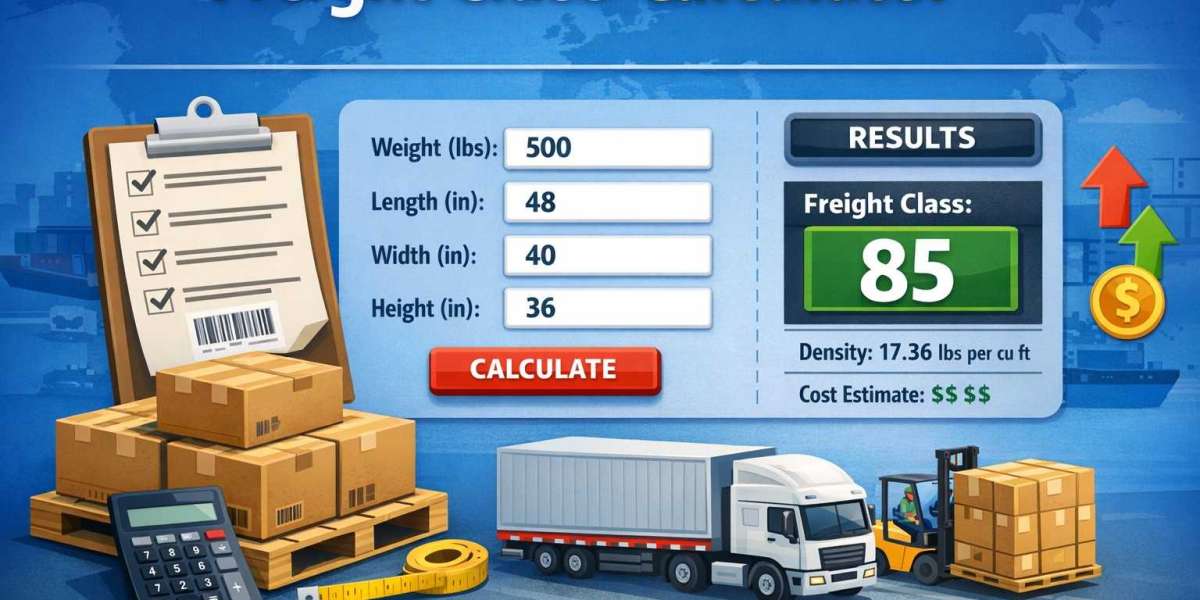

When you ship goods by truck, one of the most important things you must know is the freight class. Many businesses lose money because they do not understand how freight class works. This is where a Freight Class Calculator becomes very helpful.
A Freight Class Calculator is a simple tool that helps you find the correct freight class for your shipment. It uses details like weight, dimensions, and density to give you the right classification. When you use a Freight Class Calculator correctly, you can avoid extra charges, reduce shipping errors, and save money.
Freight class is mainly used in LTL (Less Than Truckload) shipping. If your shipment does not fill an entire truck, it is shipped with other goods. In this case, carriers use freight class to decide the shipping cost. The wrong class can increase your shipping rate or cause billing problems later.
In this detailed guide, we will explain everything about the Freight Class Calculator in very simple language. You will learn how it works, why it matters, how to calculate freight class, common mistakes to avoid, and tips to lower shipping costs. By the end of this article, you will feel confident using a Freight Class Calculator for your business.
What Is Freight Class Calculator
A Freight Class Calculator is an online or manual tool used to determine the correct freight class of a shipment. Freight class is a standardized classification system created by the National Motor Freight Traffic Association (NMFTA). It helps carriers decide how much to charge for shipping goods.
The freight class ranges from 50 to 500. Lower classes usually mean dense, heavy, and easy-to-ship products. Higher classes are usually light, bulky, fragile, or expensive items.
The Freight Class Calculator works mainly on density. Density is calculated by dividing the weight of the shipment by its volume. The formula looks like this:
Density = Weight ÷ Volume
To find volume, you multiply length × width × height (in inches) and then convert it into cubic feet.
For example, if your shipment weighs 200 pounds and has a volume of 20 cubic feet, the density is:
200 ÷ 20 = 10 pounds per cubic foot
Based on this density, the Freight Class Calculator will match your shipment to a freight class chart and give you the correct class number.
But density is not the only factor. Freight class also depends on:
Stowability (how easy it is to store)
Handling (how easy it is to move)
Liability (risk of damage or theft)
A good Freight Class Calculator considers all these points. Some advanced calculators ask about packaging type and product details to give more accurate results.
Using a Freight Class Calculator helps avoid reclassification fees. If the carrier checks your shipment and finds the wrong class, they can charge you more. That is why using this tool before shipping is very important.

How Freight Class Affects Shipping Costs
Many people do not realize how much freight class impacts shipping rates. When you use a Freight Class Calculator, you are not just finding a number. You are protecting your shipping budget.
Freight carriers use freight class to measure the risk and space your shipment takes inside the truck. Lower freight class numbers mean lower shipping costs. Higher freight classes usually mean higher costs.
For example:
Class 50–85: Dense and heavy items (lower cost)
Class 100–175: Medium density items
Class 250–500: Light or bulky items (higher cost)
If you accidentally choose a higher freight class than necessary, you will pay more than required. If you choose a lower class incorrectly, the carrier may inspect your shipment and reclassify it. This leads to extra fees, penalties, and delays.
A Freight Class Calculator reduces this risk. It calculates the correct class based on accurate measurements. This ensures you get a fair shipping rate.
Let’s say two shipments both weigh 300 pounds. One is compact and dense. The other is large but lightweight. Even though the weight is the same, the shipping cost will be different because the density is different. The Freight Class Calculator detects this difference.
Businesses that ship regularly must use a Freight Class Calculator to stay competitive. Small mistakes can add up over time. Correct classification means predictable pricing, fewer billing disputes, and smoother logistics operations.
In short, freight class directly affects your shipping cost, and a Freight Class Calculator helps you control those costs.
Steps To Calculate Freight Class
Using a Freight Class Calculator is simple if you follow the right steps. Many online shipping platforms provide this tool for free. But even if you calculate manually, the process is easy.
Step 1: Measure Dimensions
Measure the length, width, and height of your shipment. Always measure at the longest points. Include packaging like pallets and boxes.
Step 2: Convert To Cubic Feet
Multiply length × width × height in inches. Then divide by 1,728 to convert cubic inches into cubic feet.
Step 3: Weigh The Shipment
Find the total weight in pounds. Make sure it includes packaging materials.
Step 4: Calculate Density
Use this formula:
Density = Total Weight ÷ Total Cubic Feet
Step 5: Check Freight Class Chart
Match the density result to a standard freight class chart provided by the NMFTA.
A Freight Class Calculator automates all these steps. You just enter the numbers, and it instantly gives you the freight class.
Always double-check your measurements. Even small mistakes can change the density and lead to wrong classification. Use proper measuring tools and accurate scales.
Also, make sure your shipment is packaged correctly. Poor packaging may affect handling and liability factors, which can increase freight class.
By following these steps carefully or using a reliable Freight Class Calculator, you can determine the correct class quickly and avoid future problems.
Common Freight Class Mistakes Avoided
Many shipping problems happen because of incorrect freight classification. A Freight Class Calculator helps avoid these common mistakes.
One common mistake is guessing the freight class. Some businesses assume the class based on past shipments without recalculating density. But small changes in packaging or weight can change the class.
Another mistake is measuring incorrectly. If you round down dimensions, you may calculate a higher density than actual. This results in underclassification. When the carrier inspects it, they may reclassify it and charge extra.
Incorrect weight reporting is also common. Some shippers estimate weight instead of weighing the shipment. This creates billing differences later.
Some businesses ignore stowability and handling. If your shipment is irregular in shape or fragile, it may have a higher class even if density is good. A good Freight Class Calculator or shipping expert considers these factors.
Reclassification fees are expensive. They also slow down delivery because carriers must adjust paperwork and billing. Frequent errors can damage your relationship with carriers.
Using a Freight Class Calculator reduces human error. It ensures consistent calculations and provides accurate freight class results. This builds trust with carriers and improves your shipping record.
Avoiding these mistakes means saving time, money, and stress. Proper classification is not just about cost; it is about smooth logistics management.
Benefits Of Using Freight Class Calculator
A Freight Class Calculator offers many advantages for businesses of all sizes. Whether you ship occasionally or daily, this tool can improve your shipping process.
First, it saves time. Instead of manually calculating density and checking charts, you get instant results. This speeds up the booking process.
Second, it reduces costs. Correct freight class means accurate shipping rates. You avoid overpaying and prevent surprise reclassification charges.
Third, it improves accuracy. Human calculation errors are common. A Freight Class Calculator minimizes these mistakes.
Fourth, it increases transparency. You understand why a shipment has a certain freight class. This makes it easier to explain costs to customers.
Fifth, it helps with planning. When you know freight class in advance, you can estimate shipping costs more accurately and price your products better.
Many logistics companies and online freight platforms provide built-in Freight Class Calculator tools. They are user-friendly and require only basic information.
Using this tool regularly also helps you learn about density and packaging efficiency. Over time, you can improve packaging methods to reduce freight class and lower costs.
In today’s competitive market, small savings make a big difference. A Freight Class Calculator gives you control over one of the biggest shipping cost factors.
Tips To Lower Freight Class
While you cannot always change the nature of your product, you can sometimes reduce freight class by improving packaging and planning.
One important tip is to increase density. You can do this by reducing empty space inside packaging. Use smaller boxes if possible.
Another tip is stacking properly. If goods are palletized efficiently, they take less space. This improves density and lowers freight class.
Use strong packaging materials. Proper packaging reduces handling risk and liability concerns.
Avoid irregular shapes. If possible, pack items into square or rectangular boxes. These are easier to store and handle.
Measure accurately every time. Even a small difference in height can change cubic feet and density.
Compare multiple carriers. Some carriers specialize in certain freight types and may offer better rates even within the same class.
A Freight Class Calculator helps you test different packaging scenarios. You can change dimensions in the tool and see how it affects freight class.
Over time, smart packaging decisions can significantly reduce shipping expenses. Even small improvements can move your shipment to a lower class category.
Lower freight class means lower shipping costs, and that means higher profit margins for your business.
Conclusion
A Freight Class Calculator is an essential tool for anyone involved in LTL shipping. It helps determine the correct freight class based on density and other factors. Accurate classification prevents extra charges, avoids delays, and ensures smooth shipping operations.
Freight class directly affects shipping costs. Using a Freight Class Calculator protects your business from pricing mistakes and billing disputes. It saves time, improves accuracy, and supports better logistics planning.
If you want to manage shipping costs effectively, always calculate freight class before booking your shipment. A small effort today can prevent big problems tomorrow.
In modern shipping, knowledge and accuracy are power. And a Freight Class Calculator gives you both.
Frequently Asked Questions
1. What is a Freight Class Calculator used for?
A Freight Class Calculator is used to determine the correct freight class of a shipment based on density, dimensions, and weight.
2. Why is freight class important?
Freight class determines shipping cost in LTL freight. Wrong classification can lead to extra fees.