
Cybersecurity is no longer just an IT concern. It’s a business priority. As companies rely more on cloud platforms, remote teams, and third-party tools, the traditional network perimeter has disappeared. Employees now access company systems from homes, coworking spaces, airports, and public Wi-Fi networks.
This shift has made businesses more flexible, but also more vulnerable.
That’s where an enterprise VPN becomes critical. It provides a secure foundation for remote connectivity, protects sensitive data, and gives organizations control over how and where their systems are accessed.
In this article, we’ll explore what an enterprise VPN is, how it works, and why it’s become a core requirement for companies that care about security, performance, and scalability.
Understanding the Role of an Enterprise VPN
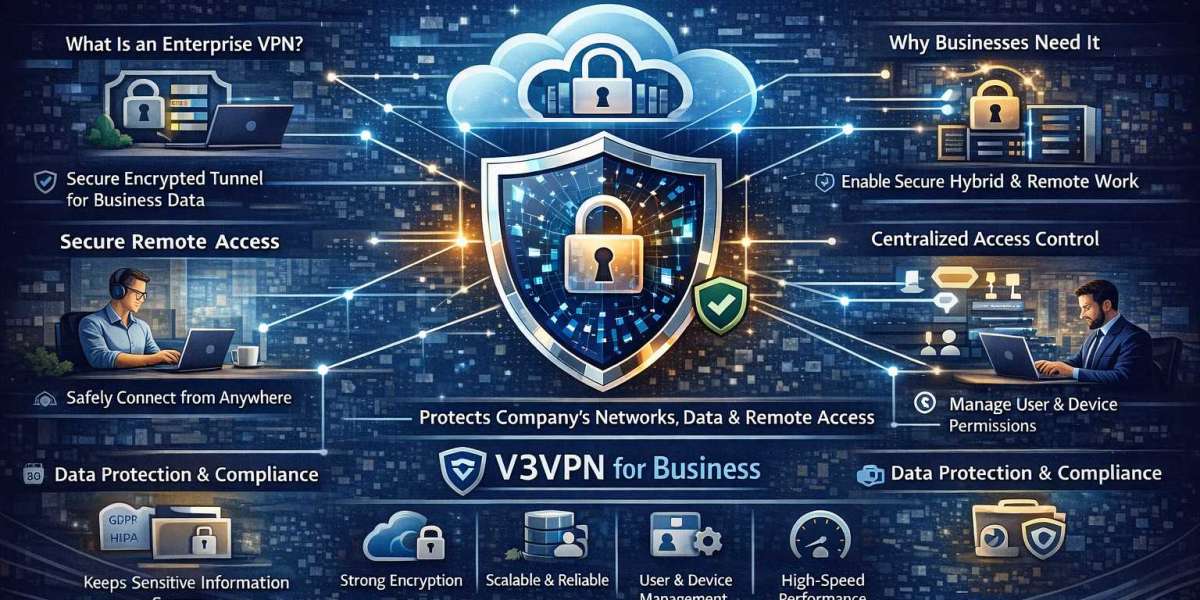
A VPN, or Virtual Private Network, encrypts data as it travels between a user’s device and a network. While consumer VPNs are designed for personal privacy, enterprise VPNs are built specifically for business environments.
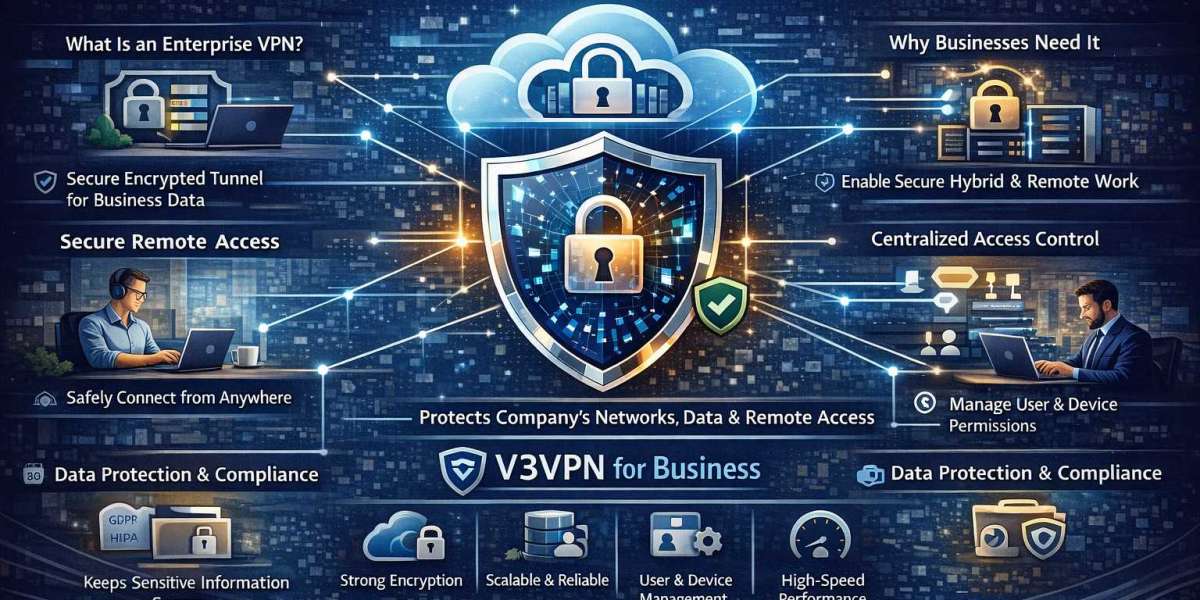
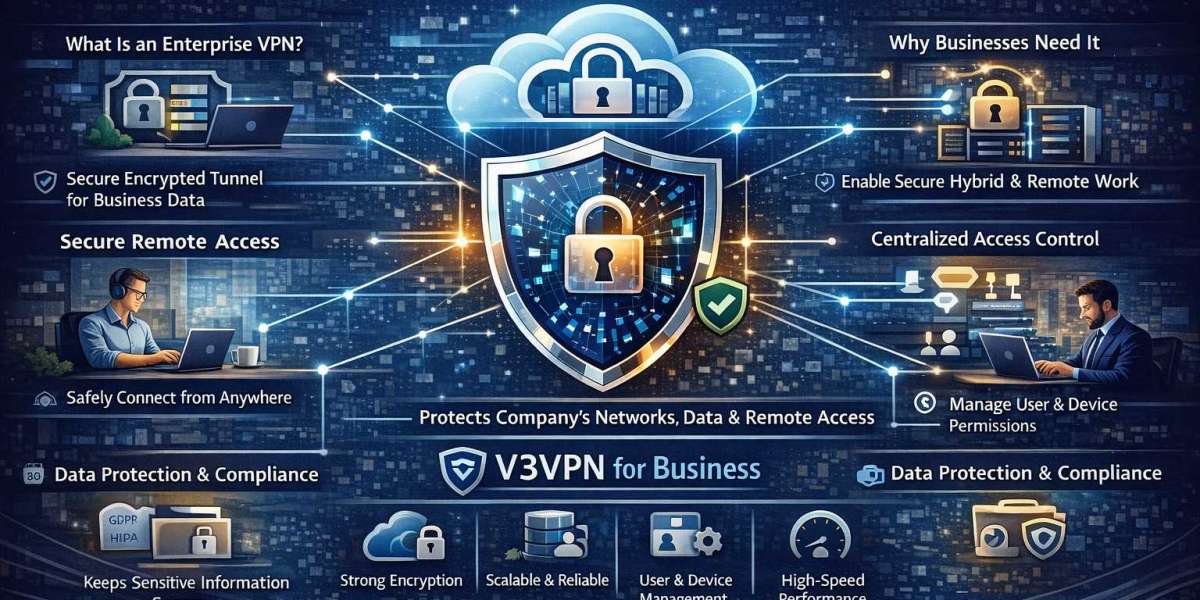
An enterprise VPN allows employees, contractors, and partners to securely connect to internal company resources without exposing those systems to the public internet. It creates a protected tunnel that shields data from interception, tampering, and unauthorized access.
More importantly, it gives businesses centralized visibility and control over network access, something basic VPN tools simply cannot offer.
Why Businesses Are Increasingly Adopting Enterprise VPNs
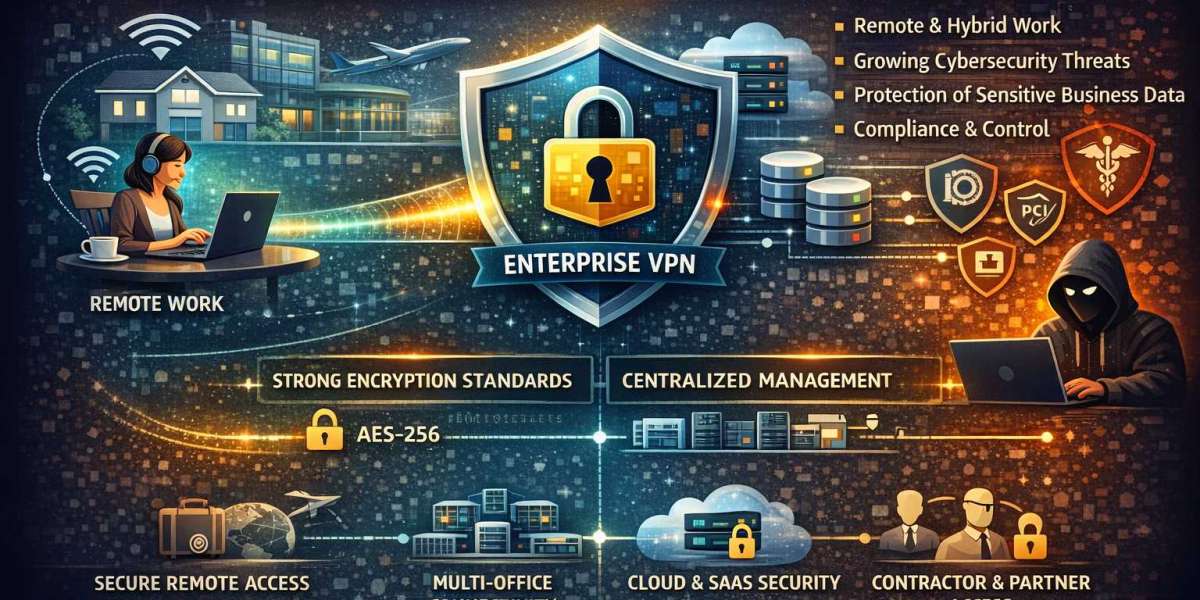
1. The Rise of Remote and Hybrid Work
Remote work is no longer temporary. Many companies now operate with fully remote or hybrid teams. Without a secure connection, employees accessing internal tools from different locations increase the risk of data breaches.
An enterprise VPN ensures that remote access follows the same security standards as in-office access, regardless of location.
2. Growing Cybersecurity Threats
Phishing, man-in-the-middle attacks, credential theft, and ransomware attacks are more common than ever. Unencrypted traffic is an easy target, especially on public or unsecured networks.
Enterprise VPNs encrypt all data in transit, making intercepted information unreadable and useless to attackers.
3. Protection of Sensitive Business Data
Companies handle valuable information every day, including customer data, financial records, internal communications, and intellectual property. A single leak can cause reputational damage and financial loss.
An enterprise VPN adds a strong layer of protection that reduces exposure and limits access to authorized users only.
Key Features That Define a True Enterprise VPN
Not all VPNs are equal. A true enterprise-grade VPN includes features designed specifically for business needs.
Strong Encryption Standards
Enterprise VPNs use advanced encryption protocols such as AES-256 to secure data. This ensures that even if traffic is intercepted, it cannot be decoded.
Centralized User Management
IT teams can create, manage, and revoke user access from a central dashboard. This is essential when employees join, change roles, or leave the company.
Authentication and Access Control
Multi-factor authentication, device verification, and role-based access help ensure that only authorized users can reach specific systems.
Scalability
As businesses grow, their VPN should grow with them. Enterprise VPN solutions are built to support expanding teams, multiple locations, and increased traffic without performance issues.
Monitoring and Logging
Visibility matters. Enterprise VPNs provide logging and monitoring tools that help organizations track access, detect unusual behavior, and meet compliance requirements.
Enterprise VPN vs Consumer VPN: Why the Difference Matters
Many businesses make the mistake of relying on consumer VPNs for work purposes. While these tools may offer basic encryption, they fall short in several critical areas.
Consumer VPNs lack centralized management, user controls, audit logs, and compliance support. They are designed for individual use, not organizational security.
An enterprise VPN, on the other hand, is built with policy enforcement, team management, and business continuity in mind. This distinction becomes crucial as organizations scale and face more complex security challenges.
Common Use Cases for Enterprise VPNs
Secure Remote Access
Employees can safely access internal systems like CRMs, ERPs, databases, and file servers from anywhere in the world.
Multi-Office Connectivity
Businesses with multiple offices can securely connect their networks without relying on expensive private infrastructure.
Contractor and Partner Access
Temporary or limited access can be granted to vendors and partners without exposing the entire network.
Cloud and SaaS Security
An enterprise VPN adds an additional security layer when accessing cloud platforms and SaaS tools, reducing the risk of unauthorized access.
How an Enterprise VPN Supports Compliance
Many industries are governed by strict data protection regulations. Failing to secure data in transit can result in penalties and legal trouble.
Enterprise VPNs help businesses align with compliance standards by:
Encrypting sensitive data
Logging user access
Enforcing security policies consistently
Reducing unauthorized exposure
This makes them particularly valuable for industries like finance, healthcare, e-commerce, and SaaS.
Choosing the Right Enterprise VPN Solution
When evaluating an enterprise VPN, businesses should focus on more than just pricing. Key factors to consider include:
Reliability and uptime
Ease of deployment and management
Security protocols and authentication methods
Scalability for future growth
Quality of technical support
A solution that balances strong security with ease of use will deliver the best long-term value.
Businesses exploring modern, scalable enterprise VPN solutions can learn more about secure business connectivity options at V3VPN.
The Business Impact of a Well-Implemented Enterprise VPN
A properly implemented enterprise VPN doesn’t slow teams down. In fact, it often improves productivity by providing consistent, reliable access to tools and systems.
It reduces downtime caused by insecure connections, minimizes security incidents, and gives leadership confidence that company data is protected.
In an era where trust and security influence customer decisions, investing in enterprise-level protection is not just a technical choice. It’s a strategic one.