
When a parent calls our office and asks, “Is a UK law degree worth the money?” my honest answer is: it depends on where you go. A Russell Group brand name isn't the only way to build a solid legal career. Over the past few years, I've found myself recommending a modern, career-focused university more and more often. Let me explain why.
The Core Programme
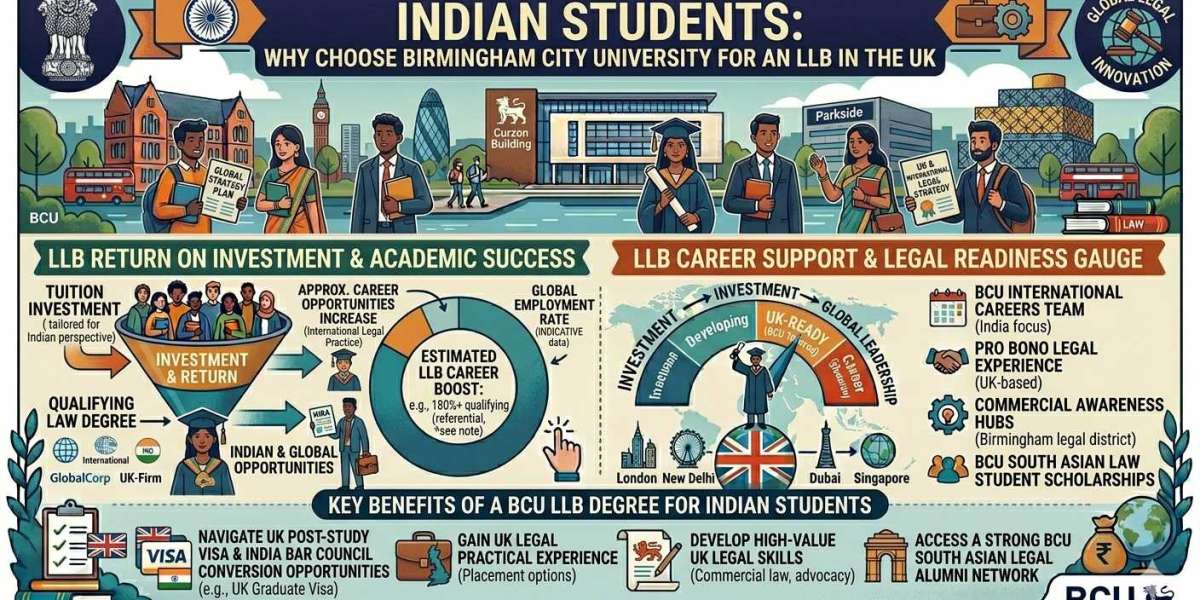
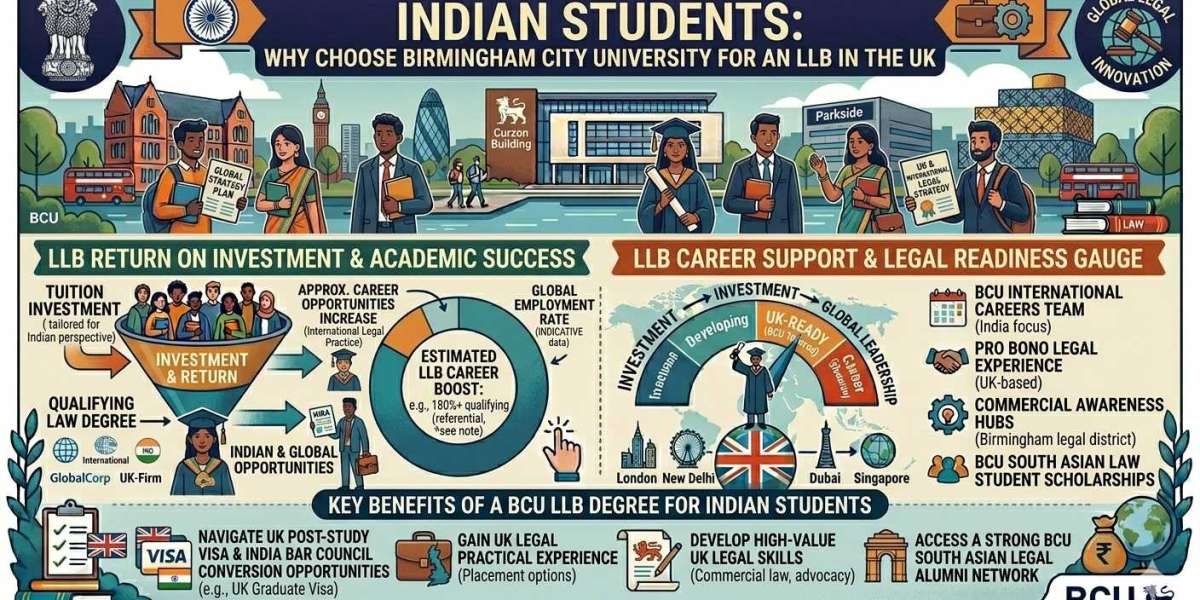
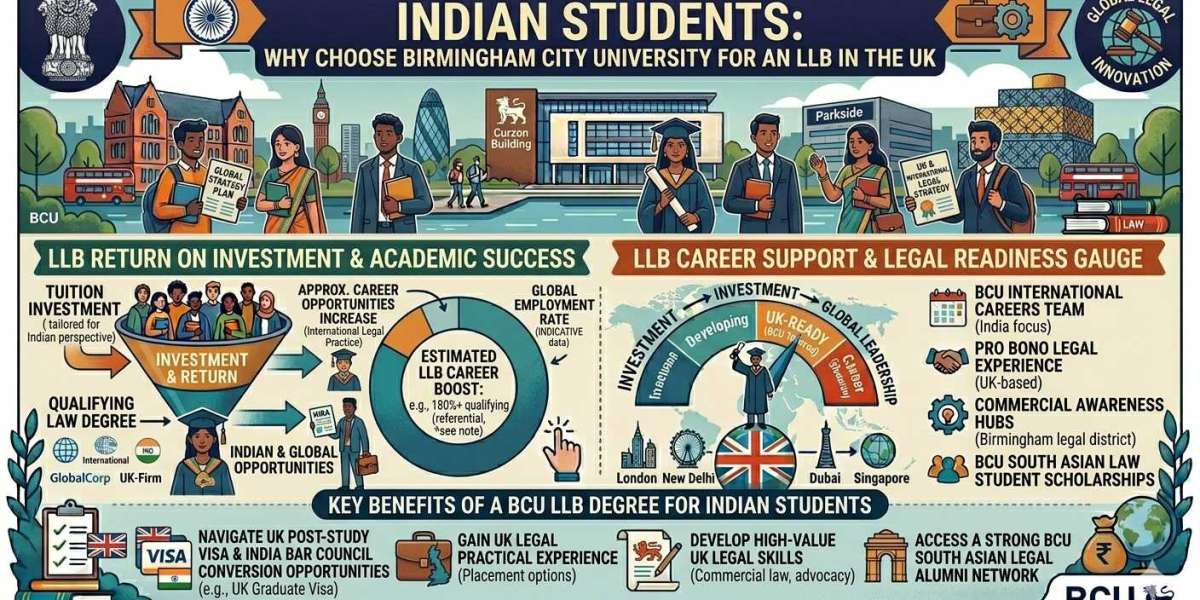
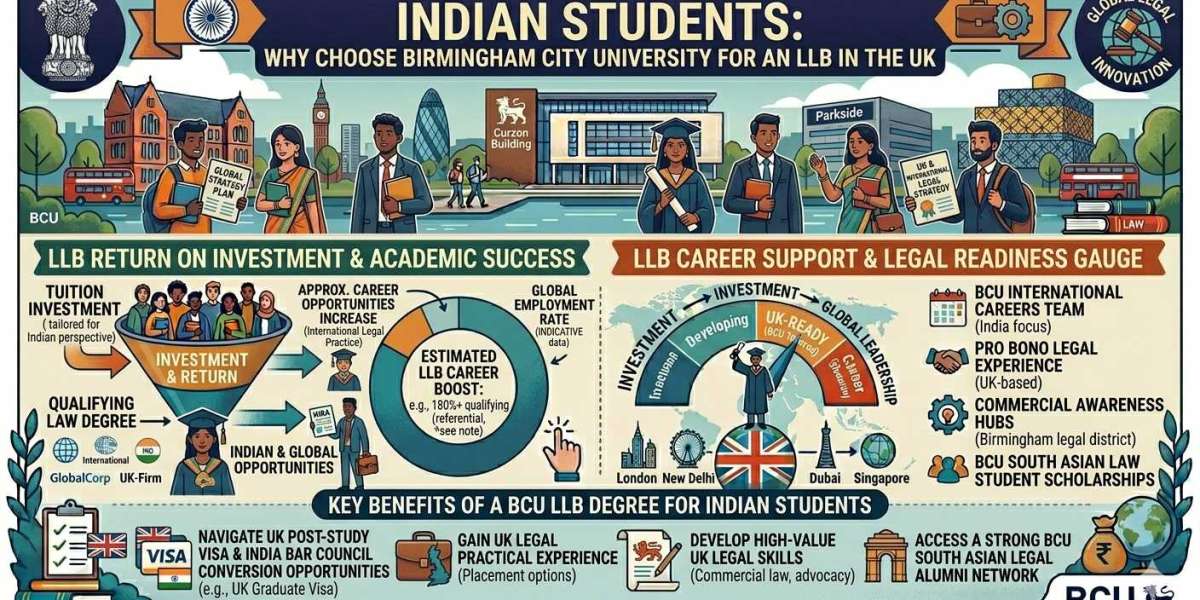
If you want to get LLB Degree in UK, Birmingham City University (BCU) offers a proper qualifying law degree. Their LLB (Hons) Law is a three-year undergraduate programme that covers all the foundations you need to move toward becoming a solicitor or barrister.
The curriculum is structured across six semesters. The first year focuses on core modules like Legal Skills, Public Law, Criminal Law, and Property Law. Later years introduce more specialised areas such as Employment Law and Family Law. The university has also designed specific LLB pathways Law with Business Law, Law with Criminal Justice, even Law with American Legal Studies allowing students to tailor their studies from day one.
The Numbers That Actually Matter
Let’s talk about fees honestly. The tuition for international students on the standard LLB (Hons) Law is £13,980 per year. Specialised pathways like Law with Foundation Year are slightly higher at around £17,690 annually. For an Indian student, that lands between ₹15 lakh and ₹20 lakh per year depending on the exchange rate.
For context, top-tier London law schools easily charge £25,000–£30,000 annually. BCU's pricing puts it in the genuinely affordable bracket for a UK law degree.
The Scholarships You Can't Ignore
Here's something that genuinely surprised me when I first looked into BCU: the scholarship structure is unusually generous for a UK university.
For 2026 entry, BCU is offering a guaranteed £5,000 scholarship to every self-funding international undergraduate student. Yes, guaranteed. No competitive application. No lottery. The breakdown is £3,000 in your first year and £2,000 in your second. That brings your effective tuition down to roughly £10,980 in year one.
There are also High Achievers' Scholarships for strong students and additional bursaries of up to £2,000 for those with excellent academic backgrounds.
The Accreditation Backbone
This is where many Indian families get anxious: Will this degree actually count?
BCU's LLB is accredited by the Solicitors Regulation Authority and the Bar Standards Board as a Qualifying Law Degree. It also holds accreditation from the Joint Academic Stage Board of England and Wales. That means the degree is recognised as the first academic stage of legal training in England and Wales.
The Law Clinic
Here’s the detail that sets BCU apart from older, more theoretical law schools. The university runs a law clinic in the heart of Birmingham the largest pro bono legal advice service in the city. Third-year and final-year students work directly with real clients, providing free legal advice under qualified solicitor supervision.
In 2026, BCU won the Pro Bono Award at the Birmingham Law Society Awards, and BCU law students also took first place in the national LawWorks Law School Challenge, raising over £4,000 for legal charities. That is not a theoretical exercise. That is hands-on, real-world legal work exactly what employers want to see on a fresh graduate’s CV.
The Acceptance Rate Reality
Let me clear this up quickly because parents always ask. The Birmingham City University acceptance rate sits at around 52% for international applicants. That is not highly selective, but it is not an open door either. For a student with decent Class 12 marks and an IELTS score of 6.0–6.5, you have a very reasonable chance.
Most Indian students applying to BCU will need:
- 65–70% in Class 12 from a recognised board
- IELTS 6.0 overall with no band below 5.5 (or 6.0 in each component for certain pathways)
- A clear Statement of Purpose
Employability
The university reports that 94% of its undergraduate students are in employment or further study within six months of graduating.
A UK LLB trains you in legal analysis, but it also opens doors far beyond traditional law practice. Graduates move into corporate compliance, banking regulation, international arbitration, policy work, and legal journalism.
For Indian students specifically, career outcomes depend heavily on visa pathways and specialisation choices. Those who focus on high-demand areas—corporate law, tech law, or international trade and who use BCU's placement office from day one, tend to do significantly better.
The City
Birmingham City University in UK sits in the heart of Birmingham, the UK's second-largest city. The main campus is centrally located, with the Law School based in the Curzon Building in Birmingham's Eastside development.
What matters to an Indian student is that Birmingham has a large, established Indian diaspora. You will find familiar food, festivals, and community support. And crucially, living costs are noticeably lower than London. You are not paying London rents for groceries, transport, or accommodation.
What Current Students Say
Course satisfaction data shows that approximately 62% of BCU law graduates report being satisfied or very satisfied with their programme. That is not a glowing figure, but it is in line with many UK law schools outside the Russell Group. Student reviews consistently praise the clinical legal education, the supportive staff, and the city's affordability. Criticisms tend to focus on administrative processes and the intensity of workload—fair complaints at most UK universities.
The Final Picture
BCU is not Oxford. It is not even Birmingham University. It is a modern, career-focused institution that trades on practical experience rather than centuries of prestige.
If your goal is to earn a Qualifying Law Degree in the UK, gain real legal experience in a live law clinic, graduate with manageable debt, and work in or return to India with a recognised English law degree, BCU is genuinely worth considering. The LLB is accredited. The scholarship is real. The law clinic is award-winning. And the city works for an Indian student's budget.
But if you want the brand name for its own sake—the marble halls and the centuries-old reputation—BCU will not satisfy that hunger.
Choose the university that fits what you actually need, not what you think you should want. That's the honest advice I give every family.