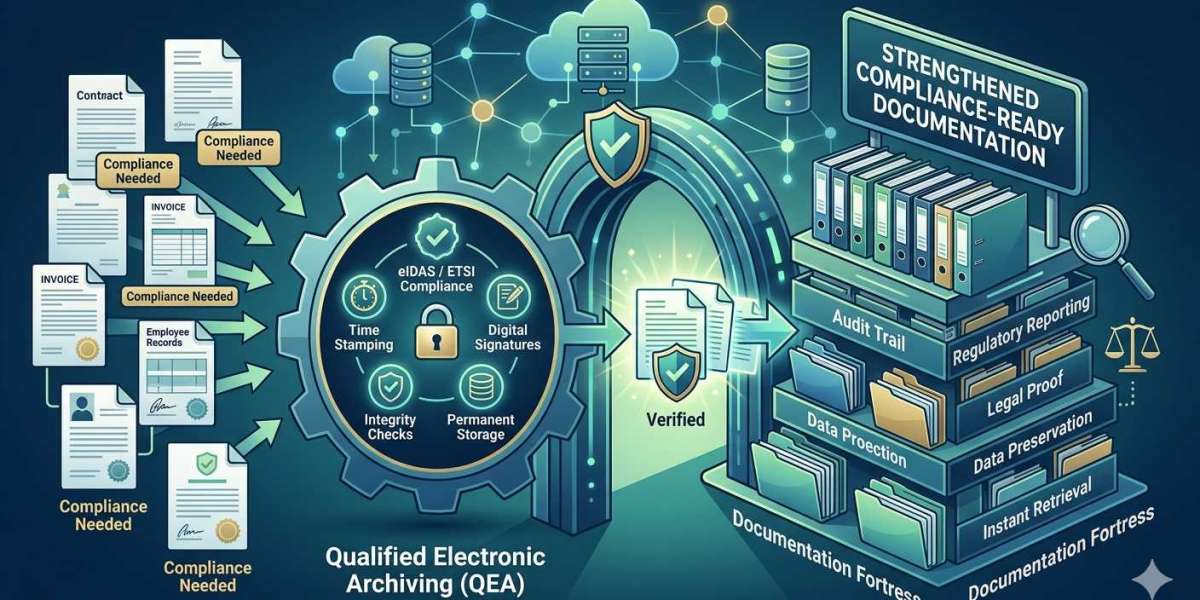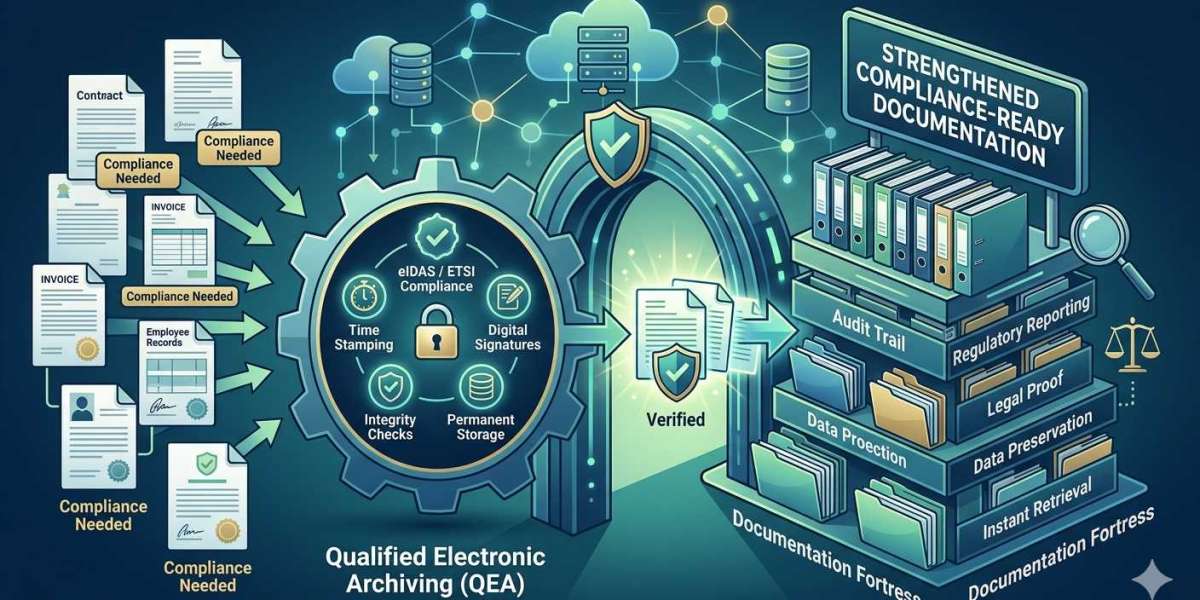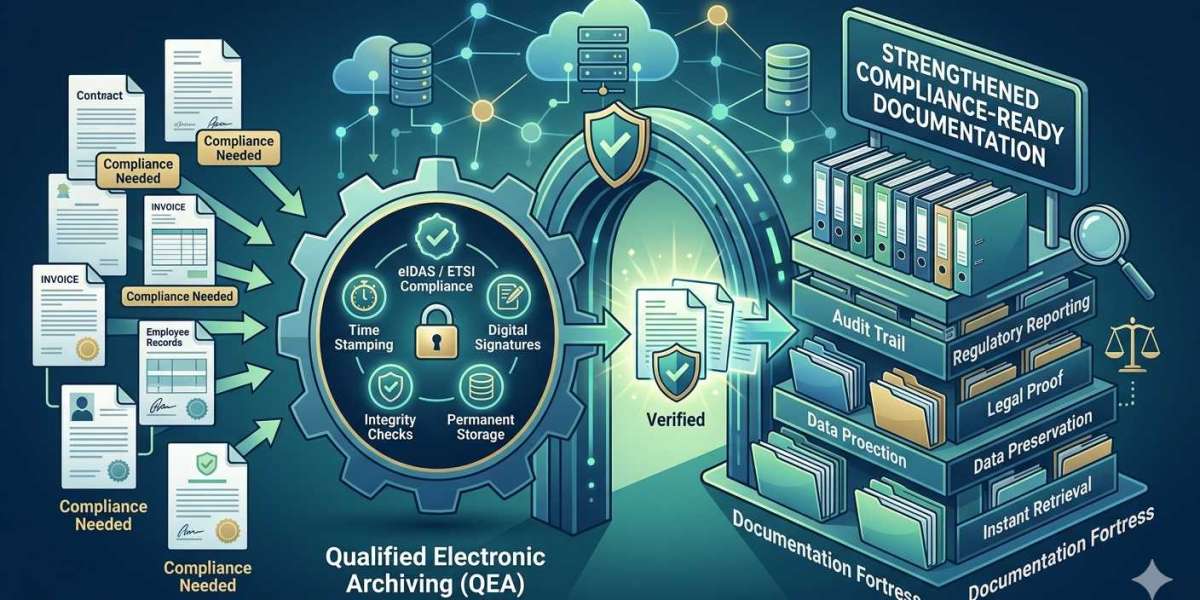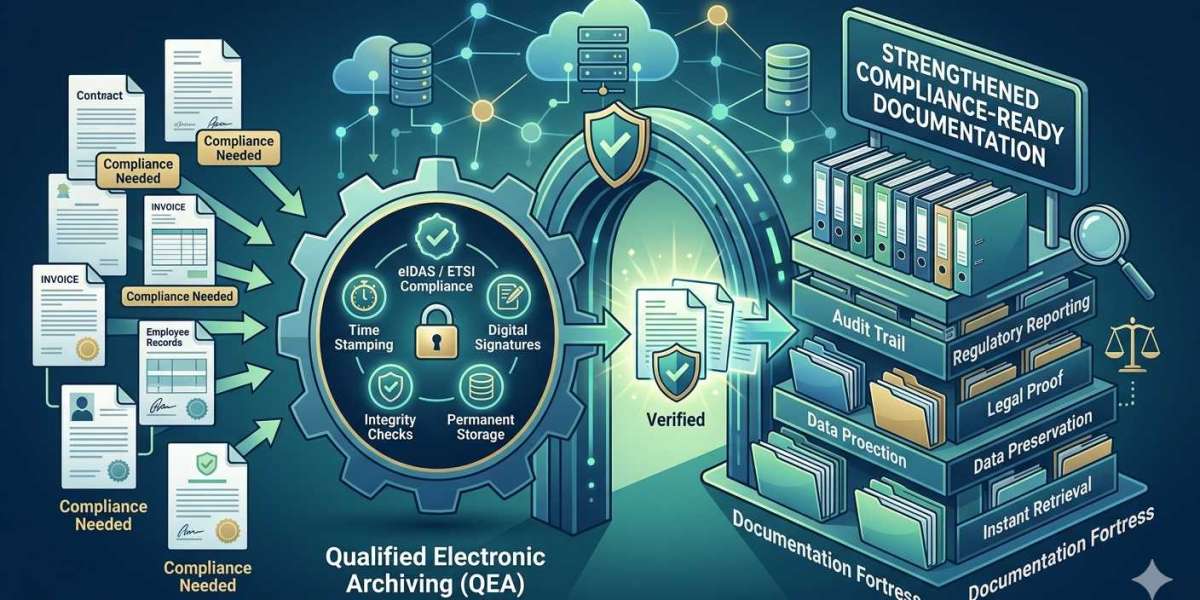

Compliance-ready documentation is not just about saving files. It is about proving that a document stayed complete, readable, traceable, and unchanged across its retention life. Qualified Electronic Archiving gives businesses a stronger way to preserve digital records so they can support audits, regulatory reviews, legal disputes, and internal governance with more confidence. This matters because the EU’s eIDAS framework defines trust services for secure electronic transactions, and eIDAS 2 expanded the framework with newer trust service areas, including electronic archiving.
Why Compliance Documentation Needs Stronger Proof
Many businesses already store documents digitally, but basic storage does not automatically create compliance-ready proof. A contract in a cloud folder may still raise questions. Was it altered? Who uploaded it? Is it the final version? Was it preserved with the right metadata? Can the business prove the record’s origin years later?
That is where weak documentation starts causing problems. During audits, tax checks, legal disputes, insurance claims, vendor reviews, and regulatory inspections, the business may need more than a file copy. It may need evidence that the document stayed reliable from the moment it entered the archive to the moment it was retrieved.
The shift toward digital-first recordkeeping is already clear. The U.S. National Archives stated that after June 30, 2024, it would no longer accept transfers of permanent or temporary records in analog formats and would accept records only in electronic format with appropriate metadata. Private businesses may not follow the same exact requirements, but the principle is hard to ignore: documents need structure and metadata if they are expected to remain useful over time.
For example, a financial services company may need to prove that a client agreement was preserved without unauthorized changes. A healthcare-related business may need to show that consent records were retained correctly. A construction firm may need old contracts, change orders, insurance documents, and safety records during a dispute. If records are scattered across emails and folders, compliance becomes a guessing game. Nobody wants that circus when auditors are in the room.
What Makes Qualified Archiving Different
Basic archiving keeps documents. Qualified archiving supports trust. Under the eIDAS framework, qualified trust services must meet specific legal requirements and be recognized across EU Member States. That matters because the word “qualified” is not just marketing language. It points to a regulated trust model.
Qualified Electronic Archiving is designed to preserve electronic documents with stronger assurance around integrity, origin, readability, and long-term reliability. The eIDAS 2 framework introduced requirements for electronic archiving services, including qualified services, to support trust in stored electronic data and documents.
In practical terms, this means a business should be able to answer key compliance questions faster:
- What document was preserved?
- When was it archived?
- Who had access?
- Has the record changed?
- Can it still be opened and read?
- Can the archive support proof of origin and integrity?
These questions matter because compliance-ready documentation depends on traceability. A file without context is weak evidence. A record with metadata, access history, retention rules, and integrity controls is much stronger.
This is especially important for regulated industries. Finance, insurance, healthcare-related services, legal, real estate, manufacturing, and government-adjacent businesses often carry long retention duties. They cannot rely on folders named “final,” “approved,” or “new final final.” That kind of file naming should be illegal in polite society.
How It Supports Security, Retention, and Audit Readiness
Compliance is not only about keeping records. It is also about protecting them. Archived documents often contain personal data, financial information, legal terms, employee records, client details, and confidential business evidence. If those files sit in open folders with unclear access rights, the business carries unnecessary exposure.
IBM reported that the global average cost of a data breach was USD 4.4 million in 2025. That number shows why information governance cannot be treated as admin housekeeping. Sensitive records need access control, encryption, retention rules, and audit trails.
Qualified Electronic Archiving can strengthen compliance readiness by making retention more controlled. Some documents must be kept for specific legal, contractual, or operational periods. Others should be deleted when they are no longer needed. Keeping everything forever may feel safe, but it can increase risk. Deleting too early can be worse. A structured archive helps the business apply retention rules consistently.
Audit readiness also improves because teams can retrieve documents with supporting context. Instead of searching across inboxes, shared drives, legacy systems, and personal folders, teams can work from a governed archive. That reduces panic and improves credibility when reviewers ask for proof.
Metadata is the backbone here. It helps connect a document to its date, owner, category, retention period, business process, and access history. Without metadata, the business may have the file but not the story behind the file. Compliance reviewers usually care about both.
Why Businesses Should Treat This as Risk Management
The value of qualified archiving becomes obvious when pressure arrives. A regulator requests documentation. A customer challenges a contract. A buyer starts due diligence. A former employee disputes a policy. A tax authority asks for records. In each case, the business needs trustworthy documentation, not a scavenger hunt.
A compliance-ready archive gives leadership more confidence. It shows that records were not handled casually. It also helps teams move faster because critical documents are easier to locate, verify, and present.
Qualified Electronic Archiving should be considered for records that carry legal, financial, regulatory, or evidential weight. Not every file needs this level of control. Draft notes and routine internal files may not require qualified preservation. Signed contracts, regulated records, formal approvals, financial files, legal evidence, and long-term compliance documents are different. They deserve stronger handling.
Conclusion
Compliance-ready documentation is built on trust. Businesses need to prove that important records are complete, readable, protected, traceable, and reliable over time. Basic storage may hold files, but it does not always prove authenticity, integrity, or proper retention.
Qualified Electronic Archiving helps businesses strengthen their documentation strategy by adding structure, metadata, access control, preservation discipline, and stronger evidential confidence. For organizations that handle regulated records, contracts, financial documents, legal proof, or long-term compliance files, this is not a minor back-office upgrade. It is serious risk management with receipts.