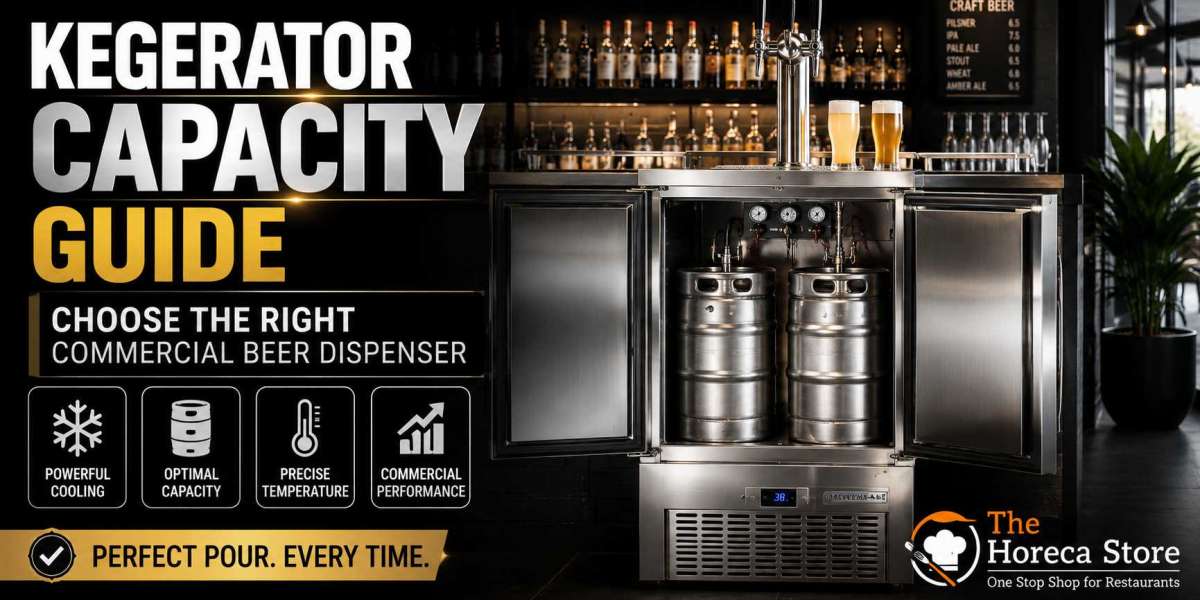

A kegerator is one of the best investments for bars, restaurants, breweries, event venues, and even home entertainment spaces that regularly serve draft beer. One of the most important factors to consider before purchasing a kegerator is kegerator capacity. The size of the kegerator determines how many kegs it can hold, the types of kegs it supports, and how efficiently it can meet your serving needs.
Whether you're running a busy commercial establishment or simply want fresh draft beer at home, understanding kegerator capacity helps you select a system that provides the right balance of storage, performance, and convenience. Choosing the correct size also ensures efficient cooling, minimizes beer waste, and supports smooth beverage service during peak hours.
In this guide, we'll explain everything you need to know about kegerator capacity, including keg sizes, storage options, key features, and tips for selecting the ideal kegerator.
What Is Kegerator Capacity?
Kegerator capacity refers to the number and size of beer kegs that a kegerator can accommodate while maintaining proper refrigeration. Capacity varies depending on the dimensions of the cabinet, the cooling system, and the overall design of the unit.
Some compact models are designed to hold a single keg, while larger commercial kegerators can store multiple kegs and serve different beer varieties simultaneously.
Choosing the right capacity depends on:
Daily beer consumption
Available installation space
Number of beer taps
Type of establishment
Variety of beverages served
Understanding these factors helps ensure you invest in the right draft beer system.
Common Keg Sizes
Before selecting a kegerator, it's important to understand the most common keg sizes available.
Full-Size Half Barrel Keg
The half-barrel keg is the standard size used in most commercial bars and restaurants.
Typical capacity:
Approximately 15.5 gallons (58.7 liters)
Around 165 twelve-ounce servings
This size is ideal for high-volume operations.
Quarter Barrel Keg
Quarter-barrel kegs are a popular choice for smaller venues and home users.
Typical capacity:
Approximately 7.75 gallons (29.3 liters)
Around 82 twelve-ounce servings
They provide a good balance between storage capacity and variety.
Sixth Barrel Keg
Also known as a sixtel, this compact keg is commonly used by craft breweries.
Typical capacity:
Approximately 5.16 gallons (19.5 liters)
Around 55 twelve-ounce servings
Its smaller size makes it perfect for offering multiple beer selections.
Mini Keg
Mini kegs are designed primarily for home use and small gatherings.
Typical capacity:
Approximately 1.3 gallons (5 liters)
Around 14 servings
These are ideal for occasional entertaining.
Types of Kegerators Based on Capacity
Different kegerator models are designed for various serving requirements.
Single-Tap Kegerators
Single-tap units typically hold one full-size keg or an equivalent combination of smaller kegs.
They are suitable for:
Home bars
Small cafés
Private events
Offices
Dual-Tap Kegerators
Dual-tap systems allow users to serve two different beverages at the same time.
Benefits include:
Greater beverage variety
Flexible serving options
Improved customer satisfaction
These are common in restaurants and sports bars.
Triple-Tap and Multi-Tap Kegerators
Larger commercial systems can accommodate multiple kegs and serve several beer varieties simultaneously.
These units are ideal for:
Restaurants
Breweries
Hotels
Event venues
High-volume bars
Factors That Affect Kegerator Capacity
Several factors determine the usable capacity of a kegerator.
Interior Dimensions
The cabinet's interior height, width, and depth determine which keg sizes fit comfortably.
CO₂ Tank Placement
Some kegerators store the carbon dioxide tank inside the cabinet, reducing available keg space. Others mount the tank externally to maximize storage.
Cooling System
Efficient refrigeration ensures every keg maintains the ideal serving temperature, regardless of cabinet capacity.
Number of Beer Lines
Additional taps require more beer lines and hardware, which can slightly affect interior space.
Benefits of Choosing the Right Capacity
Selecting the proper kegerator capacity offers numerous advantages.
Major benefits include:
Consistent beer quality
Reduced waste
Better inventory management
Lower operating costs
Improved customer service
Greater beverage variety
Efficient cooling
Easier maintenance
The right capacity supports both operational efficiency and customer satisfaction.
Features to Look For
When purchasing a kegerator, consider features that improve performance and convenience.
Important features include:
Digital temperature controls
Stainless steel construction
Adjustable shelving
Lockable casters
Energy-efficient compressor
Automatic defrost
Drip tray
Multiple tap options
Heavy-duty draft tower
Interior LED lighting
These features enhance usability while ensuring reliable long-term performance.
Maintenance Tips
Regular maintenance helps preserve beer quality and extend equipment life.
Recommended maintenance practices include:
Clean beer lines regularly.
Sanitize taps and faucets.
Inspect CO₂ connections.
Monitor temperature settings.
Replace worn seals.
Clean condenser coils.
Check gas pressure.
Empty and clean drip trays.
Routine maintenance minimizes downtime and ensures optimal draft beer performance.
Choosing the Right Kegerator
Before purchasing a kegerator, consider several important factors.
Business Type
Restaurants and bars often require larger multi-keg systems, while home users may only need a single-keg unit.
Available Space
Measure the installation area carefully to ensure adequate ventilation and easy access.
Beverage Variety
If you plan to serve multiple beer styles, choose a dual- or triple-tap model with sufficient capacity.
Future Growth
Purchasing a slightly larger kegerator provides flexibility as your beverage program expands.
Future Trends in Kegerator Technology
Modern kegerators continue to evolve with advanced features that improve convenience and energy efficiency.
Popular innovations include:
Smart temperature monitoring
Wi-Fi connectivity
Digital diagnostics
Eco-friendly refrigerants
Energy-efficient compressors
Touchscreen controls
Remote monitoring
Advanced cooling technology
These innovations help businesses maintain perfect serving conditions while reducing energy consumption.
Conclusion
Understanding kegerator capacity is essential when selecting the right draft beer system for your home or business. From compact single-keg models to large commercial multi-tap units, choosing the appropriate capacity ensures efficient storage, reliable cooling, and consistent beverage quality.
By The Horeca Store considering your serving volume, available space, keg sizes, and future needs, you can invest in a kegerator that delivers outstanding performance for years to come. Whether you're operating a busy restaurant, managing a brewery, or creating the ultimate home bar, selecting the right kegerator capacity will help you serve fresh, perfectly chilled draft beer with confidence and efficiency.