
Choosing the right oven is one of the most important decisions for any home cook, restaurant owner, bakery, or commercial kitchen operator. When comparing oven convection vs standard, understanding the differences in cooking performance, efficiency, and versatility can help you select the best appliance for your needs. While both oven types are designed to bake, roast, and cook a wide variety of foods, they operate differently and produce unique cooking results.
A standard oven has long been a reliable kitchen appliance, while a convection oven uses a built-in fan to circulate hot air for faster and more even cooking. Depending on your cooking style, menu, and kitchen requirements, one option may be better suited than the other.
In this guide, we'll compare convection ovens and standard ovens in detail, covering their working principles, advantages, disadvantages, cooking performance, energy efficiency, and the best applications for each.
What Is a Standard Oven?
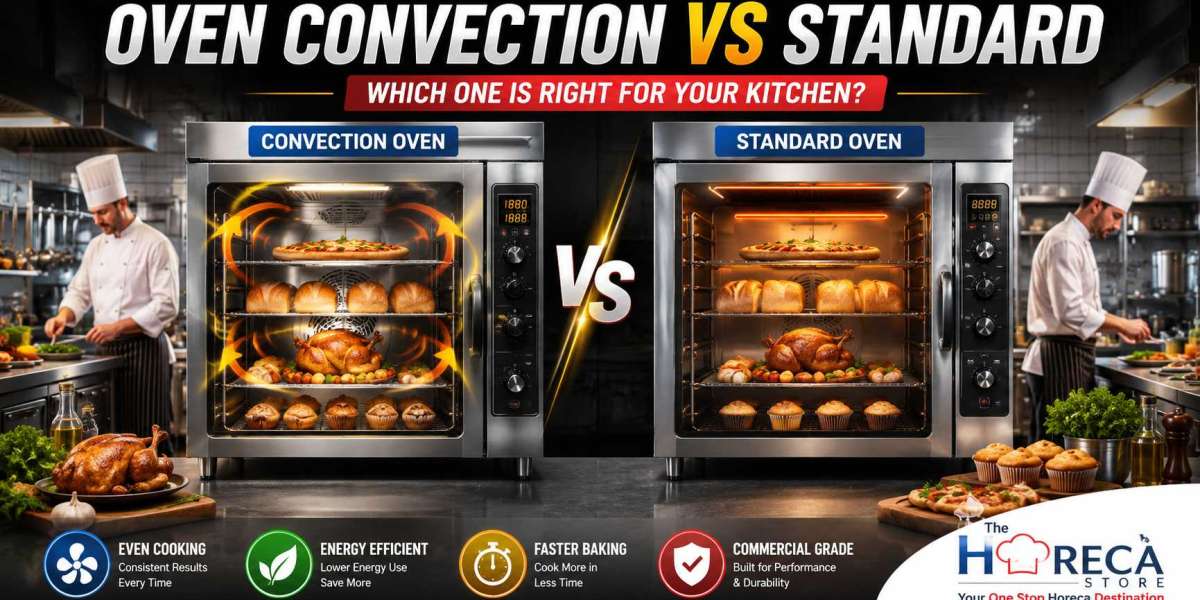
A standard oven, also called a conventional oven, cooks food using heating elements located at the top and bottom of the oven cavity. Heat naturally rises inside the oven, creating temperature variations that may cause some areas to cook faster than others.
Standard ovens are commonly found in:
Homes
Small cafés
Restaurants
Hotels
Apartment kitchens
Catering facilities
They are simple to operate and work well for everyday cooking tasks.
What Is a Convection Oven?
A convection oven includes a fan and exhaust system that continuously circulates hot air throughout the cooking chamber. This even airflow reduces hot and cold spots, allowing food to cook more consistently.
Convection ovens are widely used in:
Commercial kitchens
Bakeries
Restaurants
Hotels
Catering businesses
Professional food production facilities
Many modern residential ovens also include convection cooking modes.
How Do They Work?
The biggest difference between convection and standard ovens is how heat is distributed.
Standard Oven
A standard oven relies on stationary heat generated by heating elements. Since hot air naturally rises, temperatures can vary throughout the oven, sometimes requiring pans to be rotated during cooking.
Convection Oven
A convection oven uses a built-in fan to circulate heated air evenly around the food. This continuous airflow improves heat transfer, resulting in faster cooking and more even browning.
Cooking Performance
Convection Oven Advantages
Because hot air constantly moves around the food, convection ovens offer several cooking benefits:
Faster cooking times
Even baking
Better browning
Crispier roasted foods
Improved moisture control
More consistent results
These advantages make convection ovens ideal for high-volume cooking and professional kitchens.
Standard Oven Advantages
Standard ovens continue to be popular because they provide gentle and predictable heating.
Benefits include:
Simple operation
Reliable baking performance
Better for delicate recipes
No fan that may dry out certain foods
Familiar cooking techniques
Many traditional recipes are designed specifically for conventional ovens.
Best Foods for Each Oven
Different foods perform better depending on the type of oven used.
Foods Ideal for Convection Ovens
Convection ovens are excellent for:
Roasted vegetables
Whole chicken
Turkey
Beef roasts
Pizza
Cookies
French fries
Pastries
Puff pastry
Sheet-pan meals
The circulating air creates crisp exteriors while cooking food evenly.
Foods Better in Standard Ovens
Standard ovens are often preferred for:
Cakes
Cheesecakes
Bread
Custards
Soufflés
Quick breads
Flan
Delicate desserts
These foods benefit from steady, gentle heat without forced air movement.
Energy Efficiency
Convection ovens are generally more energy-efficient than standard ovens because they cook food faster and often require lower cooking temperatures.
Advantages include:
Reduced cooking time
Lower energy consumption
Faster preheating
Improved kitchen productivity
For commercial kitchens operating all day, these energy savings can become significant over time.
Temperature Differences
When using a convection oven, recipes typically require reducing the cooking temperature by approximately 25°F (about 15°C) compared to a standard oven.
This adjustment prevents overcooking while maintaining excellent cooking results.
Many modern ovens automatically adjust temperatures when convection mode is selected.
Pros and Cons
Convection Oven Pros
Faster cooking
Even heat distribution
Better browning
Crispier textures
Improved energy efficiency
Excellent for roasting
Convection Oven Cons
Can dry delicate foods
Requires recipe adjustments
Higher purchase cost
Fan noise during operation
Standard Oven Pros
Easy to use
Ideal for traditional recipes
Gentle cooking
Lower initial cost
Excellent for baking cakes
Standard Oven Cons
Uneven heat distribution
Longer cooking times
Less efficient
Requires rotating pans
Understanding these advantages and limitations helps you choose the best oven for your cooking style.
Choosing the Right Oven
Several factors should influence your decision.
Cooking Habits
If you frequently roast meats, bake cookies, or prepare multiple trays of food, a convection oven offers excellent performance.
If you primarily bake cakes and delicate pastries, a standard oven may provide better results.
Kitchen Type
Commercial kitchens benefit from convection ovens because they improve efficiency and consistency.
Home kitchens may benefit from combination ovens that offer both convection and conventional cooking modes.
Budget
Standard ovens usually have lower purchase prices, while convection ovens may cost more initially but offer long-term energy savings.
Food Volume
Restaurants, bakeries, and catering businesses that prepare large quantities of food typically benefit from convection cooking technology.
Maintenance Tips
Proper maintenance keeps both oven types operating efficiently.
Recommended maintenance includes:
Clean interior surfaces regularly.
Remove grease buildup.
Inspect door seals.
Clean oven racks.
Check heating elements.
Clean convection fan when applicable.
Calibrate oven temperature periodically.
Schedule professional servicing for commercial units.
Routine maintenance extends equipment life and ensures consistent cooking performance.
Conclusion
When comparing The Horeca Store oven convection vs standard, the best choice depends on your cooking needs, kitchen environment, and budget. Convection ovens provide faster cooking, even heat distribution, improved browning, and greater energy efficiency, making them an excellent option for commercial kitchens and frequent home cooks. Standard ovens, however, remain ideal for traditional baking methods, delicate recipes, and users who prefer straightforward operation.
By understanding how each oven works and matching its strengths to your cooking style, you can make a confident investment that improves food quality, kitchen efficiency, and overall cooking results. Whether you choose a convection oven, a standard oven, or a model that combines both functions, selecting the right appliance will help you achieve consistently delicious meals for years to come.