
There's a quiet shift happening in hair restoration clinics across Pakistan — and most patients never hear about it unless they specifically ask.
You come in for a consultation. The specialist runs through the usual options: PRP, minoxidil, maybe a hair transplant down the road. The appointment ends. You leave with a plan that feels... familiar. Standard.
What they didn't bring up? Exosome therapy.
Not because it doesn't work. But because it's newer, it costs more, and most clinics simply wait for the patient to ask. So consider this your insider heads-up.
What Exactly Are Exosomes — And Why Should You Care?
Here's what most people don't realize: your body's cells are constantly "talking" to each other. They send tiny messenger packets back and forth, carrying instructions like repair this, grow here, reduce inflammation there. These packets are called exosomes.
Think of them as the body's WhatsApp messages for healing.
In hair restoration, exosomes are harvested from donor stem cells (typically from lab-grade sources), concentrated, and then injected into the scalp. Once there, they signal your dormant or weakened hair follicles to wake up — to enter the active growth phase again.
They don't add new cells. They reactivate the ones you already have.
That's a subtle but important difference. And it's why the results, when they come, tend to look natural — because they are natural. Your own follicles doing what they were always meant to do.
Exosomes vs PRP — An Honest Comparison
If you've already tried PRP, you're not alone. Platelet-Rich Plasma has been the go-to non-surgical hair restoration option in Pakistan for years, and for good reason — it works for a lot of people.
But here's the honest breakdown:
PRP uses your own blood, spun down to concentrate growth factors. It's affordable, well-studied, and effective for early-to-moderate hair thinning. Most patients need 3–6 sessions, and maintenance is ongoing.
Exosome therapy goes a step further. The concentration of growth signals in a quality exosome product is significantly higher than what PRP delivers. More importantly, exosomes also carry anti-inflammatory properties, which is a big deal — because inflammation around the follicle is one of the silent drivers of hair loss that often gets overlooked.
So are exosomes better than PRP? Not always. It depends on your stage of hair loss and how your scalp has responded before.
If PRP has worked reasonably well for you, sticking with it makes sense. But if you've done 4–6 PRP sessions and the results plateaued, or if you never responded well to begin with — exosomes are often the upgrade worth exploring. Many specialists now describe exosome hair therapy as the logical next tier after PRP stops delivering.
What Happens During the Treatment — And Does It Hurt?
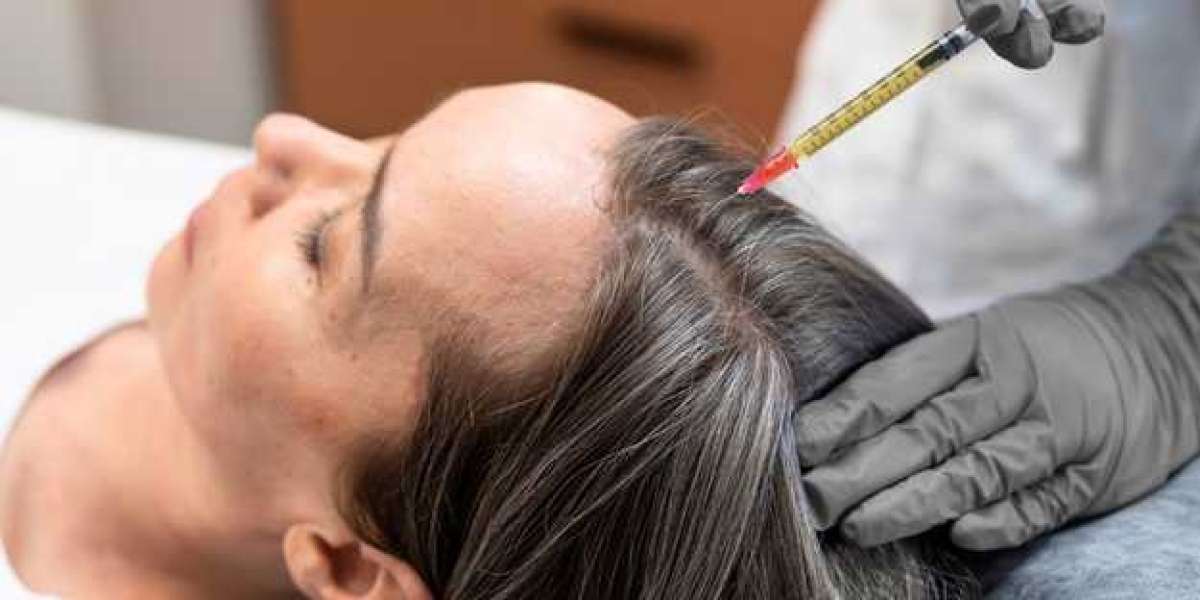
The session itself is fairly straightforward. The exosome solution is prepared (it comes as a vial, unlike PRP which requires drawing your blood on the day), and then injected across the scalp using a fine needle or a multi-injection device.
The whole thing takes 30–60 minutes, depending on the area being treated.
Pain-wise — it's uncomfortable, not unbearable. Most clinics apply a topical numbing cream beforehand, which takes the edge off significantly. People with lower pain tolerance usually describe it as a "mild stinging" sensation, not sharp pain.
Downtime is minimal. You might see some redness or slight swelling on the scalp for 24–48 hours. Most people go back to work the next day without anyone noticing anything unusual.
Now, the most important thing to set realistic expectations around: the results don't show up in two weeks. Exosome hair treatment results typically begin appearing around the 2–3 month mark, with more visible improvement at 4–6 months. Hair cycles are slow. The treatment works with your biology, not against it — so patience is genuinely required here.
What Does Exosome Therapy Actually Cost in Pakistan?
Let's talk numbers, because this is usually the first real question.
In Pakistan in 2025–2026, the exosomes for hair price in Pakistan typically ranges from Rs. 25,000 to Rs. 80,000 per session, depending on several factors:
- Quality and source of the exosome product — pharmaceutical-grade imported vials cost more than lower-concentration alternatives
- Clinic location and expertise — Islamabad and Karachi clinics generally price higher than smaller cities
- Area of scalp being treated — larger coverage means more product
- Number of sessions recommended — most specialists suggest 2–4 sessions for meaningful results
For comparison, standard PRP sessions in Islamabad typically range from Rs. 8,000 to Rs. 20,000. So yes, exosome therapy is more expensive. Sometimes significantly so.
But the tradeoff is a higher concentration of active growth signals, less preparation time, and — for the right candidate — better outcomes than PRP could deliver.
If you're weighing the cost, think of it this way: four PRP sessions that don't work still adds up. One well-chosen exosome protocol might do more in two sessions.
Who Is Actually a Good Candidate?
Not everyone needs to jump straight to exosomes. Here's how to think about it honestly:
You're likely a good candidate if:
- You're in the early-to-moderate stages of hair thinning (before significant follicle death has occurred)
- You've tried PRP and seen limited or plateaued results
- You're dealing with diffuse thinning rather than complete bald patches
- You want a non-surgical hair restoration option with minimal downtime
Exosomes work for both men and women. Female pattern hair loss, in particular, responds quite well — the anti-inflammatory component helps with a type of scalp sensitivity that's common in women experiencing hormonal hair loss.
Where it's less likely to help:
- Advanced baldness where follicles are no longer active (slick bald areas)
- Hair loss caused entirely by nutritional deficiencies that haven't been addressed
- Patients expecting surgical-level density from a non-surgical treatment
In reality, the best outcomes come when the treatment is paired with proper diagnosis. Knowing why you're losing hair matters as much as knowing what to inject.
Making the Right Call for Your Scalp
Hair loss is frustrating in a very personal way. It chips away quietly — and by the time most people seek professional help, they've already spent months (sometimes years) trying things that didn't quite work.
Exosome therapy isn't a miracle. It's a clinically sound, advanced option that works best when used strategically — at the right stage, with the right expectations, and under proper medical supervision.
If you've been doing PRP and feel like you've hit a ceiling, it's worth asking your specialist directly: "Am I a candidate for exosome therapy?"
If they're unfamiliar, or if you want a second opinion from a team that works specifically with advanced hair loss treatment, Ritual Aesthetics Clinic in F-8, Islamabad offers exosome hair therapy consultations alongside a full range of non-surgical hair restoration options — and they'll give you an honest picture of what's realistic for your specific case.
Visit ritualaesthetics.pk to learn more or book a consultation.