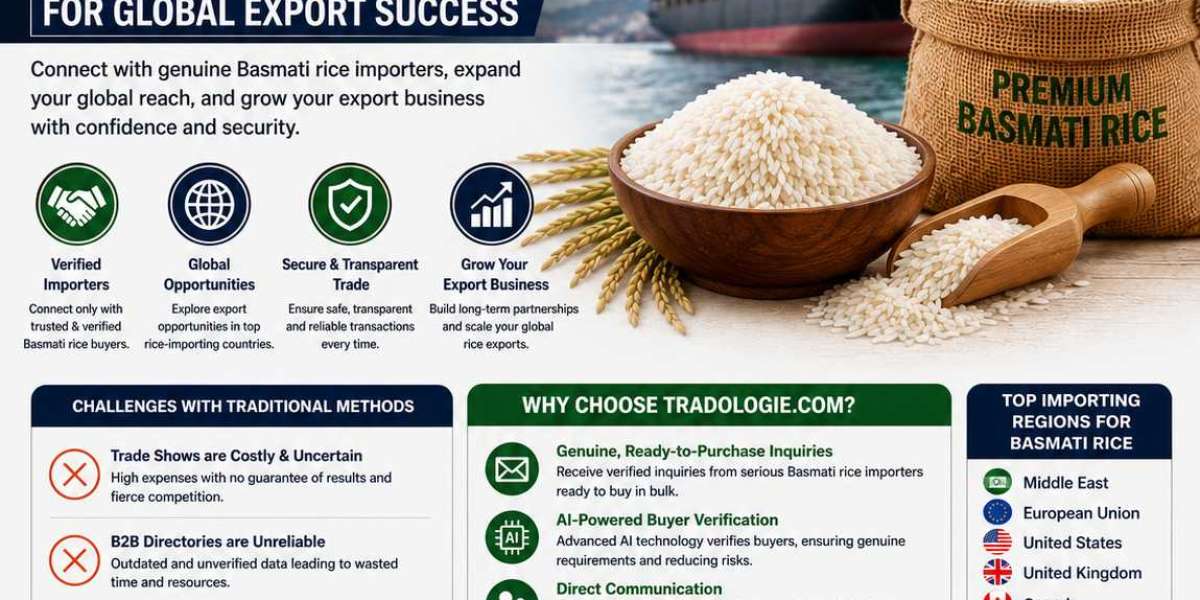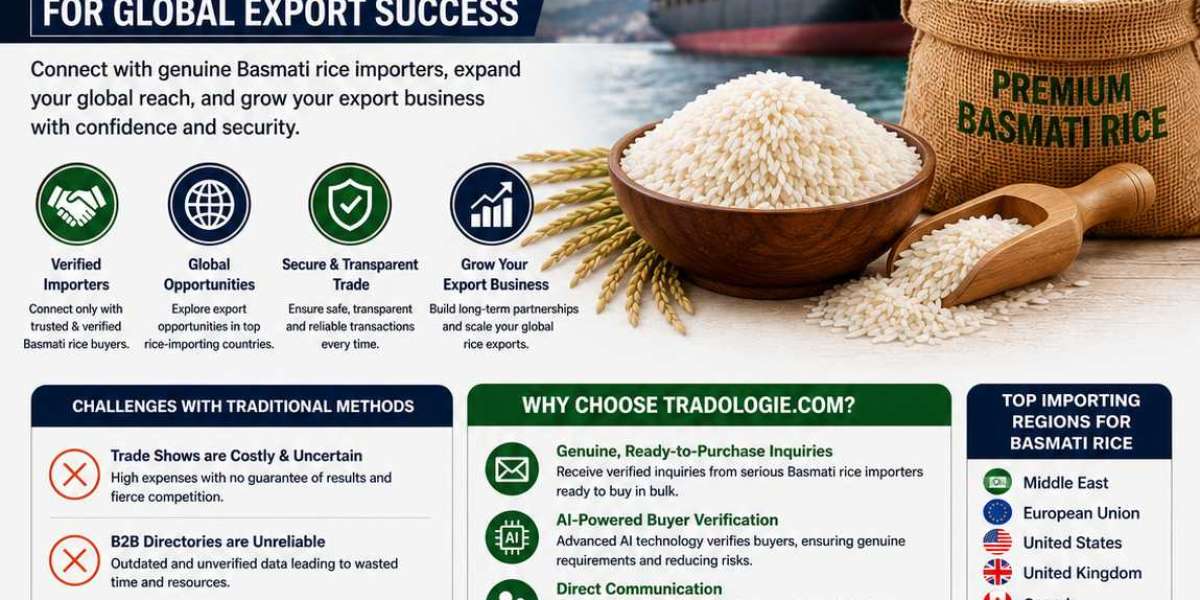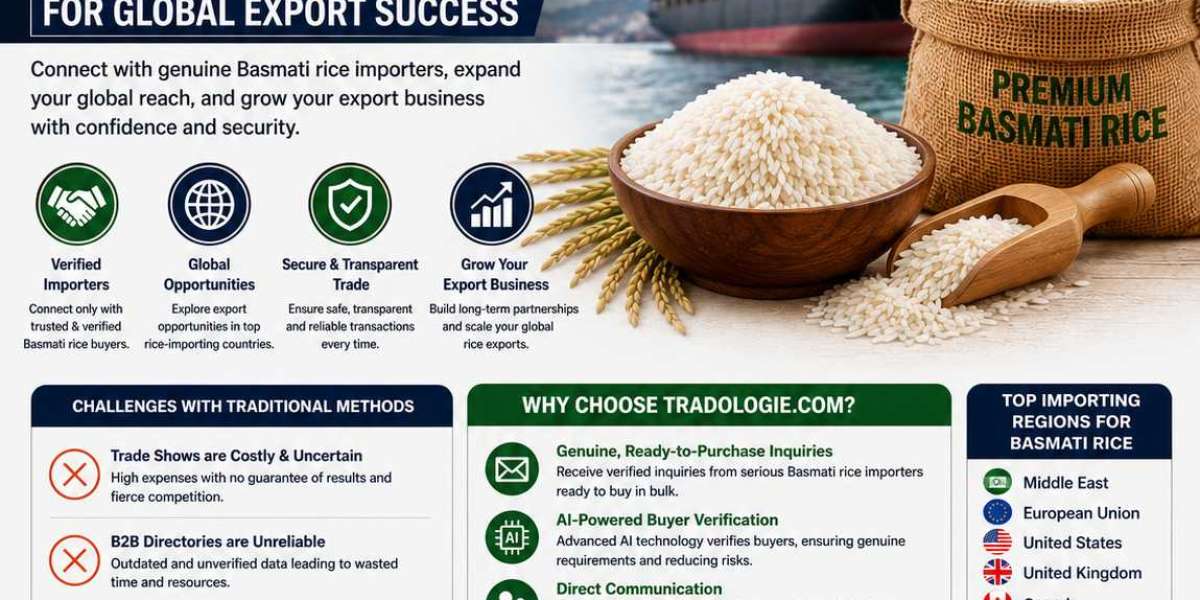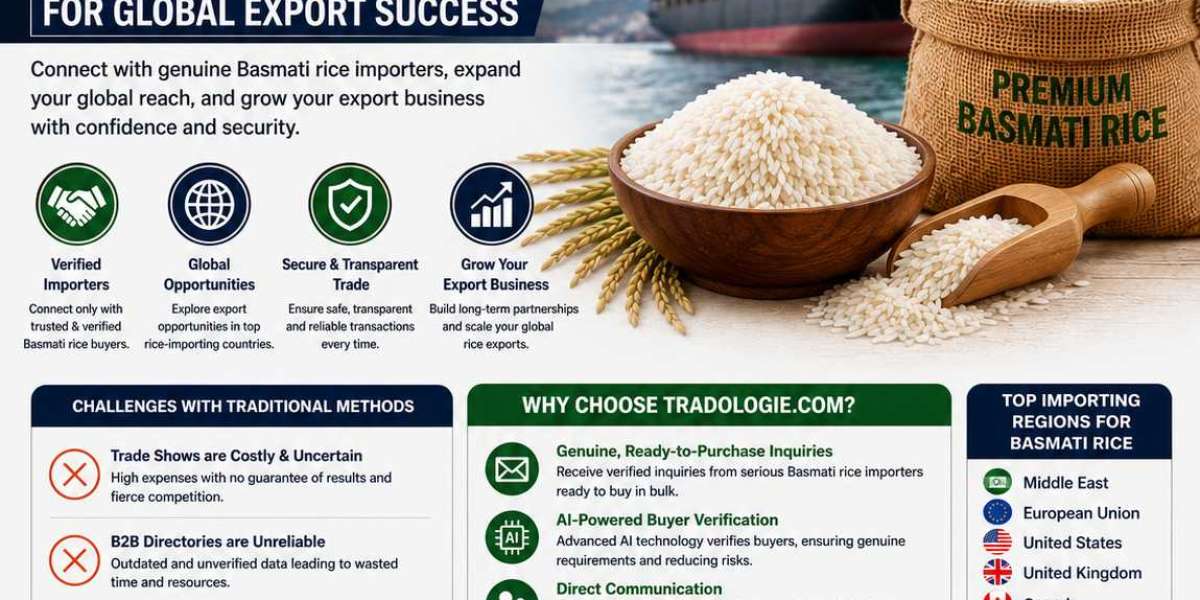

The global trade landscape for premium aromatic long-grain rice has reached an incredibly competitive, high-stakes milestone. Data from the Agricultural and Processed Food Products Export Development Authority (APEDA) shows that India’s annual Basmati rice export volumes have historically cleared the massive 6 million metric ton mark, generating annual trade revenues approaching USD 5.9 billion. For millers, processors, and agricultural entrepreneurs, the economic motivation is undeniable: international buyers pay a significant premium for aged, high-purity varieties like 1121 Pusa and Traditional Basmati.
However, scaling your mills or trading business beyond domestic distribution lines forces you to solve a persistent commercial puzzle: how do you safely and efficiently connect with Basmati Rice Importers without draining your capital or falling victim to transaction scams?
If you talk to veteran rice millers across Punjab, Haryana, or Uttar Pradesh, they will tell you that finding international basmati rice buyers is no longer the real challenge. The real battle lies in validating their financial stability, verifying their intent to purchase, and clearing structural bottlenecks without letting your export margins get eaten alive. In an industry defined by rigid entry regulations, shifting import tariffs, and volatile global maritime logistics, choosing your sourcing and lead-generation methodologies will dictate your survival.
Let's break down the traditional methods global agricultural suppliers use to discover basmati rice importers and analyze the commercial flaws, operational traps, and financial risks hidden inside each model.
1. The Traditional Lead Generation Models: A Strategic Reality Check
International Trade Shows and Food Expos
For decades, flying out to attend premier global food exhibitions—such as Gulfood in Dubai, the Saudi Food Show, or SIAL in Paris—was considered the ultimate rite of passage to encounter massive bulk buyers of Basmati Rice. Businesses spend fortunes designing custom exhibition stalls, printing promotional assets, and flying out sales delegations to secure international purchase orders.
- The Catch: Trade shows are profoundly expensive and time-consuming, requiring months of logistical planning and heavy upfront capital investments with absolutely no guarantee of concrete business results. You might hand out hundreds of premium product samples to foot-traffic visitors, but a vast majority of these contacts lead to dead ends. Furthermore, large institutional buyers at these events are frequently swamped by hundreds of competing millers, making it incredibly difficult to stand out unless you cut your pricing to razor-thin thresholds.
B2B Listing Portals and Static Directories
When global travel is too costly, the standard alternative is buying access to digital listing directories or registering on generic B2B yellow-page websites. These portals promise a database packed with thousands of global basmati rice importers sorted by geographic target zones like Saudi Arabia, Iraq, or the United States.
- The Catch: The structural authenticity of standard listing portals and open business directories is highly questionable. Most of these databases are populated with outdated, unverified, or completely inactive data scraped from historic custom records. You are handed a cold list of generic info emails and corporate landlines. To actually convert these raw leads into confirmed orders, your company is forced to maintain a large, expensive business development team dedicated entirely to making hundreds of cold calls daily, dealing with gatekeepers, and manually chasing down active decision-makers.
Commission-Based Middlemen and Traditional Brokers
Enlisting third-party brokers and local import-export agents remains a common path for millers trying to access tight culinary distribution rings across key destination corridors like the GCC or the EU. These brokers hold personal networks and promise to place your milling allocations directly into major supermarkets or canning lines.
- The Catch: Middlemen are notoriously expensive, demanding heavy upfront commissions or substantial percentage cuts on every container shipment. Beyond the clear erosion of your profit margins, traditional brokers are highly doubtful in terms of underlying trade transparency. They frequently obscure the true identities of the end-buyers to protect their commission loops. This lack of transparency leaves you completely exposed to commercial vulnerabilities, as you can never verify if you are getting a fair market price or if your products are being exposed to unnecessary counterparty risks during long transit ocean voyages.
2. Why Tradologie.com is Re-Engineering Online B2B Trade
As manual brokerage loops and archaic cold-calling practices collapse under the weight of overhead costs and transaction opacity, the global agricultural trade has shifted decisively toward digitized procurement infrastructure. Platforms like tradologie.com have emerged as the most authentic, technically secure, and efficient environments in today’s B2B online trade.
Instead of forcing agricultural sellers to buy unverified contact lists or hand over heavy commissions to third-party agents, Tradologie operates as a functional, real-time digital trade lane. The entire ecosystem is built to strip out transaction friction and put verified global basmati rice buyers directly in touch with high-yield origin millers.
Here is exactly how the platform works to secure your cross-border trade transactions:
- Genuine, Ready-to-Purchase Inquiries: Tradologie completely eliminates the time-wasting process of cold outreach. The platform provides global exporters with genuine, verified, and actively funded requirements from serious basmati rice importers who are ready to purchase concrete container volumes immediately.
- Direct Live Negotiation and Real-Time Price Discovery: You can engage with international buyers live one-to-one through dedicated digital trade rooms. The platform allows you to quote prices and negotiate complex trade deals dynamically. Because the platform features an open, reverse-bidding framework, you maintain complete clarity over competing bids without any interference or pricing manipulation by the platform.
- Artificial Intelligence Verification Mechanisms: To protect the platform's supply chain from fraudulent actors or shell companies, every single import requirement is deeply verified by the advanced Artificial Intelligence mechanism of Tradologie. The platform inspects the financial history, import licenses, and buying capacity of the participating corporate entities before allowing them to place order requests.
- End-to-End Dedicated Support Facilitation: You are never left to handle complex customs, logistics, or regulatory documentation alone. Exporters receive complete end-to-end export facilitation support through a dedicated trade manager who oversees the deal lifecycle, ensuring your cargo satisfies strict destination benchmarks like APEDA registration rules, Export Inspection Council (EIC) quality grades, and phytosanitary certificates.
- Absolute Payment Protection with Escrow Architecture: To eliminate credit risks and payment defaults, all financial clearing operates through institutional, protected transactional setups. Your incoming trade capital is secured through rock-solid international payment gateways, integrating Letter of Credit (L/C) structures and secure ESCROW payment frameworks that lock and protect your revenue until cargo tracking milestones are fully cleared.
3. Comparing Global Connection Methods: At a Glance
To visualize your operational alternatives clearly, this comparative matrix evaluates standard global lead-generation channels against modern digital trade infrastructure:
Method | Upfront Cost Structure | Conversion Speed | Pricing Transparency | Financial Security |
International Trade Shows | Very High (Travel, Stalls, Samples) | Very Slow (Months of follow-ups) | Low (Individual private quotes) | None (Requires independent credit checks) |
B2B Directories / Portals | Medium (Subscription fees) | Slow (Requires a large inside sales team) | Unclear (Prone to blind price wars) | Low (No built-in payment screening) |
Traditional Brokers | High (Heavy recurring commissions) | Variable (Dependent on broker relationships) | Very Poor (End-buyer hidden from seller) | Unpredictable (Prone to counterparty default) |
Tradologie.com | Highly Optimized | Instant (Direct match to live demands) | Absolute (Real-time live reverse bidding) | Exceptional (Institutional L/C ESCROW Architecture) |
4. Operational Milestones for Fulfilling Bulk Rice Contracts
Once you utilize an automated B2B network to securely connect with Basmati Rice Importers, executing the contract flawlessly requires matching strict global culinary and bio-security parameters. Bulk buyers often grade incoming cargo against intense technical indices:
- Grain Length Execution: Premium long-grain 1121 steam or sella varieties must hit a precise pre-cooked length baseline of 8.2mm or longer.
- Moisture Stabilization: Internal moisture levels must be meticulously maintained below 12% during processing and packaging. Managing this metric is vital to prevent mold growth inside sealed shipping containers during multi-week ocean transits across tropical maritime routes.
- Purity and Sorting Grades: Container allocations must verify a broken grain count of less than 5%, with zero tolerance for chalkiness, discoloration, or foreign agricultural matter.
By bypassing traditional, non-transparent intermediary channels and migrating your commercial export operations onto advanced digital trading pipelines, you completely eliminate transaction vulnerability. Utilizing a platform that combines AI-vetted demand verification with institutional financial protection enables your agri-enterprise to securely identify bulk buyers of Basmati Rice, insulate your underlying profit margins, and establish a highly profitable, scalable presence in the global agricultural trade.