
ROCKVILLE, MD, July 8, 2026 — The global Friction Stir Welding (FSW) Equipment Market is poised for sustained growth as manufacturers increasingly adopt solid-state welding technologies to meet the evolving requirements of electric vehicles, aerospace manufacturing, railway fabrication, and shipbuilding. According to the latest Fact.MR market analysis, the market is projected to expand from USD 296.7 million in 2026 to USD 578.2 million by 2036, registering a 6.9% CAGR during the forecast period.
The market surpassed USD 277.5 million in 2025, reflecting rising investments in advanced manufacturing technologies capable of delivering low-distortion, high-strength joints across aluminum-intensive applications. Unlike conventional fusion welding, friction stir welding produces defect-free joints without melting the parent material, making it increasingly attractive for industries where structural integrity, dimensional stability, and process repeatability are mission-critical.
As lightweight materials become central to next-generation transportation and industrial manufacturing, friction stir welding equipment is emerging as a strategic investment for manufacturers seeking higher productivity, improved weld quality, and lower lifecycle production costs.
Get detailed market forecasts, competitive benchmarking, and pricing trends: https://www.factmr.com/connectus/sample?flag=Srep_id=15498
Key Market Highlights at a Glance
- Market valuation reached USD 277.5 million in 2025.
- Market estimated at USD 296.7 million in 2026.
- Market projected to reach USD 578.2 million by 2036.
- Forecast CAGR: 6.9% (2026–2036).
- Absolute dollar opportunity: USD 281.5 million.
- Fixed FSW Equipment expected to account for 39% market share.
- Aerospace projected to generate 30% of global demand.
- Gantry Portal FSW Systems expected to capture 33% market share.
- Aluminum Alloys anticipated to represent 46% of material applications.
- North America projected to account for 32% of the global market in 2026.
- Argentina expected to record the fastest growth with 9.4% CAGR through 2036.
Why Is the Friction Stir Welding Equipment Market Growing?
Manufacturers across transportation and heavy industries are rapidly shifting toward lightweight materials that require advanced joining technologies capable of maintaining structural integrity while minimizing distortion. Friction stir welding has become one of the most reliable solid-state joining processes for aluminum structures, battery enclosures, cooling plates, railcar extrusions, aerospace fuselages, and marine panels.
Growing production of electric vehicles is significantly accelerating equipment demand, particularly for battery trays, cooling jackets, inverter housings, and structural battery enclosures where leak-free welds and dimensional accuracy are essential. Aerospace manufacturers are also increasing investments in qualified FSW production lines as they seek stronger and lighter aluminum assemblies capable of meeting stringent certification standards.
Rail manufacturers continue adopting long-travel gantry systems for joining large aluminum extrusions with minimal post-processing, while shipbuilders increasingly deploy heavy-duty FSW equipment for large marine structures requiring consistent weld quality across extended seam lengths.
According to Shambhu Nath Jha, Senior Analyst at Fact.MR,
"Commercial success depends on proving repeatable force control across each customer process window. Adoption is expected to favor equipment teams that shorten qualification without weakening traceability. Suppliers should combine rigid mechanics with process monitoring and application engineering."
Which Equipment Type Leads the Market?
Fixed Friction Stir Welding Equipment is expected to dominate the market by capturing 39% of total revenue in 2026.
These systems continue leading adoption because dedicated production environments require maximum structural rigidity, repeatable force control, and consistent weld quality across long production cycles. Fixed equipment is particularly preferred in aerospace manufacturing, automotive battery production, and railway fabrication where dimensional tolerances remain extremely tight.
Robotic FSW equipment is also gaining popularity as manufacturers increasingly require flexible joining solutions capable of welding complex three-dimensional geometries. Mobile systems continue serving large-scale industrial applications where transporting oversized workpieces is impractical.
Why Does Aerospace Continue Leading End-use Demand?
The aerospace industry is projected to account for 30% of global market demand during 2026.
Aircraft manufacturers increasingly rely on friction stir welding to produce lightweight aluminum structures with superior fatigue performance, reduced distortion, and exceptional structural reliability. Since aerospace qualification procedures demand highly repeatable production processes, manufacturers continue investing in advanced FSW systems equipped with integrated monitoring, force control, and digital traceability capabilities.
Automotive manufacturers represent the second-largest customer segment, particularly as electric vehicle production expands globally. Battery trays, cooling systems, inverter housings, and structural battery packs increasingly utilize friction stir welding because the process minimizes heat distortion while maintaining leak-tight joints.
Gantry Portal Systems Continue Dominating Installation Formats
Among installation formats, Gantry and Portal Friction Stir Welding Systems are expected to account for 33% of market share.
These systems provide exceptional reaction-force capacity, long travel distances, and high positional accuracy, making them ideal for aerospace panels, railway carriages, marine structures, and large automotive battery assemblies.
Growing adoption of industrial robotics is simultaneously expanding demand for robotic FSW cells capable of joining complex three-dimensional components. Manufacturers increasingly seek flexible automation platforms that integrate welding, inspection, material handling, and digital process monitoring within a single production environment.
luminum Alloys Remain the Primary Material Focus
Aluminum Alloys are expected to represent 46% of material applications throughout 2026.
The widespread adoption of aluminum across electric vehicles, aerospace structures, railway transportation, and lightweight industrial equipment continues driving equipment demand. Friction stir welding offers significant advantages over conventional fusion welding by eliminating solidification defects while producing stronger joints with lower residual stress.
Manufacturers are also expanding research into multi-material joining technologies, particularly for advanced mobility platforms requiring hybrid lightweight structures.
Market Dynamics
Market Drivers
Several structural trends continue supporting long-term market expansion.
Major growth drivers include:
- Rapid expansion of electric vehicle battery enclosure production.
- Growing aerospace lightweight manufacturing programs.
- Increasing deployment of robot-based welding cells.
- Rising railway aluminum fabrication projects.
- Expansion of commercial shipbuilding programs.
- Higher investments in automated joining technologies.
Market Restraints
Despite favorable market fundamentals, several challenges continue affecting equipment adoption.
Key restraints include:
- High capital investment requirements.
- Expensive machine stiffness and fixturing systems.
- Lengthy aerospace qualification procedures.
- Process-force limitations for robotic cells.
- Tool wear and specialized engineering requirements.
Emerging Market Trends
Manufacturers increasingly focus on:
- Multi-material joining technologies.
- Three-dimensional robotic welding systems.
- Mobile friction stir welding platforms.
- Inline process monitoring.
- Digital qualification software.
- Smart manufacturing integration.
- AI-enabled production analytics.
Regional Outlook
North America continues leading the global market due to strong aerospace manufacturing, electric vehicle investments, and advanced industrial automation programs.
Fastest-growing countries include:
- Argentina — 9.4% CAGR
- India — 9.1% CAGR
- China — 8.6% CAGR
- Brazil — 7.8% CAGR
- Japan — 7.4% CAGR
Argentina is expected to emerge as the fastest-growing market owing to increasing investments in electrified mobility and industrial modernization.
India continues strengthening domestic machine-building capabilities while rapidly expanding electric vehicle production and manufacturing localization initiatives.
China remains one of the world's largest markets for battery manufacturing and aluminum-intensive vehicle production, creating sustained demand for high-capacity friction stir welding systems.
Brazil's aerospace manufacturing sector and transport equipment industry continue creating opportunities for specialized joining technologies, while Japan benefits from advanced automotive engineering capabilities and precision manufacturing expertise.
Competitive Landscape
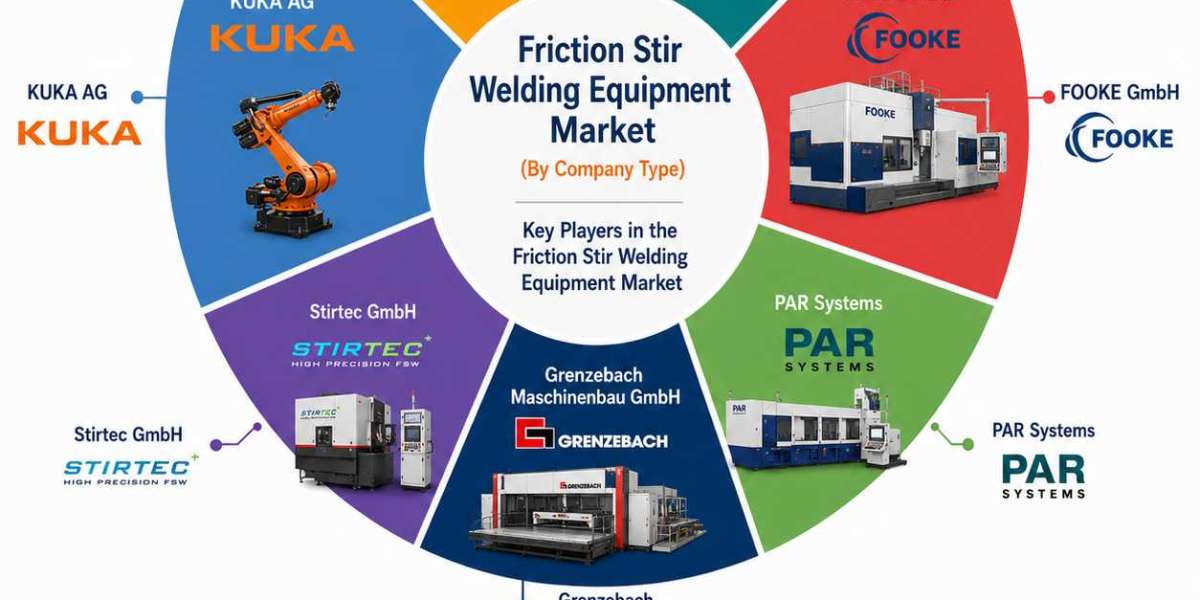
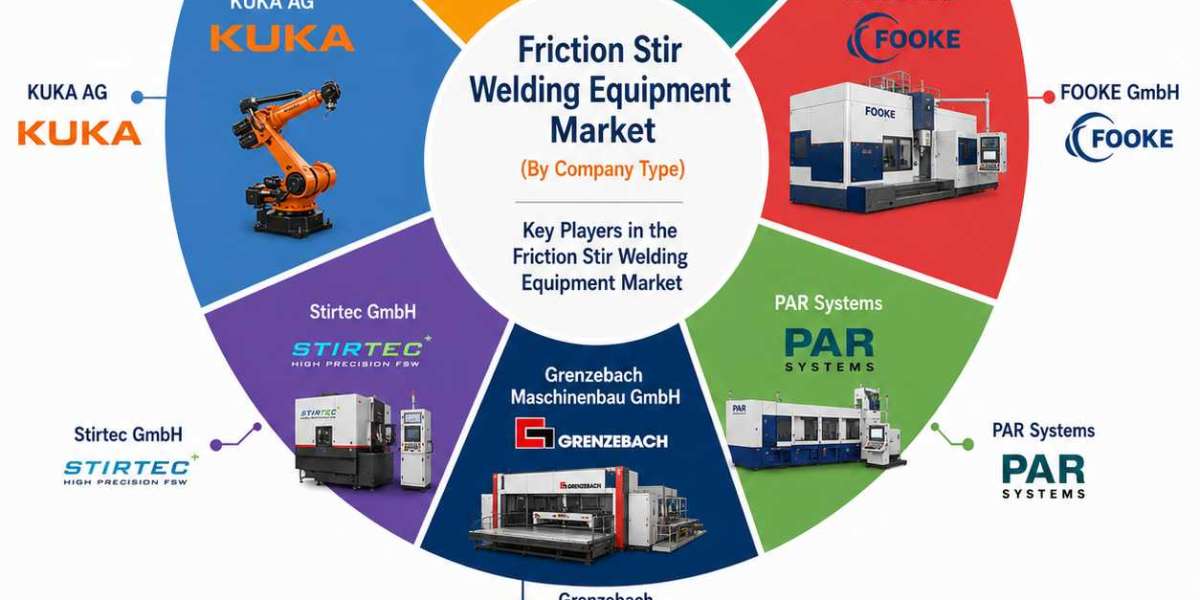
The Friction Stir Welding Equipment Market remains highly specialized, with manufacturers competing through force-control accuracy, automation integration, qualification expertise, and engineering support.
Key industry participants include:
- ETA Technology
- Yamazaki Mazak Corporation
- FOOKE GmbH
- PAR Systems
- Grenzebach Maschinenbau GmbH
- Stirtec GmbH
- KUKA AG
Companies are increasingly investing in robotic welding platforms, digital monitoring software, turnkey automation cells, and localized engineering services to strengthen customer relationships and accelerate production qualification.
A notable example includes KUKA's follow-up order for twelve additional friction stir welding cells supporting electric vehicle battery case production, highlighting growing demand for integrated robotic joining systems across automotive manufacturing.
Frequently Asked Questions
What will the Friction Stir Welding Equipment Market be worth by 2036?
The global Friction Stir Welding Equipment Market is projected to reach USD 578.2 million by 2036.
What CAGR is expected during the forecast period?
The market is forecast to register a 6.9% CAGR between 2026 and 2036.
Which equipment type dominates the market?
Fixed Friction Stir Welding Equipment is expected to account for 39% of market share in 2026.
Which end-use industry generates the highest demand?
The aerospace industry is projected to contribute 30% of global market demand.
Which material category leads equipment utilization?
Aluminum Alloys are expected to represent 46% of material applications.
Which region leads the global market?
North America is forecast to account for 32% of the global market in 2026.
Which country is expected to grow the fastest?
Argentina is projected to record the fastest growth with a 9.4% CAGR through 2036.
Explore More Related Studies Published by Fact.MR Research.
Calcium Bromide Market https://www.openpr.com/news/4494424/calcium-bromide-market-to-reach-usd-1-87-billion-by-2036-driven
Advanced Polymer Composites Market https://www.openpr.com/news/4494404/advanced-polymer-composites-market-to-reach-usd-19-60-billion
Musk Aroma Chemicals Market https://www.openpr.com/news/4496089/the-future-of-olfaction-how-macrocyclic-mastery-and-green
Thermal Management Materials Market https://www.openpr.com/news/4496102/thermal-management-materials-the-critical-infrastructure
About Fact.MR
Fact.MR is a leading market research and consulting firm providing actionable intelligence across global industries. Through extensive primary research, advanced forecasting methodologies, and in-depth competitive analysis, Fact.MR enables organizations to identify growth opportunities, evaluate market trends, and develop informed business strategies.