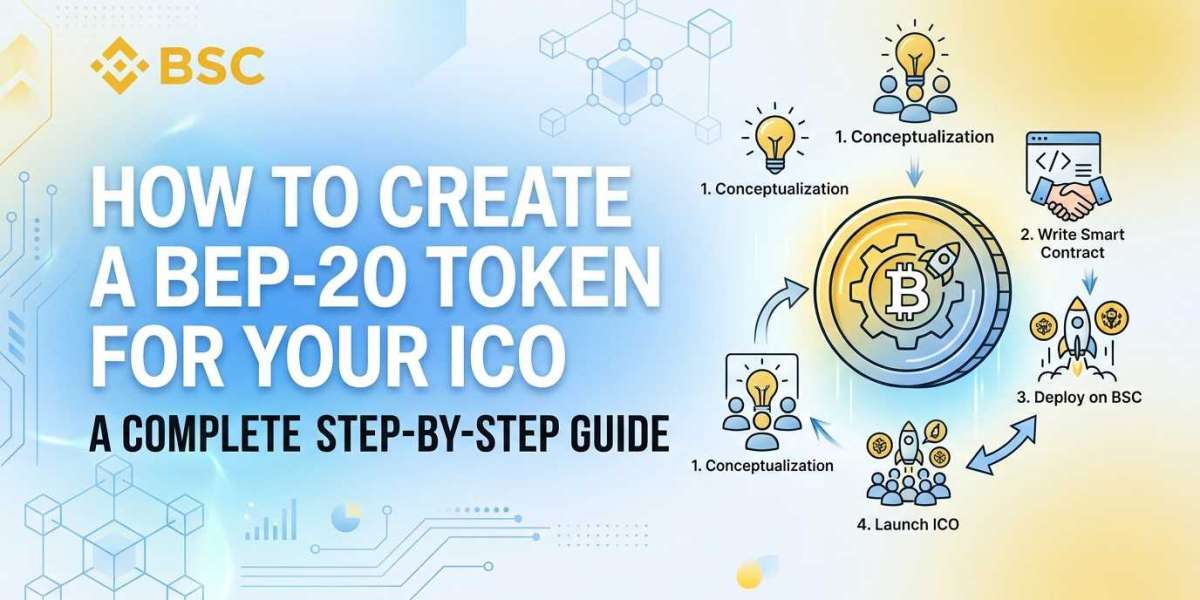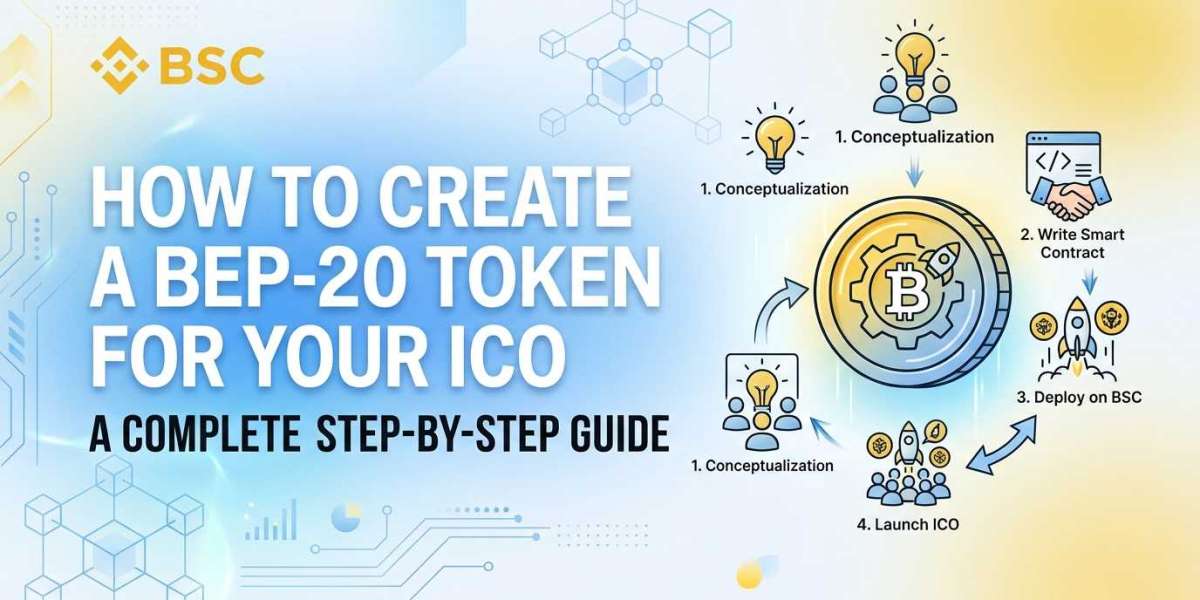

The blockchain fundraising landscape has evolved significantly over the past few years. While new fundraising models such as Initial DEX Offerings (IDOs), Initial Exchange Offerings (IEOs), and token launches through launchpads have gained popularity, Initial Coin Offerings (ICOs) continue to remain a viable option for blockchain startups seeking decentralized fundraising. One of the primary reasons is the accessibility of blockchain networks like Binance Smart Chain (BNB Smart Chain), which enables businesses to launch secure, scalable, and cost-effective tokens.
Among the various token standards available today, the BEP-20 token standard has become one of the most widely adopted for ICOs. Its low transaction fees, fast confirmation times, and compatibility with the Ethereum ecosystem make it an attractive choice for startups looking to raise capital without burdening investors with expensive gas fees.
However, creating a BEP-20 token involves much more than deploying a smart contract. Successful ICOs require careful planning around tokenomics, smart contract security, legal compliance, distribution models, liquidity, and investor confidence. A technically sound token combined with a strategic fundraising approach significantly improves the chances of long-term project success.
This comprehensive guide explains everything you need to know about creating a BEP-20 token for your ICO, from planning and development to deployment and post-launch management.
Understanding the BEP-20 Token Standard
BEP-20 is the fungible token standard developed for BNB Smart Chain (BSC). It defines a common framework that allows wallets, decentralized exchanges, staking platforms, and decentralized applications to recognize and interact with tokens consistently.
The standard was designed to be compatible with Ethereum's ERC-20 standard while providing significant improvements in transaction costs and processing speed.
A typical BEP-20 token includes functions such as:
- Token transfers
- Balance tracking
- Token approvals
- Spending allowances
- Minting and burning (optional)
- Ownership management
- Supply control
Because of its compatibility with Ethereum Virtual Machine (EVM), developers can easily migrate projects between Ethereum and BNB Smart Chain while using familiar Solidity programming tools.
Why Choose BEP-20 Tokens for an ICO?
Choosing the right blockchain can directly influence investor participation and fundraising success.
Lower Transaction Costs
Ethereum gas fees can fluctuate significantly during periods of network congestion. In contrast, BNB Smart Chain maintains considerably lower transaction costs, making token purchases more affordable for retail investors.
This encourages:
- Higher participation
- Smaller investment sizes
- Frequent transactions
- Better liquidity after listing
Faster Block Confirmation
BNB Smart Chain processes blocks much faster than many traditional blockchain networks.
Faster transactions improve:
- Investor experience
- Token claim processes
- Exchange deposits
- Staking participation
Quick settlement becomes particularly valuable during high-demand ICO events where thousands of transactions may occur within minutes.
Strong Exchange Support
Most major centralized and decentralized exchanges support BEP-20 assets.
Popular wallets including Trust Wallet, MetaMask, SafePal, and TokenPocket also provide native support, making onboarding easier for investors.
Mature DeFi Ecosystem
Projects launching on BNB Smart Chain can integrate with:
- Decentralized exchanges
- Yield farming protocols
- Liquidity pools
- Staking platforms
- Lending protocols
This ecosystem allows newly launched ICO tokens to gain utility shortly after fundraising concludes.
Step 1: Define Your ICO Tokenomics
Before writing a single line of smart contract code, define the economic model of your token.
Tokenomics determines how value flows throughout the ecosystem.
Important questions include:
- What is the total token supply?
- Will additional tokens ever be minted?
- What percentage goes to investors?
- How many tokens are reserved for the development team?
- Will advisors receive allocations?
- How much is reserved for ecosystem growth?
- What percentage funds marketing?
- How are staking rewards distributed?
A sample allocation might resemble:
| Allocation | Percentage |
|---|---|
| ICO Investors | 45% |
| Development | 20% |
| Treasury | 15% |
| Marketing | 10% |
| Advisors | 5% |
| Liquidity | 5% |
Proper vesting schedules prevent excessive token dumping after launch.
Many successful projects lock team tokens for one to four years while gradually releasing investor allocations according to predefined schedules.
Step 2: Set Up the Development Environment
Developers typically build BEP-20 smart contracts using Solidity.
Common development tools include:
- Remix IDE
- Hardhat
- Truffle
- Foundry
- Visual Studio Code
- OpenZeppelin Contracts
OpenZeppelin's audited contract libraries significantly reduce development risks because they provide standardized implementations for ownership, token functionality, access control, and security features.
Instead of writing every function from scratch, developers inherit audited modules and customize only project-specific functionality.
Step 3: Develop the BEP-20 Smart Contract
The smart contract defines how the token behaves.
Essential variables include:
- Token name
- Symbol
- Decimal precision
- Total supply
- Owner address
Beyond the standard BEP-20 functionality, many ICO tokens include advanced capabilities such as:
- Minting controls
- Token burning
- Pausable transfers
- Blacklist functionality (where legally appropriate)
- Vesting mechanisms
- Multi-signature administration
- Emergency pause functions
Projects should avoid unnecessary complexity. Every additional feature increases the attack surface for potential vulnerabilities.
Step 4: Test the Token Thoroughly
Testing is one of the most overlooked yet essential stages of token creation.
Before deploying on the mainnet, developers should use BNB Smart Chain testnets to validate every function.
Testing should cover:
- Transfers
- Approvals
- Ownership transfers
- Minting
- Burning
- ICO purchase process
- Token vesting
- Edge cases
- Error handling
- Gas optimization
Automated testing frameworks help simulate thousands of transactions to identify unexpected behavior before real funds are involved.
Step 5: Conduct a Smart Contract Security Audit
Security remains the single most important factor influencing investor trust.
Over the past several years, blockchain projects have collectively lost billions of dollars due to smart contract vulnerabilities, highlighting the importance of rigorous security practices across the industry.
A professional audit examines:
- Reentrancy risks
- Integer overflow
- Access control
- Authorization flaws
- Logic errors
- Token mint vulnerabilities
- Ownership exploits
- Front-running risks
Many institutional investors refuse to participate in token sales that lack independent security audits.
In addition to third-party audits, projects should conduct internal reviews and bug bounty programs before launch.
Step 6: Deploy the Token on BNB Smart Chain
Once testing is complete, the token can be deployed to the BNB Smart Chain mainnet.
Deployment requires:
- A funded wallet containing BNB
- Verified deployment scripts
- Smart contract compilation
- Deployment confirmation
- Contract verification
After deployment, developers should verify the contract source code on a blockchain explorer.
Verification increases transparency by allowing investors to inspect the contract and confirm that deployed code matches publicly available source files.
Step 7: Build the ICO Smart Contract
The BEP-20 token itself only represents the digital asset.
A separate ICO smart contract typically manages the fundraising process.
Key functions include:
- Accept investor payments
- Calculate token allocations
- Enforce minimum and maximum purchase limits
- Manage whitelist participation
- Apply bonus structures
- Handle hard cap and soft cap limits
- Distribute purchased tokens
- Process refunds if fundraising goals are not met
This contract should also undergo independent security auditing before launch.
Step 8: Prepare Investor Infrastructure
A successful ICO requires far more than a functional token.
Projects should prepare:
- Investor dashboard
- KYC integration (where required)
- Wallet connectivity
- Token purchase interface
- Vesting dashboard
- Claim portal
- FAQ section
- Documentation
Providing a seamless purchasing experience can significantly improve conversion rates during fundraising.
Step 9: Launch Marketing Before the ICO
Even technically outstanding projects struggle without visibility.
Marketing should begin several months before the ICO opens.
Effective crypto marketing strategies include:
- Content marketing
- Search engine optimization (SEO)
- Community management
- Social media campaigns
- PR distribution
- Influencer partnerships
- Email marketing
- AMA sessions
- Podcast interviews
- Referral programs
The objective is not simply generating website traffic but building credibility within the blockchain community.
Transparent communication regarding roadmap milestones, partnerships, audits, and token utility helps establish long-term investor confidence.
Professional crypto marketing agencies such as Blockchain App Factory assist blockchain startups by developing comprehensive marketing campaigns that combine SEO, community growth, PR, influencer outreach, paid advertising where permitted, and investor engagement strategies to maximize ICO visibility.
Step 10: Manage the ICO and Post-Launch Activities
Launching the ICO is only the beginning.
After fundraising concludes, projects must continue delivering value.
Key post-launch priorities include:
- Token distribution
- Exchange listings
- Liquidity provisioning
- Product development
- Community engagement
- Partnership announcements
- Governance implementation
- Ecosystem expansion
Regular progress updates help maintain investor confidence while demonstrating accountability.
Projects that disappear after fundraising often experience declining token prices and reduced community trust.
Conclusion
Creating a BEP-20 token for an ICO involves much more than deploying a smart contract on BNB Smart Chain. It requires strategic planning, carefully designed tokenomics, secure smart contract development, comprehensive testing, independent security audits, regulatory awareness, and a well-executed marketing strategy. Each stage contributes to building investor confidence and laying the foundation for a sustainable blockchain ecosystem. By following a structured development process and adhering to industry best practices, startups can significantly improve their chances of conducting a successful ICO and achieving long-term growth. For businesses seeking end-to-end support, Blockchain App Factory provides comprehensive BEP-20 token development, ICO development, smart contract auditing, tokenomics consulting, and crypto marketing solutions, helping blockchain projects launch securely, attract investors, and scale successfully in the competitive Web3 market.