
A government continuity-of-operations facility seals its underground command room during a scheduled lockdown drill. Staff dismiss the early symptoms — mild headaches, a bit of sluggishness — as fatigue from long shifts.
Six hours later, response times to simple radio queries have visibly slowed. Nobody flagged it earlier because nothing looked obviously wrong. That's the problem with CO2 buildup — it rarely announces itself.
This is exactly why recognizing the early signs matters as much as the engineering itself. A CO2 removal system exists to solve a problem that's often dismissed as something else entirely, right up until it isn't.
Why CO2 Buildup Gets Misread as Something Else
Sealed rooms — bunkers, command centres, shelters — accumulate CO2 as a direct, unavoidable result of occupancy. Positive-pressure NBC filtration keeps external contamination out, but it does nothing to address what occupants exhale continuously into a fixed volume of air.
The symptoms of elevated CO2 mimic ordinary tiredness closely enough that they're frequently misattributed — to long shifts, stress, or poor sleep — rather than recognized as an atmospheric problem with a specific, fixable cause.
Sign One: Headaches With No Obvious Trigger
Mild to moderate headaches appearing several hours into a sealed occupancy period, without any other clear cause, are one of the earliest indicators of rising CO2 concentration.
This symptom often appears first in poorly ventilated corners or seating areas — exactly where airflow dead zones tend to form in sealed rooms.
Sign Two: Difficulty Concentrating or Slower Response Times
Cognitive performance is sensitive to even moderate CO2 elevation, well before concentrations reach physiologically dangerous levels. Staff in command or monitoring roles may notice they're re-reading instructions, missing details, or responding more slowly than usual.
In any environment where decision-making matters — military command posts, emergency operation centres, government facilities — this is a meaningful warning sign, not a minor inconvenience.
Why This Sign Gets Overlooked in Long-Duration Occupancy
Because cognitive slowing develops gradually, occupants often adjust without realizing performance has degraded. There's no single moment that feels alarming — just a steady drift that's easy to rationalize as ordinary fatigue.
Sign Three: Stuffiness or "Heavy" Air Despite Working Filtration
If a sealed room feels stale or heavy even though NBC filtration is operating normally, that's a strong indicator the issue is internal CO2 buildup rather than external air quality. Filtration and CO2 scrubbing solve different problems, and one running well doesn't compensate for the other being absent.
Sign Four: Symptoms Cluster in Specific Areas of the Room
If headaches or fatigue consistently affect occupants in one section of a room rather than evenly throughout, that points to an airflow dead zone — a pocket where CO2 accumulates faster than the central monitoring point reflects.
This is a sign that recirculation engineering, not just overall scrubbing capacity, needs review.
Sign Five: Symptoms Worsen as Occupancy or Duration Increases
If a room handles short occupancy fine but symptoms emerge reliably during longer sheltering events or higher headcounts, that's a direct signal that existing capacity — whether ventilation or scrubbing — isn't matched to realistic worst-case use.
This is common in CO2 scrubber for bunker applications originally sized for shorter drills than actual operational requirements demand.
What These Signs Mean for System Selection
Recognizing these signs early lets you size a solution correctly rather than reactively. Key considerations include:
- Actual occupancy and duration, not original design assumptions
- Room volume and air change calculations against real headcount
- Integration with existing pressurization and filtration systems
- Power availability for continuous scrubbing operation
How CO2 Scrubbing Technology Resolves These Signs
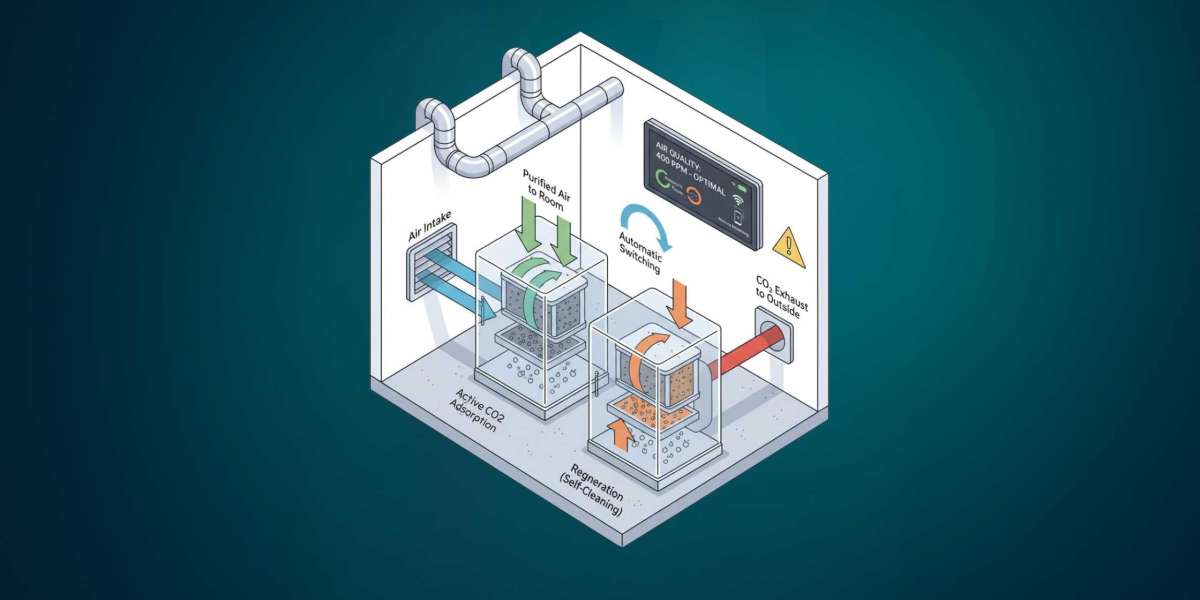
A properly specified CO2 scrubber addresses the underlying cause directly, using chemical absorption, regenerative cycling, or molecular sieve technology depending on occupancy duration and resupply logistics.
Pairing this with real-time monitoring and conservative alarm thresholds catches buildup before symptoms reach the staff — turning a reactive problem into a managed one.
Key Features Worth Prioritizing
- Real-time CO2 monitoring with reliable alarm thresholds
- Absorption media sized to genuine occupancy and duration
- Compatibility with existing NBC filtration and pressurization
- Low power consumption with backup power continuity
- Compact, corrosion-resistant construction suited to long-term sealed use
Where These Signs Show Up Most Often
This pattern recurs across military bunkers, NBC-protected command centres, civil defence shelters, CO2 scrubber industrial facilities, sealed data centres, and government continuity-of-operations rooms — any space where occupancy duration regularly exceeds initial planning assumptions.
Choosing the Right Fix, Not Just Any Fix
Once these signs are recognized, selection should weigh occupancy-based generation rates, integration requirements, and lifecycle reliability — not just upfront CO2 scrubber price.
Evaluate suppliers with demonstrated life-support engineering experience, documented testing procedures, and genuine customization capability for your specific room and occupancy profile.
Facilities recognizing these warning signs should look closely at the CO2 Removal System category before symptoms become a recurring operational problem rather than an occasional one.
Mistakes That Let These Signs Go Unaddressed
- Attributing symptoms to fatigue or stress instead of investigating air quality
- Assuming functioning filtration means air quality overall is fine
- Ignoring localized symptom clusters that point to airflow dead zones
- Sizing systems for drills rather than realistic worst-case occupancy
- Delaying monitoring upgrades until after a noticeable incident
Final Word
The signs of CO2 buildup are subtle by nature, which is exactly why they're so often missed until performance — or safety — is already compromised. Recognizing headaches, slowed cognition, stuffiness, and symptom clustering for what they actually are is the first step toward correcting the problem.
A correctly sized CO2 removal system turns these warning signs into a non-issue, keeping occupants alert and capable for the full duration of sealed operation — exactly when that capability matters most.