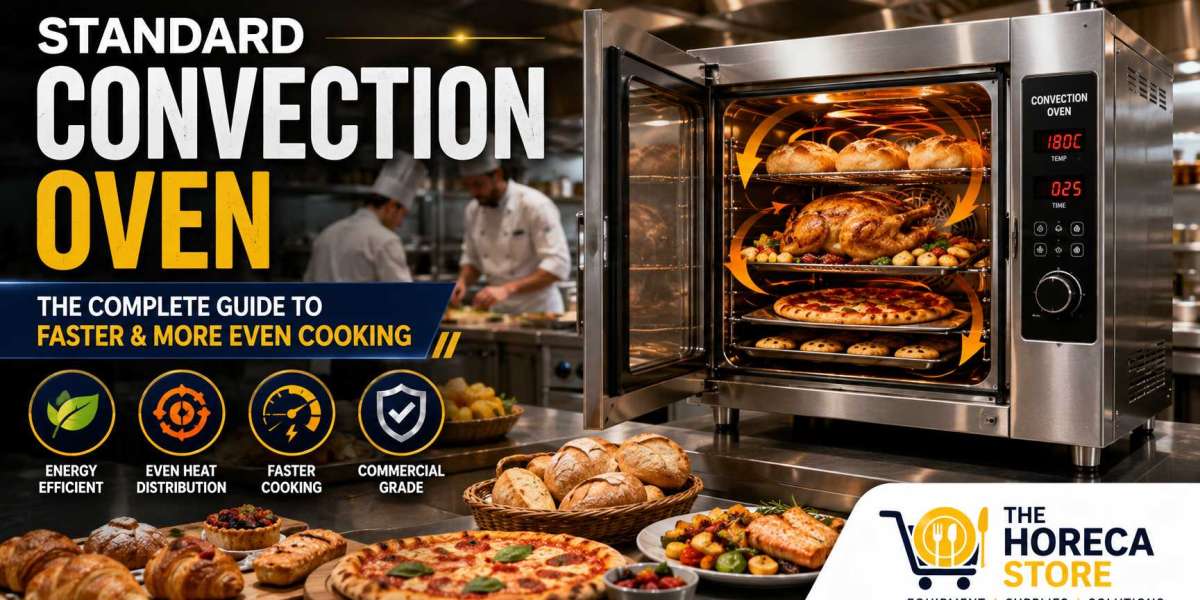

Whether you're running a busy restaurant, managing a bakery, operating a café, or simply upgrading your home kitchen, choosing the right oven is one of the most important decisions you'll make. A standard convection oven is one of the most versatile and efficient cooking appliances available today. It combines consistent heat distribution, faster cooking times, and excellent baking performance, making it a preferred choice for both professional chefs and home cooks.
Unlike conventional ovens that rely on natural heat circulation, a standard convection oven uses a built-in fan to circulate hot air evenly throughout the cooking chamber. This technology ensures food cooks more uniformly, develops better texture, and often requires less cooking time. Whether you're roasting meats, baking cookies, cooking pizzas, or preparing casseroles, a convection oven can significantly improve cooking efficiency and food quality.
This guide explains everything you need to know about standard convection ovens, including how they work, their benefits, features, buying tips, maintenance, and why they have become a must-have appliance in modern kitchens.
What Is a Standard Convection Oven?
A standard convection oven is an oven equipped with a fan and exhaust system that continuously circulates hot air during cooking. Unlike a traditional oven, where heat naturally rises and can create hot and cold spots, a convection oven distributes heat evenly throughout the entire cooking cavity.
This continuous airflow allows food to cook more efficiently by surrounding it with consistent heat from every direction. As a result, dishes cook faster, brown more evenly, and retain better texture.
Standard convection ovens are widely used in:
Restaurants
Bakeries
Cafés
Hotels
Catering businesses
School cafeterias
Home kitchens
Their versatility makes them suitable for everything from delicate pastries to roasted meats and baked vegetables.
How Does a Standard Convection Oven Work?
The main difference between a standard convection oven and a conventional oven is the fan.
A heating element generates heat while the built-in fan circulates the hot air evenly throughout the cooking chamber. This moving air eliminates temperature variations and ensures every rack receives nearly the same amount of heat.
Because the hot air continuously surrounds the food, moisture evaporates more quickly from the surface, creating crispy exteriors while keeping the inside moist and tender.
This efficient airflow also reduces cooking times by approximately 20–30% compared to standard ovens.
Benefits of Using a Standard Convection Oven
Faster Cooking Times
One of the biggest advantages of a standard convection oven is speed.
Because hot air constantly circulates around the food, meals cook faster than they do in conventional ovens. Most recipes require reducing either the cooking time or the oven temperature by about 25°F (15°C).
For commercial kitchens, this means serving customers more quickly and increasing overall productivity.
Even Heat Distribution
Traditional ovens often develop hot and cold spots, requiring trays to be rotated during cooking.
A convection oven eliminates this issue by distributing heat evenly across every shelf.
This consistency is especially important for bakeries and restaurants preparing multiple trays of food simultaneously.
Better Browning and Crisping
The moving hot air helps remove excess moisture from the food's surface.
This creates:
Crispy roasted vegetables
Golden pastries
Evenly baked cookies
Perfectly browned chicken
Crisp pizza crusts
Foods cooked in a convection oven often develop better texture and appearance.
Energy Efficiency
Since convection ovens cook food faster and at slightly lower temperatures, they generally consume less energy than conventional ovens.
Restaurants and commercial kitchens operating throughout the day can benefit from lower energy costs over time.
Improved Productivity
Commercial kitchens rely on speed and consistency.
Convection ovens allow chefs to cook multiple dishes at once without worrying about uneven temperatures, making them ideal for busy foodservice operations.
Best Foods to Cook in a Standard Convection Oven
A standard convection oven performs exceptionally well with many types of food.
These include:
Roasted chicken
Turkey
Beef
Pork
Pizza
Cookies
Pastries
Bread
Vegetables
Frozen foods
French fries
Seafood
Casseroles
However, delicate recipes like soufflés, custards, and certain sponge cakes may perform better in a conventional oven because they require gentler airflow.
Standard Convection Oven vs Conventional Oven
Understanding the differences between these oven types helps you choose the right appliance.
| Feature | Standard Convection Oven | Conventional Oven |
|---|---|---|
| Heat Distribution | Fan-assisted | Natural airflow |
| Cooking Speed | Faster | Slower |
| Temperature Consistency | Excellent | Moderate |
| Multi-Rack Cooking | Excellent | Limited |
| Browning | Superior | Good |
| Energy Efficiency | Higher | Moderate |
| Commercial Use | Highly Recommended | Limited |
For most commercial kitchens, convection ovens provide superior overall performance.
Key Features to Look for When Buying a Standard Convection Oven
Choosing the right oven depends on your cooking requirements.
Important features include:
Capacity
Select an oven large enough to handle your expected cooking volume.
Commercial kitchens often require multiple racks for batch cooking.
Temperature Controls
Digital temperature controls provide greater precision and help maintain consistent cooking results.
Multiple Cooking Modes
Many modern convection ovens include:
Bake mode
Roast mode
Broil mode
Convection bake
Convection roast
These settings improve cooking flexibility.
Interior Lighting
Bright interior lighting allows chefs to monitor food without opening the oven door and losing heat.
Easy Cleaning
Choose models with removable racks and smooth stainless steel interiors for easier maintenance.
Tips for Using a Standard Convection Oven
To achieve the best cooking results:
Lower cooking temperatures by about 25°F (15°C).
Check food earlier than traditional recipes recommend.
Leave space between trays to allow proper airflow.
Use shallow baking pans whenever possible.
Avoid overcrowding the oven.
Follow manufacturer cooking recommendations.
These simple adjustments maximize the advantages of convection cooking.
Maintenance Tips
Routine maintenance helps extend the life of your oven.
Recommended practices include:
Clean interior surfaces regularly.
Remove grease after each use.
Inspect door seals.
Clean oven racks.
Check the fan for proper operation.
Follow manufacturer maintenance instructions.
Keeping the oven clean improves efficiency and ensures consistent cooking performance.
Frequently Asked Questions
What is a standard convection oven?
A standard convection oven is an oven equipped with a fan that circulates hot air throughout the cooking chamber, allowing food to cook faster and more evenly than in a conventional oven.
Is a convection oven better than a conventional oven?
For roasting, baking multiple trays, and commercial cooking, yes. Convection ovens offer better heat distribution, faster cooking times, and improved browning.
Can I use regular recipes in a convection oven?
Yes. Most recipes work well with slight adjustments. Lower the temperature by about 25°F (15°C) or reduce the cooking time by approximately 20–30%.
Are convection ovens good for baking?
Absolutely. They produce evenly baked cookies, pastries, breads, and pizzas. However, delicate cakes and soufflés may perform better in a conventional oven.
Final Thoughts
A standard convection oven is an excellent investment for anyone looking to improve cooking efficiency, consistency, and food quality. Its fan-assisted airflow technology ensures even heat distribution, faster cooking times, and beautifully browned results, making it ideal for both commercial kitchens and home use.
The Horeca Store whether you're operating a restaurant, bakery, hotel, café, or simply preparing meals for your family, a standard convection oven offers the versatility needed to cook a wide variety of dishes with professional results. By considering factors such as capacity, cooking features, energy efficiency, and ease of maintenance, you can select the right model for your needs and enjoy reliable performance for years to come. Investing in a quality convection oven not only enhances your cooking experience but also helps save time, reduce energy consumption, and deliver consistently delicious meals.