
Starting yoga can feel overwhelming when you're unsure which poses are safe and effective for beginners. The good news is that you don't need advanced flexibility or strength to begin. You may strengthen your muscles, improve your posture, increase flexibility, and lessen daily stress by learning a few basic yoga positions. Whether you're practicing at home or joining your first class, the best beginner yoga poses provide a strong foundation for a lifelong yoga journey. With consistent practice, you'll build balance, body awareness, and confidence while developing healthy movement habits. In this guide, you'll discover the best easy yoga poses for beginners, learn their benefits, follow step-by-step instructions, and explore important safety tips to practice with confidence.
Why Should Beginners Practice Yoga?
Yoga is much more than stretching. A regular beginner yoga practice improves both physical and mental health while helping you develop better posture, breathing, and balance.
Physical Benefits
- Improves flexibility
- Strengthens muscles
- Enhances posture
- Increases balance
- Supports joint mobility
- Boosts overall fitness
Mental Benefits
- Reduces stress
- Improves focus
- Encourages mindfulness
- Promotes better sleep
- Increases self-confidence
Daily Health Benefits
Practicing daily yoga for beginners can also help:
- Reduce stiffness after long hours of sitting
- Improve energy levels
- Relieve muscle tension
- Support healthy breathing
- Increase body awareness
Tips Before Starting Beginner Yoga
Before beginning your beginner yoga routine, keep these simple tips in mind.
- Wear comfortable clothing.
- Practice on a non-slip yoga mat.
- Start slowly without forcing any stretch.
- Focus on breathing naturally.
- Listen to your body.
- Stay hydrated.
- Practice consistently rather than intensely.
These beginner yoga tips will help reduce the risk of injury while making your practice enjoyable.
Best Beginner Yoga Poses
The following basic yoga poses are ideal for anyone starting yoga for the first time.
1. Mountain Pose (Tadasana)
Mountain Pose teaches good alignment of the body and posture.
Benefits
- Improves posture
- Builds body awareness
- Strengthens legs
- Enhances balance
How to Do It
- Place your feet hip-width apart or together.
- Keep your spine straight.
- Relax your shoulders.
- Allow your arms to naturally rest next to your body.
- Take slow, deep breaths.
- Hold for 30–60 seconds.
2. Child's Pose (Balasana)
One of the easiest simple yoga poses for beginners, Child's Pose helps the body relax while gently stretching the back.
Benefits
- Relieves stress
- Stretches the hips
- Reduces lower back tension
- Encourages deep breathing
Steps
- Kneel on the mat.
- Sit back on your heels.
- Stretch your arms forward.
- Rest your forehead on the floor.
- Breathe slowly for one minute.
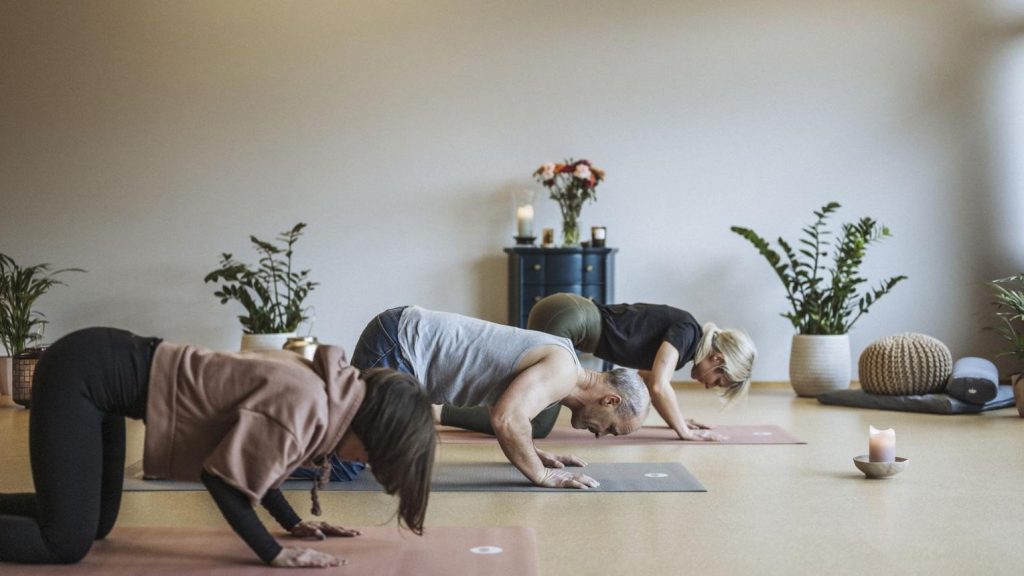
3. Cat-Cow Pose
This gentle movement is one of the best beginner yoga stretches for warming up the spine.
Benefits
- Improves spinal flexibility
- Reduces back stiffness
- Warms up the body
- Improves posture
How to Practice
- Start on hands and knees.
- Inhale while lifting your chest and tailbone (Cow Pose).
- Exhale while rounding your back (Cat Pose).
- Repeat slowly for 8–10 breaths.
4. Downward-Facing Dog
This is one of the most recognized yoga poses for beginners because it stretches almost every major muscle group.
Benefits
- Strengthens arms and shoulders
- Improves flexibility
- Lengthens the spine
- Stretches the hamstrings
Steps
- Start on hands and knees.
- Lift your hips toward the ceiling.
- Keep your arms and legs straight without locking the knees.
- Press your heels gently toward the floor.
- Hold for 20–30 seconds.
5. Tree Pose
Tree Pose is an excellent beginner yoga balance pose that improves stability and concentration.
Benefits
- Improves balance
- Strengthens the legs
- Enhances focus
- Builds confidence
Steps
- Stand tall.
- Put one foot on the inner thigh or calf on the other side.
- Bring your palms together at your chest.
- Focus on a fixed point.
- Hold for 20–30 seconds before switching sides.
Beginner Yoga Routine
If you're unsure where to begin, follow this simple beginner yoga sequence.
| Pose | Time |
| Mountain Pose | 1 Minute |
| Cat-Cow Pose | 1 Minute |
| Child's Pose | 1 Minute |
| Downward Dog | 30 Seconds |
| Tree Pose | 30 Seconds Each Side |
| Relaxation | 2 Minutes |
This short morning yoga for beginners routine takes less than 10 minutes and is perfect for building consistency.
Common Mistakes Beginners Should Avoid
Many people make small mistakes when starting yoga. Avoid these habits for a safer and more enjoyable experience.
- Holding your breath during poses
- Comparing yourself with others
- Forcing deep stretches
- Skipping the warm-up
- Practicing without proper alignment
- Rushing through movements instead of moving mindfully
By focusing on correct form rather than perfection, you'll progress steadily and reduce the risk of injury.
Standing Yoga Poses for Beginners
Standing poses help build a strong foundation by improving balance, posture, and lower-body strength. These standing yoga poses for beginners are easy to learn and can be included in any beginner yoga workout.
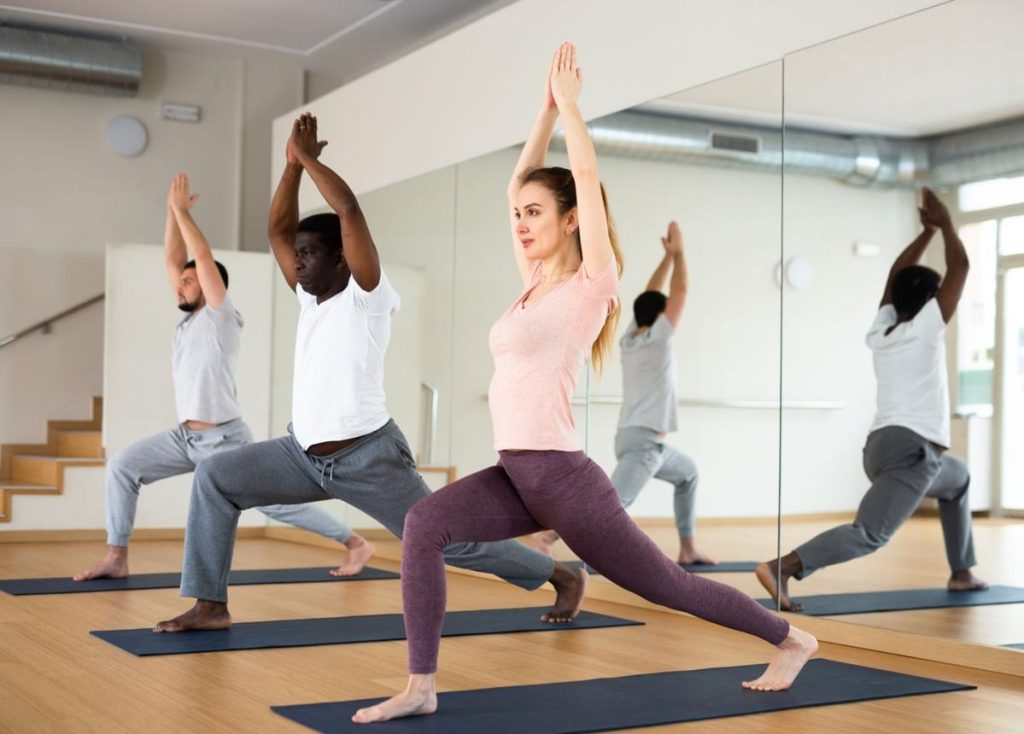
Warrior I (Virabhadrasana I)
Warrior I strengthens the legs while opening the hips and chest.
Benefits
- Strengthens the legs and core
- Improves balance
- Opens the hips and shoulders
- Builds endurance
How to Do It
- Step one foot back into a lunge.
- Bend the front knee to about 90 degrees.
- Keep the back leg straight.
- Raise both arms overhead.
- Hold for 20-30 seconds, then switch sides.
Triangle Pose (Trikonasana)
Triangle Pose is one of the best yoga poses for flexibility because it stretches the legs, hips, and sides of the body.
Benefits
- Improves hamstring flexibility
- Strengthens the legs
- Opens the hips
- Enhances spinal mobility
Steps
- Stand with your feet wide apart.
- Turn one foot outward.
- Extend your arms to shoulder height.
- Reach forward and lower one hand toward your shin or ankle.
- Extend the opposite arm toward the ceiling.
- Hold for 20-30 seconds before changing sides.
Seated Yoga Poses for Beginners
Seated yoga poses for beginners are excellent for cooling down while improving flexibility and relaxation.
Easy Pose (Sukhasana)
Easy Pose is commonly used for meditation and breathing exercises.
Benefits
- Encourages good posture
- Promotes relaxation
- Improves concentration
- Supports mindful breathing
Steps
- Sit cross-legged comfortably.
- Keep your spine tall.
- Rest your hands on your knees.
- Breathe slowly for one to three minutes.
Seated Forward Fold (Paschimottanasana)
This pose gently stretches the entire back of the body.
Benefits
- Improves hamstring flexibility
- Relieves tension
- Calms the mind
- Supports better posture
How to Practice
- Sit with your legs extended.
- Keep your back straight.
- Hinge forward from the hips.
- Reach toward your feet without forcing the stretch.
- Hold for 20–30 seconds.
Yoga for Beginners at Home
One of the biggest advantages of yoga is that it requires very little equipment. A quiet room, a yoga mat, and a few minutes each day are enough to begin.
To build a successful yoga routine for beginners at home:
- Practice at the same time every day.
- Choose a quiet, distraction-free space.
- Wear comfortable clothing.
- Start with a 10-15 minute session.
- Focus on quality rather than quantity.
Consistency is more important than long workouts. Even a short beginner yoga flow can produce noticeable improvements over time.
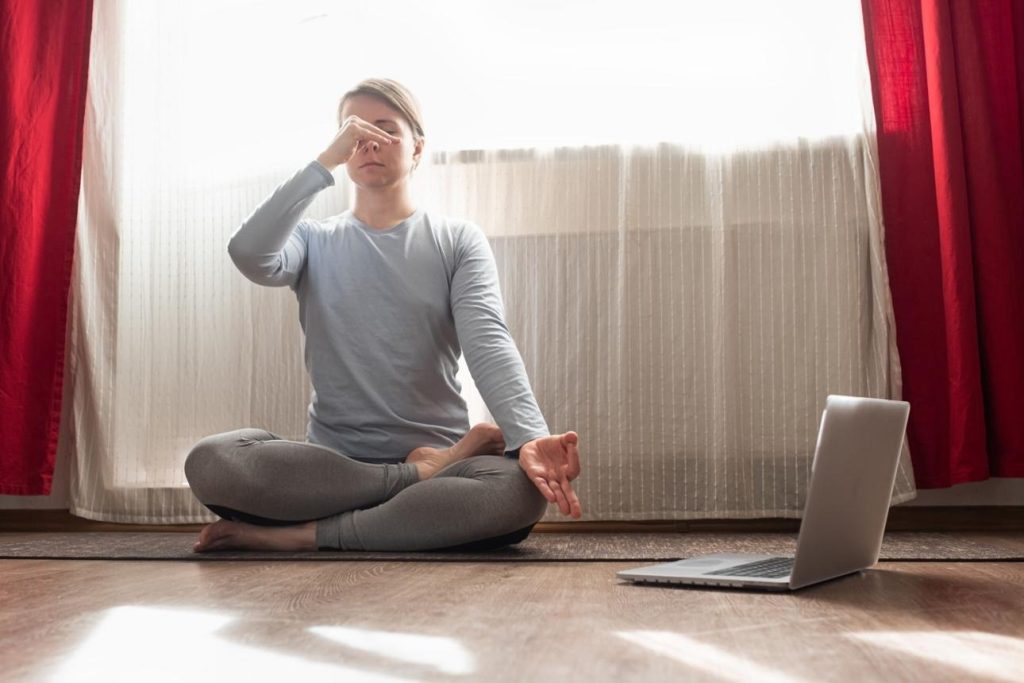
Beginner Yoga Breathing Techniques
Breathing is an essential part of yoga. Proper breathing improves focus, supports movement, and helps relax the nervous system.
Diaphragmatic Breathing
Also called belly breathing, this technique encourages slow, deep breaths.
Steps
- Sit comfortably.
- Place one hand on your abdomen.
- Inhale deeply through your nose.
- Feel your belly expand.
- Exhale slowly through your nose.
Equal Breathing (Sama Vritti)
Inhale for a count of four and exhale for a count of four. This simple technique is ideal for yoga for complete beginners because it helps create a steady breathing rhythm.
Yoga Poses for Strength and Flexibility
As your confidence grows, you can gradually combine different poses into a complete beginner yoga sequence.
Poses for Strength
- Warrior I
- Downward-Facing Dog
- Tree Pose
- Mountain Pose
Poses for Flexibility
- Child's Pose
- Cat-Cow Pose
- Triangle Pose
- Seated Forward Fold
Alternating strength and stretching exercises creates a balanced practice that supports long-term progress.
Safety Tips for Beginner Yoga
Following a few safety guidelines can make your yoga journey enjoyable and injury-free.
- Warm up before practicing.
- Never force a stretch.
- Move slowly between poses.
- Maintain steady breathing.
- Use yoga blocks or straps if needed.
- Stop immediately if you feel sharp pain.
- Stay hydrated.
- Rest in Child's Pose whenever necessary.
Remember that yoga is about steady progress, not perfection. Listening to your body is the best way to practice safely.

Conclusion
Learning beginner yoga poses is the perfect way to start a healthier and more active lifestyle. By practicing simple poses such as Mountain Pose, Child's Pose, Cat-Cow, Downward-Facing Dog, and Tree Pose, you'll gradually improve flexibility, balance, strength, and overall well-being.
Whether you follow a beginner yoga routine at home or attend a class, consistency is the key to success. Focus on proper alignment, breathe mindfully, and progress at your own pace. Over time, these yoga poses for beginners will help you build confidence while creating a strong foundation for more advanced yoga practices.
FAQs
1. What are the best beginner yoga poses?
The best beginner yoga poses include Mountain Pose, Child's Pose, Cat-Cow Pose, Downward-Facing Dog, Tree Pose, Warrior I, and Triangle Pose because they are easy to learn and provide a full-body workout.
2. How often should beginners practice yoga?
Most beginners can practice yoga 3–5 times per week. Even a 10–15-minute daily session can improve flexibility, strength, posture, and overall fitness.
3. Can I do yoga at home as a beginner?
Yes. Yoga for beginners at home is an excellent option. All you need is a comfortable space, a yoga mat, and a simple routine to practice consistently.
4. How long should I hold beginner yoga poses?
Most basic yoga poses can be held for 20–60 seconds, depending on your comfort level and breathing.
5. Is yoga suitable for complete beginners?
Absolutely. Yoga for complete beginners focuses on gentle movements, proper breathing, and simple poses that can be modified to suit different fitness levels.