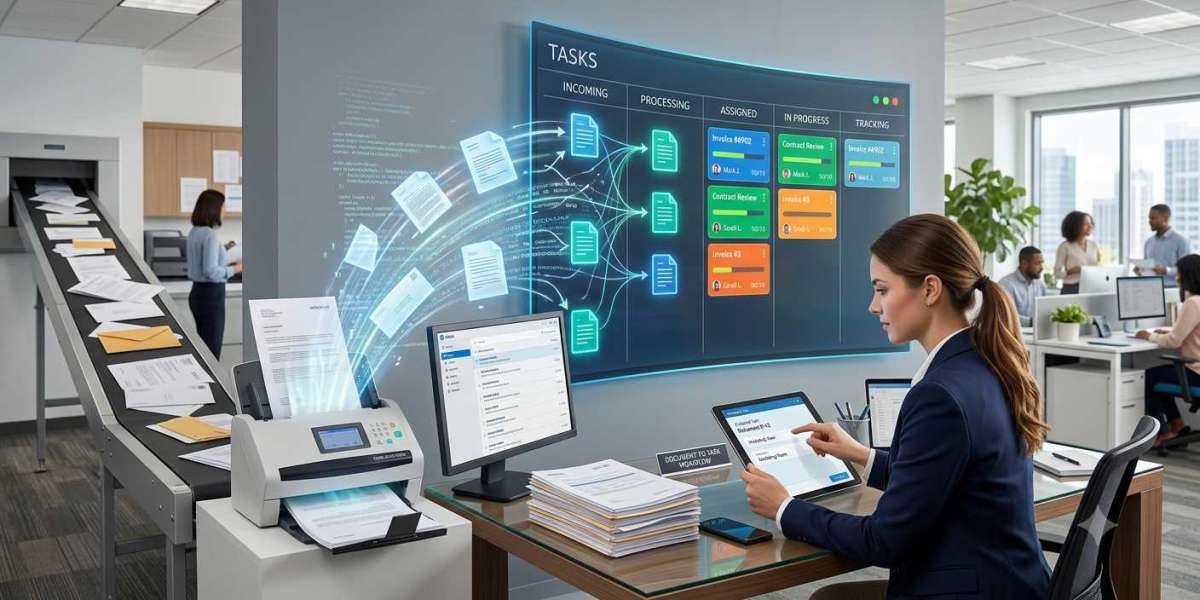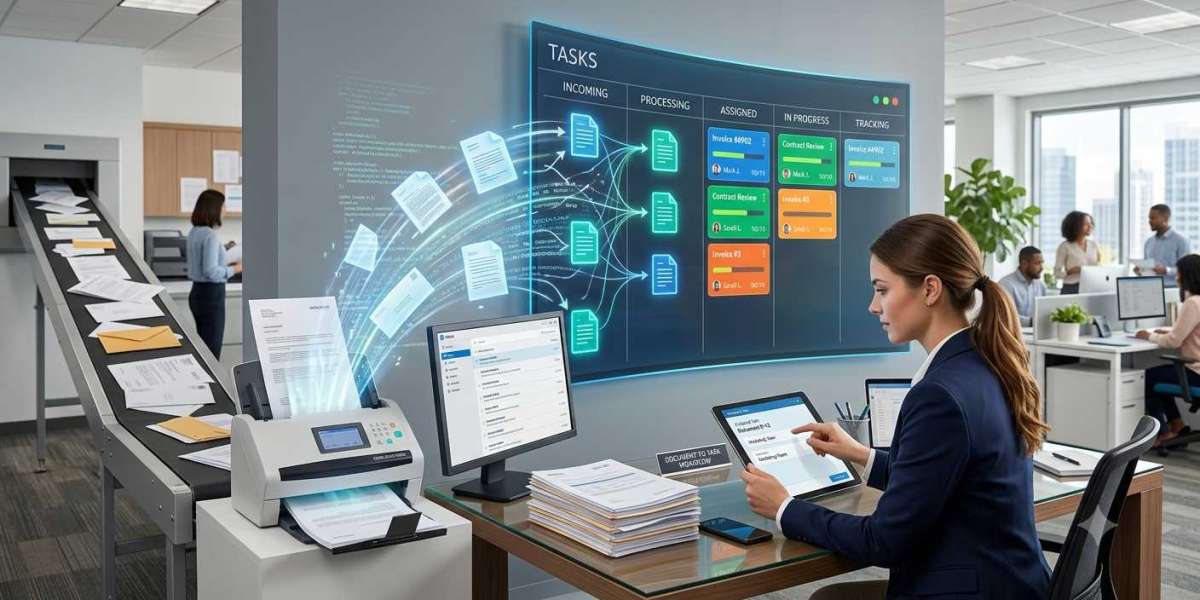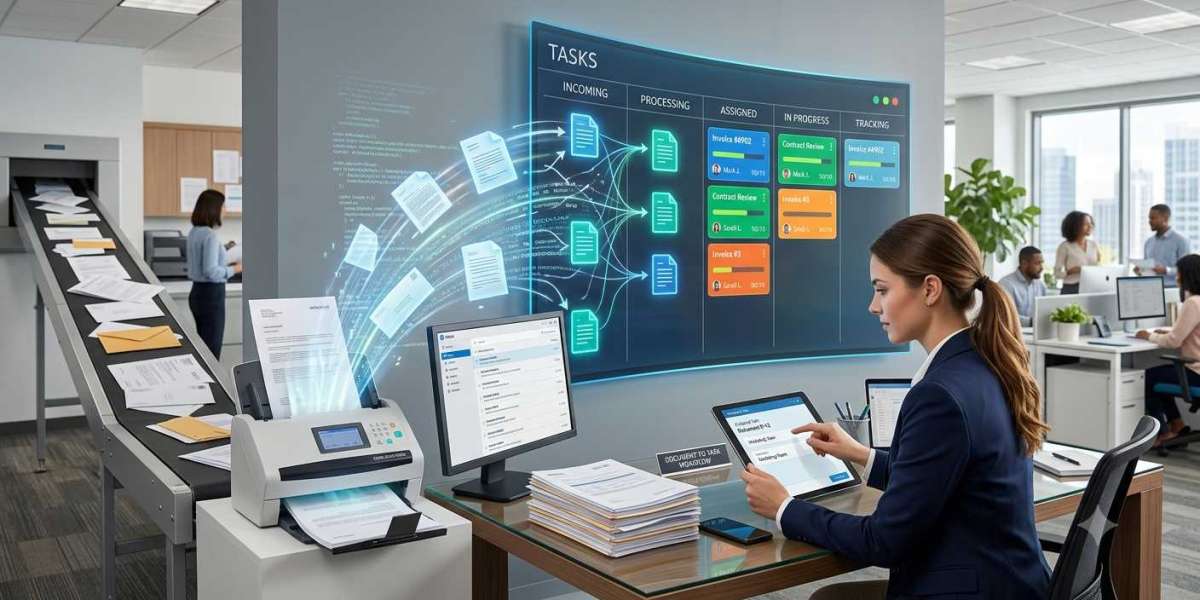

Most people picture a digital mailroom as a scanner: paper comes in, a digital copy comes out. That is only the beginning. The real value of Digital Mailroom Services is what happens after capture, when every incoming document becomes a trackable task with an owner, a status, and a deadline, instead of a passive file that someone might get to eventually. That shift, from documents that simply arrive to tasks that must be completed, is what turns a mailroom into an engine for getting work done.
This article explains how a digital mailroom converts each document into an actionable task, why trackability changes the way work flows, and where it matters most.
From Passive Document to Active Task
A digital mailroom does more than digitise mail. It transforms each item into a defined unit of work that can be assigned, tracked, and completed. The difference is the gap between a document sitting somewhere and a task someone is accountable for.
The Problem With Mail That Just Arrives
When documents merely land in an inbox or a tray, predictable failures follow.
- Items are misrouted to the wrong person and quietly stall.
- Paperwork is lost, and no one notices until it is chased.
- Deadlines are overlooked because nothing flags them.
- No one clearly owns the document, so it drifts.
What a Trackable Task Actually Means
Turning a document into a task attaches accountability to it from the moment it arrives.
- It has an owner, so responsibility is never ambiguous.
- It has a status, so anyone can see whether it is pending or done.
- It has a deadline, so time-sensitive items do not slip.
- It leaves an audit trail, so its whole journey is recorded.
How a Document Becomes a Task
The conversion from document to task happens automatically, through a sequence of steps that a digital mailroom applies to every item. Each step adds the structure a task needs.
Classification and Data Extraction
First, the system understands what the document is and pulls out the details that matter.
- Intelligent Document Processing distinguishes invoices from contracts from applications.
- Key fields such as sender, date, and reference number are extracted automatically.
- One insurer processed over 800 different form types at up to 98 percent accuracy this way (SSC Blue Prism, 2026).
Rule-Based Assignment and Routing
Next, business rules decide where the task goes and who owns it.
- Invoices route to finance, complaints to customer service, applications to onboarding.
- Assignment is based on document type, sender, or urgency.
- The right person receives the task in real time, not days later.
Alerts, Reminders, and Deadlines
Finally, the task is kept moving until it is complete.
- Notifications tell owners when a new task arrives.
- Automated reminders chase pending actions so deadlines are never missed.
- Priority items trigger immediate alerts for urgent handling.
Why Trackability Changes Everything
Once every document is a trackable task, the whole flow of inbound work changes. Visibility and accountability replace guesswork.
Nothing Falls Through the Cracks
The failures of manual handling largely disappear.
- Every item is logged and monitored from arrival to completion.
- Misrouting and lost paperwork are caught rather than discovered late.
- You can see exactly where every document is at any moment.
Accountability and SLAs
Trackable tasks make performance measurable, not assumed.
- Service-level agreements can be set around timely handling.
- Each task is accountable and auditable, with a clear owner.
- Bottlenecks become visible, so they can be fixed.
End-to-End Visibility
The organisation gains a live view of its incoming work.
- Managers see workload, status, and progress across teams.
- Compliance teams get a complete, logged history of every item.
- Reporting is built in, rather than reconstructed after the fact.
This is why so many organisations turn to automation here. In one survey, 62 percent of businesses said workflow automation could resolve major inefficiencies (MetaSource, 2025).
Where Documents Become Business-Critical Tasks
The document-to-task model matters most where inbound mail directly drives operations. In these areas, a delayed or lost document is a delayed or lost process.
- Accounts payable, where invoices become approval tasks routed to finance.
- Insurance, where claims documents become cases that must be actioned on time.
- Onboarding and HR, where applications and IDs become verification tasks.
- Customer service, where correspondence becomes tickets with response deadlines.
In each case, turning the document into a tracked task is what keeps the underlying process on schedule.
From Mailroom to Connected Workflow
The greatest value comes when these tasks flow directly into the systems where work already happens. A digital mailroom is not an endpoint but the entry point to broader automation.
- Extracted data moves straight into DMS, CRM, or ERP systems.
- Documents feed established workflows like invoice processing or contract management.
- Completed items can flow into a governed archive for secure, compliant retention.
Handled this way, an incoming document does not just become a task. It becomes a tracked, actioned, and preserved part of the business process, from the moment it arrives to long after it is done.
Conclusion
Turning every incoming document into a trackable task is what separates a true digital mailroom from a simple scanning service. Instead of files that arrive and wait, each item becomes a unit of work with an owner, a status, a deadline and a complete audit trail, so nothing is misrouted, lost, or forgotten.
That trackability brings accountability, visibility, and speed to the flow of inbound work, and it connects directly to the systems and archives where that work lives. For any organisation whose operations depend on the mail it receives, the real question is not whether documents are digitised, but whether each one becomes a task you can actually track to completion.