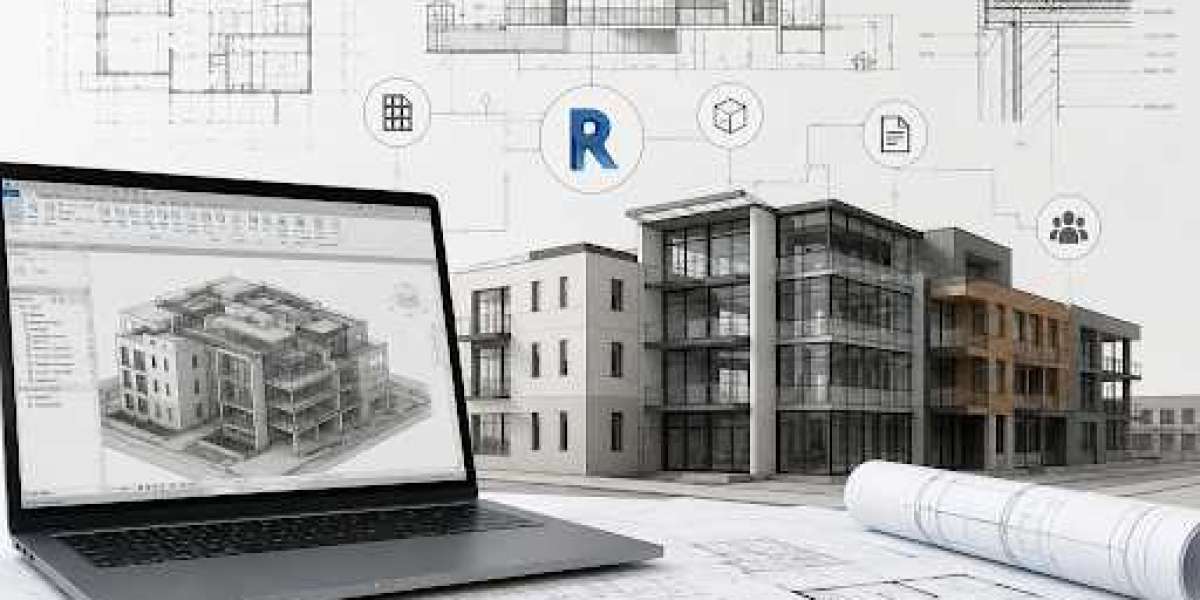

In the high-stakes world of commercial and residential development, a project’s ultimate success hinges on a precise Construction Cost Estimating process.
There are multiple factors at play that derail a construction project and erode profit margins. For example:
- Unforeseen structural challenges
- Material and labor shortages
- Volatile supply chain
This is where cost estimation in construction serves as the vital foundation of modern project management.
Construction Cost Estimating - What it Actually Means?
Accurate, reliable cost estimation is not an approximation, but is built on statistics that turns an idea into financial terms to facilitate budgeting. It has become crucial to produce an estimate well before the project begins for:
- Precise quantity of materials
- Amount of specialty labour
- Equipment needed
Doing so allows for financing, preserves capital and guides the project through the planning process without distress.
Now that you have an understanding of what it is, let's delve into risk reduction and budget control strategies.
What are Risk Reduction Strategies in Construction Estimating?
In the field of construction, the financial risks that arise during the course of the project are very real. However, they do not have to become something that cannot be managed. Through accurate and reliable estimating of costs, there exist risk reduction strategies.
Thus, the top recognized strategies adopted by professional estimation firms are:
Material Takeoffs of Granular Materials
The most important way to reduce risks is to perform a thorough material takeoff. This means using digital design files and advanced estimating software to catalogue every physical component (like structural steel tonnage or linear feet of conduit). Thus, ensuring highly accurate Material Cost Calculations.
What does it do?
This level of precision will help ensure that projects do not run into problems because of an inadequate quantity or too many items on hand — both cause delays.
Contingency Modeling Itemized
Risk reduction requires that you don’t just randomly apply a flat percentage (such as 10%) to the total cost of your project. Instead, you need an itemized contingency to account for risks.
What does it do?
The higher the level of uncertainty or volatility with respect to any given line item, the higher the contingency is automatically assigned. Conversely, lower levels of uncertainty or volatility receive less of a contingency amount
Historical Data Benchmarking
Using historical data for estimating costs allows the estimator to compare current bidding projects to completed projects.
What does it do?
This will assist in identifying problems such as mistaken bids by subcontractors or bids that are lower than the estimated scope of work.
What Strategies Can Be Applied to Control Budget?
Risk management means being prepared and is more of a defensive strategy. Budget control is about managing the finances of a project in a proactive manner. To ensure that the project stays within its original baselines and prevents scope creep, here are the top Cost Control Strategies:
Pre-Construction Value Engineering
Value engineering before construction begins occurs when estimators and design teams proactively work together. This is done to review materials and systems to find less expensive alternatives. And, at the same time providing the same level of structural integrity, code compliance, and aesthetic appeal.
How does it impact?
By doing this, it results in more efficient use of the budget while still providing the same overall quality for the assets.
Procurement Planning and Scheduled Procurement
The process of establishing the cost of materials for a construction project can provide a basis for a master purchasing guide. If this estimate and procurement schedule are met strictly, construction managers can procure materials at stable prices in advance.
How does it impact?
This enables the use of “just in time” sequencing of materials, thereby minimizing on-site storage fees and potential material loss from damage or theft.
Tracking of Real-Time Cost Variations
Typical construction budget control is achieved by integrating estimating software with real-time project field management systems. Such as, for Labor Cost Estimation, the actual costs and labour hours for each phase of the project are frequently compared to the baseline.
How does it impact?
When construction managers detect variances, they can act promptly to correct them before project completion.
Conclusion
In summary, the combination of these different strategies will change the role of construction cost estimating. From an administrative activity to an active tool used to manage project costs, improve operating efficiencies, and generate reliable profits. Thus, to ensure success in implementing these two approaches, it is important to have a knowledgeable estimator on staff. It will ensure that these strategies can be effectively used together. Thus, by employing Universe Estimating, you are able to create actionable strategies that will help produce optimal results.