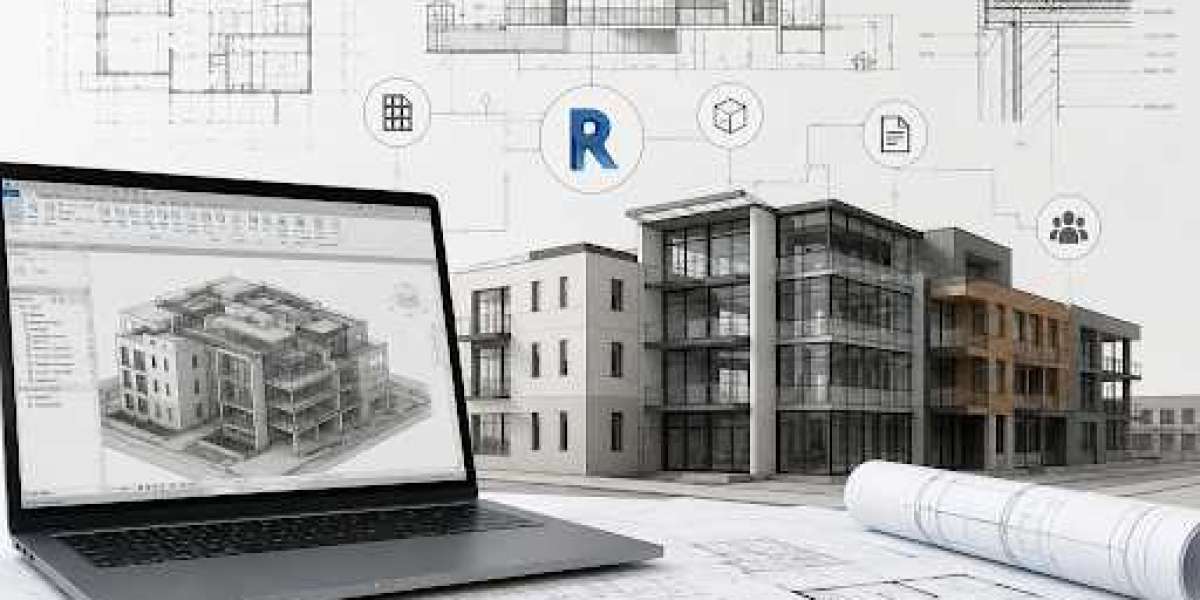

Revit Drafting Services has fundamentally changed how the industry functions by moving to a Building Information Modeling platform. Rather than using flat 2D lines to create drawings, Revit drafting provides an object-oriented database. This database contains intelligent Building Information Models (BIMs). In short, Revit has transformed the process of drafting from simply reproducing geometry to assembling digital assets.
How did it happen before Revit?
In the past, documentation was a fragmented, linear process. For example:
- Architects meticulously drew floor plans using line-based 2D CAD software
- They manually drafted corresponding elevations, building sections, and material schedules
- Moreover, if a client requested a late-stage layout, then a draftsman had to update dozens of separate drawing sheets manually.
How Does Revit Drafting Streamline the Process?
Revit has actually transformed Architectural Documentation.
The Power of Parametric Relationships
The functional foundation of Revit is its parametric engine. Instead of creating two parallel lines and labeling them as a wall, you simply use an intelligent wall object. It includes actual height, width, material layers, and thermal data, etc.
Every floor plan, elevation, longitudinal section, or schedule is an active live view of one central 3D model database. Thus, allowing you to view your design in real time. This database has two basic principles:
Coordinated Solutions
Imagine changing the location of a 3D representation of a window object or a floor plan view. In return, this will also take effect immediately in all other related elevations, structural sections, and quantity takeoffs.
Document Protection
As a result of this automatic synchronization, there is no longer the potential for human error during the coordination process. Consequently, there will no longer be any risk of having inconsistent cross-references throughout the entire collection of construction documents.
How Revit Drafting Reformed the Architecture Documentation Process?
Revit completely reorganized the chronological timeline of architectural drafting, delivering major efficiency boosts across the documentation phase:
Ingenious Automate Scheduling Process
Manual Count Disposal
In previous traditional CAD workflow systems, draftsmen performed manual counting of doors/windows/finishes via printed forms, then entered those counts onto a spreadsheet.
Decrease Data Entry Error
This manual workflow is time-consuming and prone to human error arithmetic errors.
Immediate Data Updates (in real-time)
When you insert or modify a door in your 3D, it's automatically updated with all its dimensions/materials/fire rating information on the Door Schedule as soon as it is created.
Embedded Detail Components and Standards
Revit Streamlined Design Documentation via a robust framework of smart families and nested detail components. The need to redraw standard wall-to-roof framing intersections from scratch isn’t necessary for each project. But instead, experts use pre-configured detail libraries and intelligent drafting views.
How does it impact?
This allows designers to follow specific corporate graphic guidelines. While at the same time conforming to local building codes, as well as reducing overall drafting production time by an estimated 75%.
Phasing and Design Options Inside One File
Managing renovations or presenting multiple design schemes used to require saving dozens of separate, confusing CAD file variations. However, Revit Design Documentation and built-in phasing engines are directly incorporated into the primary central file.
Impact
Thus, a draftsman can toggle elements seamlessly between existing, demolished, and new construction phases. Thus, keeping the documentation clean, organized, and perfectly calibrated.
Conclusion
A reliable Revit Drafting service has transformed the way we use architectural documents, and now they are active, real-time tools that allow us to create high-accuracy documentation for our projects. By linking the three-dimensional (3D) geometry of our designs directly to a central database, we can reduce rework from drawing drafting errors, minimize coordination issues between consultants, and expedite project delivery schedules. When considering that the market has become so saturated with firms offering architectural services and project delivery schedules have become more compressed, Revit should be regarded as an essential component of current architectural practice.