
Corteiz Clothing Inside Britain's Most Disruptive Streetwear Brand
Introduction
Few brands in recent fashion history have built as much cultural momentum with as little conventional marketing as Ensemble Corteiz Known to fans simply as CRTZ, this London-born streetwear label has gone from a teenager's bedroom project to one of the most talked-about names in global fashion, all while refusing to play by the industry's usual rules. For anyone curious about what is shaping youth fashion in the UK right now, Corteiz is impossible to ignore.
Origins: From West London Bedroom to Global Movement
Corteiz was founded in 2017 by British-Nigerian entrepreneur Clint Ogbenna, who goes by the name Clint419, while he was a university student in his early twenties working out of his bedroom in West London. The brand launched with a limited run of screen-printed T-shirts and crewnecks carrying the now-iconic Alcatraz Island logo. There was no investment round, no PR agency, and no fashion-week debut. It was, by most accounts, a scrappy passion project that happened to catch fire.
That first drop consisted of just sixteen screen-printed hoodies, sold with no paid advertising, no celebrity seeding, and no press coverage whatsoever. Instead, the brand spread through word of mouth and a tightly controlled social presence. Corteiz's Instagram account was initially private, and gaining access required being personally accepted into the community, which only deepened the sense of exclusivity around the label.
The Alcatraz Logo and Its Meaning
Corteiz's branding centres on a silhouette of Alcatraz Island, paired with the tagline "Rules The World." The choice of Alcatraz, once a notorious prison, is meant to symbolise breaking free from societal restriction and convention. It's a fitting emblem for a brand whose entire identity is built around resisting the established fashion order, both in how it designs clothing and in how it chooses to sell it.
A Different Kind of Marketing Playbook
What truly sets Corteiz apart is its approach to retail itself. Rather than following the now-standard streetwear formula of seasonal collections, scheduled drops, and stockist distribution, Corteiz built its name through guerrilla pop-ups, ranging from giveaways to takeovers of unconventional spaces like an abandoned New York subway station or Atlanta's famous Magic City.
Some of these stunts have become legendary within streetwear circles. In 2021, the brand staged a drop in London's Soho where customers could trade in their metro tickets for a limited-edition T-shirt. A year later, Corteiz held its now-famous "99p Market Stall," selling cargo trousers for exactly 99 pence, with no change given to customers, an event that drew over two thousand attendees.
Perhaps the most culturally resonant stunt was the brand's jacket exchange. In 2022, Clint used social media to invite customers to swap their existing jackets for the new Corteiz "Bolo" puffer, with the collected garments later donated to homeless charities. Participants traded in pieces from major outerwear labels including The North Face, Supreme, Moncler, and Arc'teryx in exchange for the Corteiz alternative. The jackets collected were reportedly worth around £16,000 and were donated to charity afterward. It was equal parts marketing stunt, community event, and charitable gesture, a combination that has become something of a Corteiz signature.
In 2024, the brand brought this approach to New York with "Da Great Denim Exchange," inviting customers to trade jeans from any brand for one of just 250 pairs of Corteiz denim. Drops like these aren't advertised through traditional channels. Instead, GPS coordinates are posted on social media shortly before an event, creating flash-mob-style scenes as fans rush to the location. The brand's website itself remains password-protected, with access codes only released around each new product drop.
From Underdog to Industry Player
Corteiz's rise hasn't been without friction with the fashion establishment it set out to needle. In 2021, Nike filed a lawsuit against Corteiz and Clint, arguing the brand's name was too similar to its own Nike Cortez sneaker, a dispute that resulted in Clint being ordered to pay £1,850. The story took an ironic turn just two years later: in 2023, the two brands put their dispute behind them and collaborated on a release of the Nike Air Max 95 in three colourways, Gutta Green, Pink Beam, and Aegean Storm.
That same year, Corteiz also partnered with Supreme on a collection of T-shirts and hoodies, and the brand received a nomination at the 2023 Fashion Awards in the "New Establishment – Menswear" category. These milestones marked a clear shift: a label that began as an explicit rejection of big fashion brands was now being courted by them.
The London launch of the Nike collaboration showed just how far Corteiz's pulling power had grown. For the London drop, the brand ran a crossbar challenge featuring Manchester City's Phil Foden and singer Jorja Smith, offering winners a pair of the collaborative sneakers, with a £1,000 cash prize for anyone who hit the crossbar while wearing the shoes. For the New York leg, coordinates were dropped near a Nike billboard by Penn Station, sending crowds running down 34th Street to a Corteiz-branded bodega.
Celebrity Endorsement Without the Paid Partnership
Public figures including Drake, Central Cee, Dave, Jorja Smith, and Stormzy have all been spotted wearing Corteiz. The Alcatraz logo has even appeared on the backs of football figures such as Ronaldinho. Crucially, these endorsements have largely been organic rather than paid placements, which has helped preserve the brand's image of authenticity in a market where audiences are increasingly sceptical of sponsored celebrity tie-ins.
What Corteiz Actually Sells
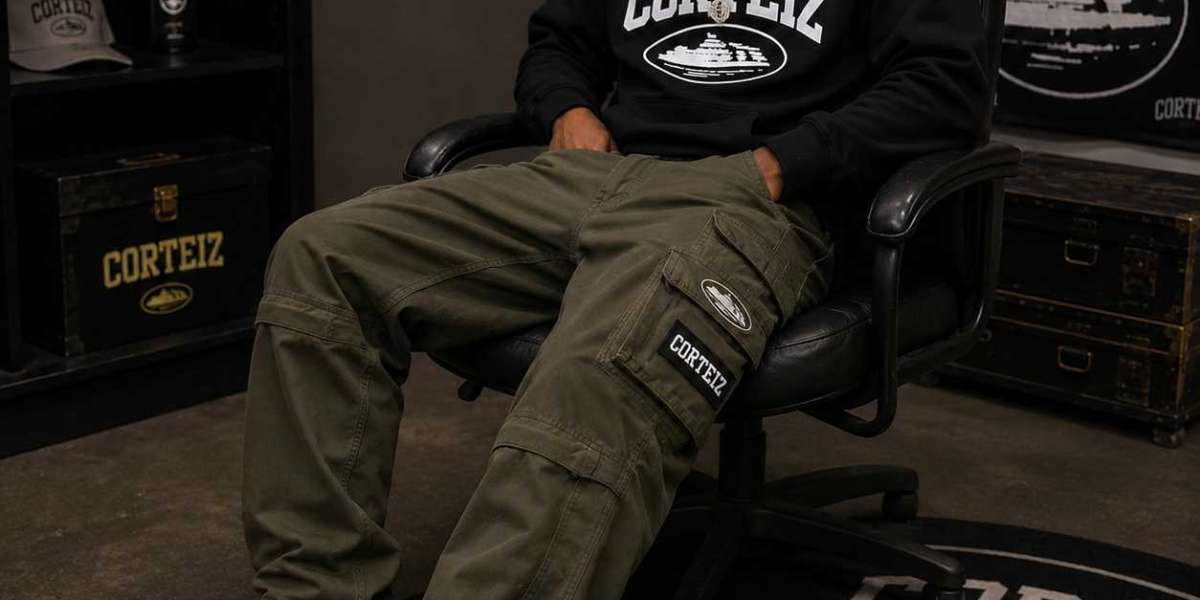
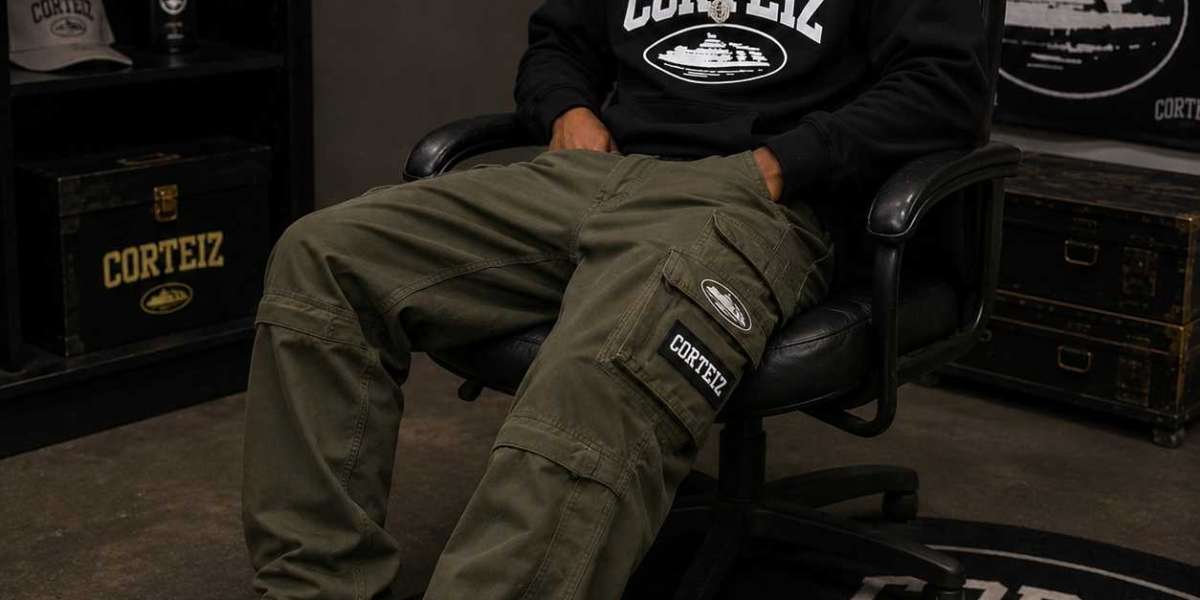
Despite all the spectacle, Corteiz is, at its core, a clothing brand. Drops typically include T-shirts, hoodies, sweatpants, military-inspired fatigues, and balaclavas. Early prices ranged from around £12 for socks up to roughly £300 for the Bolo puffer jacket, and as the brand has matured its range has expanded to include embossed denim, satin jackets, leather coats, and reworked football kits that nod to its London roots. Cargo trousers remain one of the brand's most recognisable signature items, typically rendered in muted tones like black, khaki, olive, and grey, with subtle logo placement rather than loud branding.
Why It Resonates
Corteiz's success says as much about the state of streetwear as it does about the brand itself. By 2024, the label was reportedly generating around $58 million in revenue, according to reporting by The New York Times. That scale is striking for a brand that has never relied on a conventional retail strategy. Scarcity, community gatekeeping, and real-world spectacle have done what advertising budgets typically do for larger labels.
For young British consumers in particular, Corteiz taps into something beyond clothing: a sense of ownership and identity. The brand speaks in the cultural language of its audience, stages events that become shared memories rather than mere transactions, and maintains enough scarcity that getting hold of a piece still feels like an achievement rather than a routine purchase. Whether that formula can scale indefinitely as the brand's profile keeps rising is an open question, but for now, Corteiz remains one of the clearest examples of how UK streetwear can build global relevance entirely on its own terms.
Conclusion
From a sixteen-hoodie debut in a West London bedroom to international collaborations with Nike and Supreme, Corteiz's trajectory reflects a broader shift in how fashion brands can build loyalty: not through saturation advertising, but through scarcity, spectacle, and genuine cultural connection. As Corteiz continues to expand, its challenge will be holding on to the underdog energy that built it in the first place, even as it increasingly rubs shoulders with the very establishment it once defined itself against.