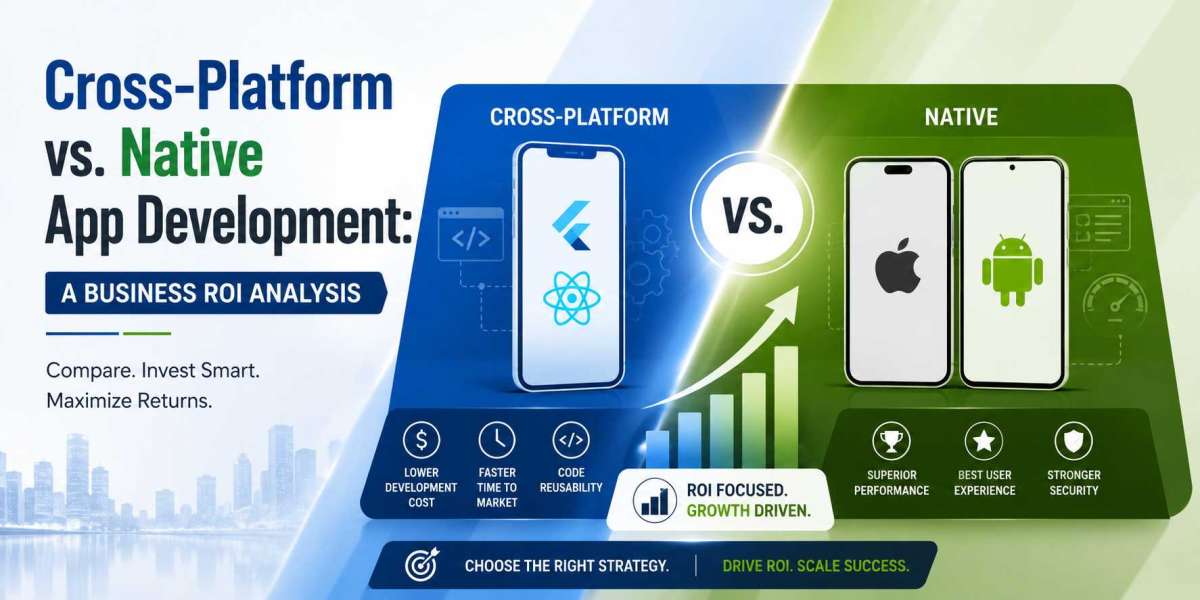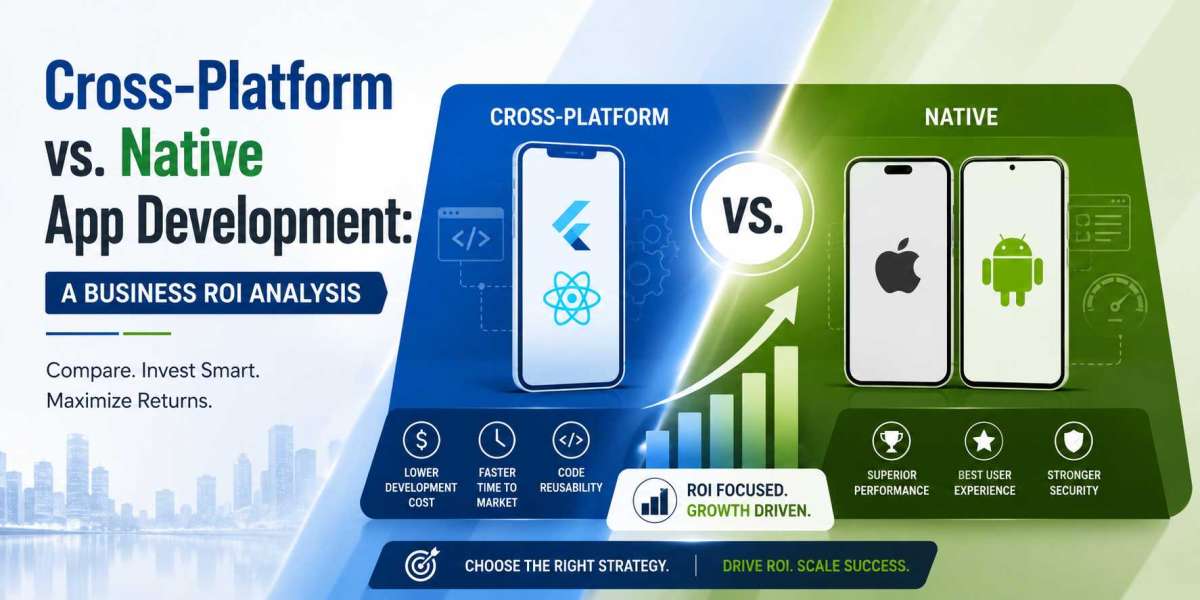

In today's mobile-first world, businesses must make a critical decision when investing in app development: should they choose cross-platform development or native app development? While both approaches have their advantages, the ultimate factor for many organizations is Return on Investment (ROI).
Understanding the differences between these development strategies can help businesses maximize their budget, accelerate time-to-market, and achieve long-term growth.
Understanding Native App Development
Native apps are built specifically for a single operating system, such as iOS or Android, using platform-specific programming languages and tools. For example, iOS apps are typically developed using Swift, while Android apps are built using Kotlin or Java.
Advantages of Native Apps
- Superior performance and speed
- Enhanced user experience with platform-specific UI/UX
- Better access to device hardware and native APIs
- Higher security and reliability
- Improved scalability for complex applications
Challenges of Native Apps
- Higher development costs
- Separate codebases for iOS and Android
- Longer development timelines
- Increased maintenance expenses
While native apps often deliver exceptional performance, businesses must be prepared for the higher upfront investment and ongoing maintenance costs.
Understanding Cross-Platform App Development
Cross-platform development enables developers to create a single codebase that runs on multiple operating systems. Frameworks like React Native have become highly popular because they allow businesses to launch apps for both Android and iOS simultaneously.
Many organizations partner with a specialized react native app development company to leverage this approach and reduce development costs while maintaining app quality.
Advantages of Cross-Platform Apps
- Faster development cycles
- Lower development costs
- Shared codebase across platforms
- Easier maintenance and updates
- Faster time-to-market
Challenges of Cross-Platform Apps
- Slightly lower performance compared to native apps
- Limited access to certain platform-specific features
- Potential compatibility issues with OS updates
- Additional optimization may be required for complex applications
ROI Comparison: Cross-Platform vs Native Apps
Let's compare both approaches from an ROI perspective.
1. Initial Development Cost
Cross-Platform:
A single codebase significantly reduces development effort, making cross-platform apps more cost-effective.
Native:
Businesses need separate development teams or resources for Android and iOS, increasing costs substantially.
ROI Winner: Cross-Platform
2. Time-to-Market
Speed is often critical in competitive industries.
Cross-Platform:
A unified codebase allows simultaneous deployment on multiple platforms, helping businesses launch products faster.
Native:
Developing separate applications can extend project timelines.
ROI Winner: Cross-Platform
3. Maintenance and Updates
Post-launch expenses can significantly impact ROI.
Cross-Platform:
Updates can be implemented once and deployed across platforms.
Native:
Changes must be replicated in multiple codebases, increasing maintenance efforts.
ROI Winner: Cross-Platform
4. User Experience and Performance
Application performance directly affects customer retention and revenue.
Cross-Platform:
Modern frameworks deliver excellent performance, but highly demanding applications may face limitations.
Native:
Offers the best possible performance and seamless user experiences.
ROI Winner: Native
5. Scalability
As businesses grow, scalability becomes essential.
Cross-Platform:
Suitable for most business applications, eCommerce platforms, and service-based apps.
Native:
Ideal for applications requiring advanced features, real-time processing, gaming, or intensive hardware integration.
ROI Winner: Native (for complex applications)
When Cross-Platform Delivers Better ROI
Cross-platform development is often the smarter choice when:
- Budget constraints exist
- Fast market entry is required
- The app serves both Android and iOS audiences
- Core functionality is similar across platforms
- Ongoing maintenance costs need to be minimized
Working with an experienced react native app development company can help businesses accelerate development while maintaining quality and performance standards.
When Native Development Delivers Better ROI
Native development often generates higher ROI when:
- Performance is mission-critical
- The app requires advanced hardware integration
- User experience is a key competitive differentiator
- Long-term scalability is a top priority
- The application involves complex workflows or real-time processing
Why React Native is Becoming the Preferred Choice
React Native has emerged as one of the leading cross-platform frameworks because it combines development efficiency with near-native performance. Businesses can reduce costs while still delivering responsive, feature-rich applications.
Many organizations choose to hire react native app developers to build scalable mobile solutions that reach a broader audience without doubling development expenses.
Additionally, React Native's large ecosystem, reusable components, and strong community support contribute to lower development risks and faster project execution.
Final Verdict: Which Option Offers Better ROI?
There is no one-size-fits-all answer. The best choice depends on your business goals, budget, target audience, and technical requirements.
For startups, SMEs, and businesses looking for rapid deployment with controlled costs, cross-platform development—particularly with React Native—often provides the highest ROI.
For enterprises building performance-intensive applications that require advanced platform-specific capabilities, native development may justify the higher investment through superior user experiences and long-term scalability.
Before making a decision, carefully evaluate your business objectives and consult experienced development professionals who can recommend the most cost-effective strategy for your unique requirements.
Ultimately, the highest ROI comes not from choosing the most popular development approach, but from selecting the one that best aligns with your business goals and customer expectations.