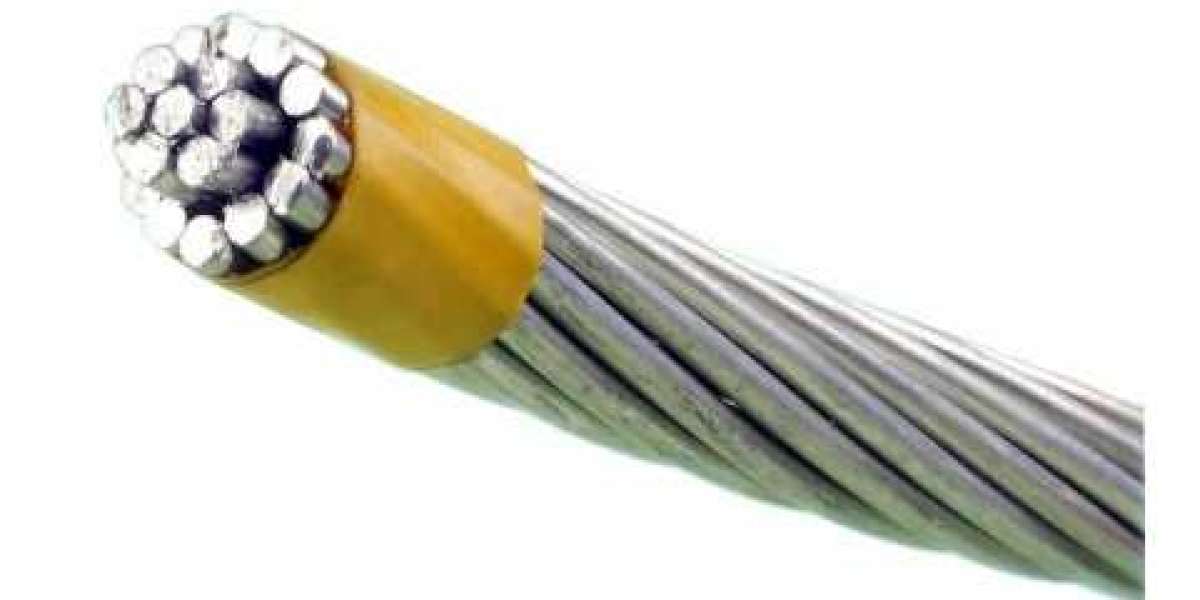

Advantages of AAC vs ACSR Cable
Choosing between AAC vs ACSR Cable impacts both operational efficiency and lifecycle costs.
- AAC (All Aluminum Conductor):
- Lightweight, reducing structural load on poles and towers.
- Superior conductivity, minimizing power losses in short to medium spans.
- Highly corrosion-resistant in urban environments with low industrial pollutants.
- ACSR (Aluminum Conductor Steel Reinforced):
- Combines the conductivity of aluminum with the tensile strength of steel.
- Ideal for long spans, heavy ice, or wind-loaded rural transmission lines.
- Offers greater sag control, reducing mechanical stress on supports.
In practice, AAC vs ACSR Cable selection often balances the need for conductivity against mechanical robustness. Urban grids frequently favor AAC for its electrical efficiency and reduced installation costs, while rural or mountainous terrains often require ACSR’s strength.
Technical Specifications
| Specification | AAC Cable | ACSR Cable |
|---|---|---|
| Material | Pure Aluminum | Aluminum + Steel Core |
| Typical Conductivity | 58–61% IACS | 58–61% IACS (Aluminum part) |
| Tensile Strength | 70–120 MPa | 170–270 MPa (steel core) |
| Operating Temperature | Up to 90°C | Up to 75°C (aluminum) |
| Standard Compliance | IEC 61089, ASTM B399 | IEC 61089, ASTM B232 |
| Diameter Range | 8–50 mm | 8–50 mm (Al layer) |
| Typical Applications | Urban suburban distribution | Rural long spans, industrial transmission |
Key insight: For engineers, the steel core in ACSR provides significant mechanical advantage, while AAC ensures lower resistive losses and easier handling.
Durability and Maintenance
Durability is a decisive factor when comparing AAC vs ACSR Cable.
- AAC Cable:
- Excellent resistance to atmospheric corrosion.
- Requires minimal maintenance, particularly in low-pollution urban areas.
- Susceptible to sag under high temperatures; periodic tension adjustment may be needed.
- ACSR Cable:
- Steel core provides long-term mechanical stability.
- Requires anti-corrosion treatment at connection points, especially in coastal or industrial environments.
- May need periodic inspection for galvanic corrosion where aluminum and steel meet.
In both cases, preventive maintenance ensures the system’s reliability and longevity, reducing the risk of unplanned outages.
Application Fields
AAC vs ACSR Cable are deployed based on environmental and operational demands:
- Urban Distribution: AAC is preferred for low to medium voltage networks where weight, flexibility, and ease of installation matter most.
- Rural Transmission: ACSR is chosen for high-voltage lines over long spans, where ice, wind, and mechanical stress are significant.
- Industrial Zones: ACSR’s strength is advantageous in industrial corridors with high spans and heavy mechanical load.
- Special Environments: Coastal areas may favor AAC with anti-corrosion coatings, while mountainous areas often require ACSR for sag and tensile control.
Frequently Asked Questions (FAQs)
1. Can AAC be used for long rural transmission lines?
AAC is efficient for short to medium spans, but ACSR is generally recommended for long rural lines due to its tensile strength and sag control.
2. What is the maximum operating temperature of AAC vs ACSR?
AAC typically operates safely up to 90°C, while the aluminum layer in ACSR is rated up to 75°C.
3. Which conductor requires more maintenance?
ACSR requires more attention to galvanic corrosion at the steel-aluminum interface, whereas AAC requires minimal maintenance in clean environments.
4. How does cost compare?
AAC is usually less expensive upfront due to the absence of steel, but ACSR may offer better lifecycle value in challenging terrains.
5. What is the typical voltage range for AAC vs ACSR?
AAC is used mostly in medium-voltage distribution (up to 33 kV), while ACSR is common in high-voltage transmission (up to 132 kV and above).
6. Are there environmental considerations?
AAC is more suitable for urban environments with low mechanical stress, whereas ACSR is ideal for rural or high-wind regions.
7. How do you decide between AAC vs ACSR for a project?
Consider span length, load, mechanical stress, installation environment, and maintenance resources. A careful engineering analysis ensures optimal efficiency and durability.
Selecting between AAC vs ACSR Cable is a strategic decision that influences efficiency, safety, and cost. AAC offers excellent conductivity and low maintenance for urban distribution, while ACSR provides the mechanical strength necessary for rural and high-load applications. By carefully analyzing the project’s environmental and operational requirements, engineers and procurement specialists can choose the most suitable conductor, ensuring reliable and long-lasting power distribution.