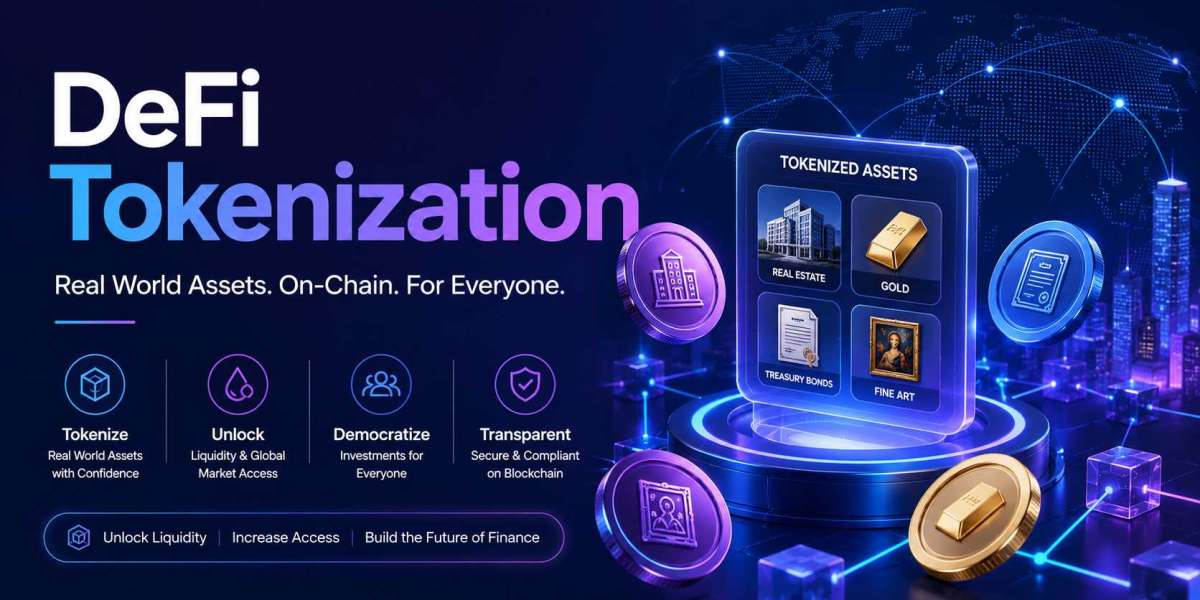

Decentralized Finance (DeFi) has evolved far beyond its early experimental phase of liquidity mining, speculative tokens, and isolated lending protocols. In 2026, it is increasingly being viewed as a parallel financial system—one that interacts directly with real-world assets, institutional capital, and regulated markets. At the center of this transformation is tokenization, the process of converting real-world and digital assets into blockchain-based tokens that can be traded, fractionally owned, and programmatically managed. The importance of DeFi tokenization lies in its ability to merge two previously disconnected worlds: traditional finance and decentralized ecosystems. Real estate, government bonds, private credit, commodities, and even revenue-generating businesses are now being represented on-chain, enabling greater liquidity, transparency, and composability across financial systems.
For investors, 2026 represents a critical inflection point. The trends shaping DeFi tokenization are no longer theoretical they are actively defining where capital flows, how yields are generated, and how risk is managed in digital markets. Understanding these trends is essential for navigating the next phase of financial innovation.
1. Real-World Asset (RWA) Tokenization Becomes the Foundation of DeFi Growth
One of the most important developments in 2026 is the rapid expansion of real-world asset tokenization. Instead of relying solely on crypto-native collateral, DeFi platforms are increasingly integrating tokenized versions of real-world assets such as U.S. Treasury bills, real estate portfolios, corporate debt instruments, and invoice financing structures. This shift is fundamentally changing the structure of DeFi. Earlier versions of decentralized finance were heavily dependent on volatile crypto assets as collateral. With RWAs entering the ecosystem, DeFi is becoming more stable, yield-backed, and institutionally relevant.
For investors, this means access to predictable yield streams that are tied to real-world economic activity rather than purely speculative market behavior. Tokenized RWAs are also improving liquidity in traditionally illiquid markets, creating a bridge between global capital markets and decentralized infrastructure.
2. Institutional Adoption of Compliant DeFi Infrastructure
As DeFi matures, institutional investors are no longer on the sidelines. Pension funds, asset managers, insurance companies, and sovereign wealth funds are increasingly exploring tokenized investment vehicles within regulated DeFi environments. This has led to the rise of compliant DeFi infrastructure systems that incorporate identity verification, transaction monitoring, and jurisdiction-specific regulatory controls directly into smart contract architecture.
Unlike early DeFi platforms that prioritized anonymity and open access, modern tokenization frameworks are designed to meet institutional standards. Permissioned liquidity pools, regulated custody solutions, and audited smart contracts are becoming standard components of institutional-grade DeFi ecosystems. For investors, this trend signals increased capital inflows, reduced systemic risk, and improved market legitimacy.
3. Tokenized Fixed-Income Products Redefine Yield Generation
Fixed-income markets are undergoing a major transformation through tokenization. Traditional instruments such as government bonds, corporate debt, and money market funds are being replicated on-chain as programmable yield-bearing tokens. These tokenized products offer several advantages, including real-time settlement, fractional accessibility, and transparent yield distribution mechanisms governed by smart contracts.
In 2026, investors are increasingly allocating capital to tokenized treasury products and structured yield vaults as alternatives to conventional savings instruments. These assets are particularly attractive in volatile macroeconomic environments because they provide predictable returns backed by real-world credit systems. The result is a shift in DeFi from speculative yield farming toward structured, risk-adjusted income generation.
4. Cross-Chain Liquidity Expansion for Tokenized Assets
As tokenized assets multiply across different blockchain ecosystems, liquidity fragmentation has become a key challenge. In response, cross-chain infrastructure is emerging as a critical enabler of DeFi scalability. Cross-chain bridges, interoperability protocols, and multi-chain liquidity layers now allow tokenized assets to move seamlessly between networks such as Ethereum, Layer 2 rollups, and alternative Layer 1 ecosystems.
This development is significant for investors because it enhances capital efficiency. Instead of being locked into a single blockchain environment, assets can be deployed across multiple DeFi platforms to maximize yield opportunities and liquidity access. The long-term implication is a unified liquidity layer that connects fragmented blockchain ecosystems into a cohesive financial network.
5. Fractional Ownership Expands Into New Asset Classes
Fractional ownership is not new, but its scope is expanding dramatically in 2026. Initially popular in real estate tokenization, fractionalization is now extending into private equity, fine art, intellectual property, infrastructure projects, and even entertainment revenue streams. This trend is fundamentally changing access to high-value investments. Assets that were previously reserved for institutional investors or ultra-high-net-worth individuals are now being divided into smaller, tradable digital units. For investors, fractional ownership provides diversification opportunities across multiple asset classes with significantly lower capital requirements. It also improves liquidity in markets that have traditionally been difficult to enter or exit.
6. On-Chain Credit Markets and Tokenized Lending Ecosystems
Credit markets are becoming one of the fastest-growing segments of DeFi tokenization. Instead of relying solely on crypto collateral, lending protocols are increasingly using tokenized real-world assets such as invoices, business receivables, and supply chain financing instruments. These tokenized credit assets are enabling more accurate risk assessment models based on real-world cash flow data. Smart contracts automate loan issuance, repayment schedules, and collateral liquidation processes. For investors, on-chain credit markets offer exposure to diversified lending opportunities with transparent risk profiles. They also reduce reliance on traditional banking intermediaries, creating more efficient capital distribution systems.
7. AI-Driven Tokenization and Predictive Financial Systems
Artificial intelligence is becoming deeply integrated into DeFi tokenization ecosystems. AI models are being used to evaluate asset risk, optimize yield strategies, detect fraud patterns, and forecast market movements. In tokenized environments, AI systems analyze large volumes of on-chain and off-chain data to identify investment opportunities and manage portfolio risk dynamically. This includes predictive pricing models for tokenized real estate, credit risk scoring for lending pools, and automated rebalancing of diversified DeFi portfolios. For investors, AI-driven systems reduce complexity and improve decision-making accuracy in fast-moving digital markets.
8. Regulatory-Compliant Security Token Ecosystems
Regulation is no longer viewed as a barrier to DeFi—it is becoming an enabler of institutional adoption. Security token ecosystems are emerging as compliant frameworks for issuing and trading tokenized financial instruments. These systems incorporate built-in regulatory features such as investor accreditation, jurisdictional restrictions, audit trails, and automated reporting mechanisms.
As a result, tokenized securities are gaining legitimacy in traditional financial markets. This trend is particularly important for attracting large-scale institutional capital, which requires strict compliance standards before participating in digital asset ecosystems. For investors, this provides a safer and more structured environment for participating in tokenized markets.
9. Tokenization of Revenue-Generating Businesses
Beyond physical and financial assets, entire businesses are now being tokenized based on revenue streams. This includes SaaS companies, media platforms, digital infrastructure providers, and subscription-based businesses.
Revenue-sharing tokens allow investors to participate directly in cash flow generated by these businesses. Smart contracts automate profit distribution, ensuring transparency and consistency in payouts. This trend expands DeFi beyond asset ownership into income participation models. Investors are no longer limited to capital appreciation they can now earn returns directly from operational business performance.
10. Integration Between Traditional Finance and DeFi Systems
The final major trend in 2026 is the convergence of traditional financial systems with DeFi infrastructure. Banks, payment processors, and asset management firms are increasingly integrating blockchain-based tokenization systems into their operations.
This hybrid model allows fiat-based systems and decentralized protocols to coexist. Tokenized assets can move between regulated financial institutions and DeFi platforms through compliant gateways and custody solutions. For investors, this integration significantly increases liquidity access and market efficiency. It also reduces friction between traditional investment vehicles and blockchain-based financial instruments.
Conclusion: A New Era of Tokenized Financial Infrastructure
DeFi tokenization in 2026 represents a structural transformation of global financial systems. It is no longer limited to experimental blockchain applications but is becoming a foundational layer for modern investment markets. The most important trends including real-world asset integration, institutional adoption, AI-driven analytics, cross-chain liquidity, and regulatory compliance are collectively shaping a more mature and scalable financial ecosystem. For investors, the implications are significant. DeFi tokenization offers access to diversified asset classes, improved liquidity, transparent yield generation, and global market participation. As adoption continues to expand, those who understand and adapt to these trends early are likely to benefit from the next wave of financial innovation driven by blockchain technology.