
Introduction
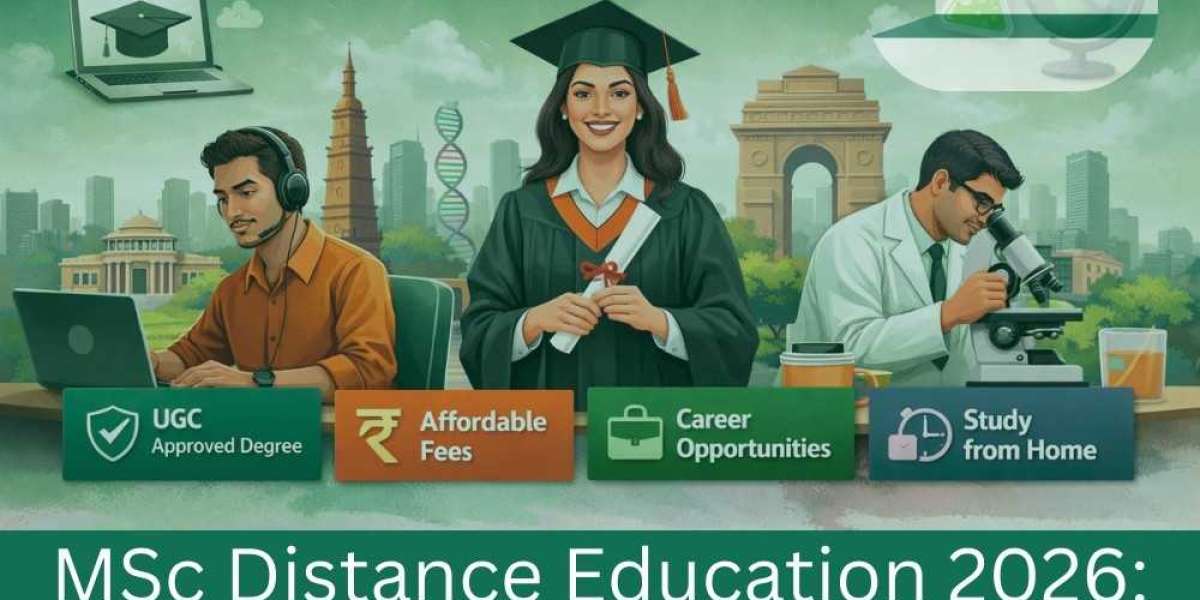
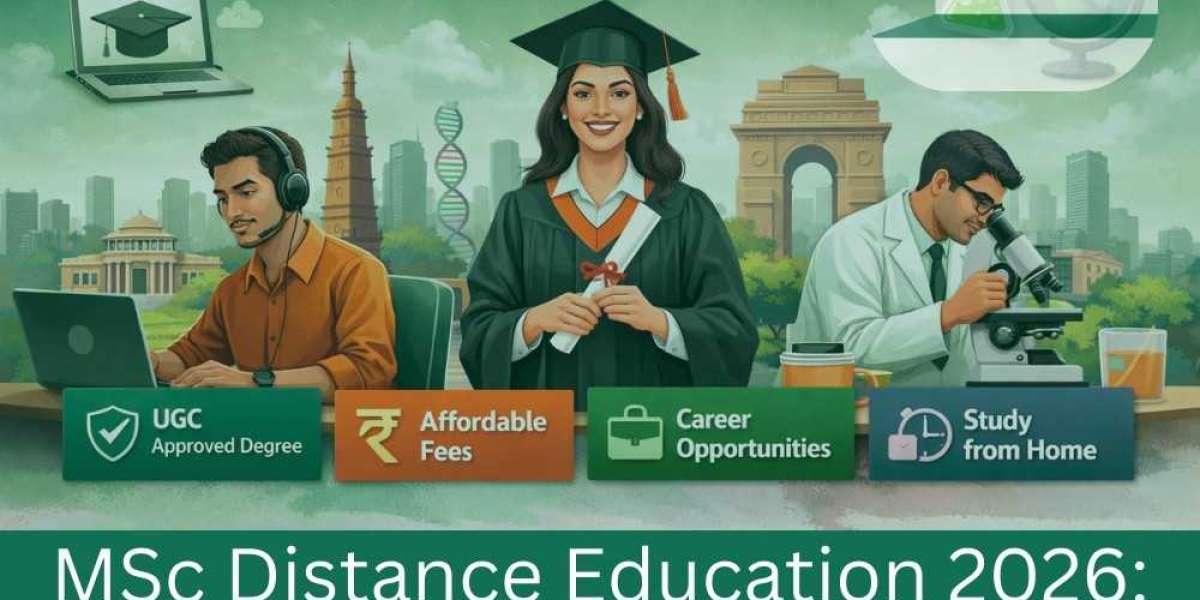
In today’s fast-changing world, higher education is no longer limited to traditional classroom learning. With the rise of flexible learning models, students and working professionals now have the opportunity to pursue advanced degrees without attending regular college. One of the most popular options in this category is the MSc Distance Education program.
An MSc (Master of Science) through distance education allows learners to gain in-depth knowledge in scientific, technical, and analytical fields while studying at their own pace. Whether you are a working professional, a homemaker, or someone unable to attend regular classes, this mode of education offers a practical and affordable pathway to higher qualifications.
What Is MSc Distance Education?
An MSc Distance Education program is a postgraduate degree in science or related disciplines that is delivered through remote learning methods instead of traditional classroom teaching. Students do not need to attend daily lectures on campus. Instead, they receive study materials, attend online classes (in many cases), and complete assignments and exams as per university guidelines.
The course is designed to provide the same academic value as a regular MSc degree but with greater flexibility. Students can learn from home, access digital resources, and often continue working alongside their studies.
In simple terms, MSc distance education = advanced science degree + flexible learning system.
How Does MSc Distance Education Work?
Distance MSc programs are structured to ensure students receive both theoretical and practical knowledge. Although delivery methods vary by university, most programs follow a similar structure:
1. Study Materials
Universities provide printed books, PDFs, or online modules covering the entire syllabus.
2. Online Learning Platforms
Many institutions now use Learning Management Systems (LMS) where students can:
- Watch recorded lectures
- Attend live classes
- Submit assignments
- Access discussion forums
3. Assignments and Projects
Students are required to complete assignments regularly. These contribute to internal assessment marks.
4. Practical Sessions (if required)
For subjects like Physics, Chemistry, or Computer Science, practical training may be conducted in:
- Study centers
- Partner colleges
- Virtual labs (in some universities)
5. Examinations
Final exams are usually conducted:
- Online (proctored) or
- At designated exam centers
Popular MSc Distance Education Specializations
Students can choose from a variety of specializations based on their academic background and career goals. Some of the most common options include:
1. MSc in Mathematics
Focuses on advanced mathematical theories, statistics, and analytical problem-solving.
2. MSc in Computer Science
Covers programming, algorithms, AI, data structures, and software development.
3. MSc in Physics
Includes quantum mechanics, thermodynamics, and applied physics concepts.
4. MSc in Chemistry
Focuses on organic, inorganic, and physical chemistry with lab components.
5. MSc in Information Technology
Emphasizes IT systems, databases, cybersecurity, and networking.
6. MSc in Data Science (in some universities)
Covers machine learning, big data analytics, and AI tools.
Each specialization opens doors to different career opportunities depending on industry demand.
Eligibility Criteria for MSc Distance Education
Although eligibility requirements vary by institution, the general criteria include:
- A Bachelor’s degree (BSc or equivalent) from a recognized university
- Minimum percentage requirement (usually 45%–55%)
- Some universities may require a background in a related subject
For example:
- MSc Mathematics usually requires a BSc in Mathematics or related field
- MSc Computer Science may require Computer Science or IT background
Some universities also offer bridge courses for students from non-related backgrounds.
Duration of MSc Distance Education
The standard duration of an MSc distance education program is:
- Minimum: 2 years
- Maximum: 4 years (depending on university rules)
This flexibility allows students to complete the course at their own pace, making it ideal for working professionals.
Advantages of MSc Distance Education
Choosing an MSc through distance learning comes with several benefits:
1. Flexibility
Students can study anytime and anywhere without attending regular classes.
2. Cost-Effective
Distance education is usually more affordable than regular full-time courses.
3. Career Continuation
Working professionals can continue their jobs while studying.
4. Accessibility
Students from remote areas can access quality education without relocating.
5. Self-Paced Learning
Learners can revise and study according to their comfort level.
6. Wide Range of Specializations
Many universities offer multiple MSc subjects through distance mode.
Challenges of MSc Distance Education
While distance learning is beneficial, it also comes with certain challenges:
1. Lack of Regular Interaction
Students may miss face-to-face classroom discussions.
2. Self-Discipline Required
Success depends heavily on time management and motivation.
3. Limited Practical Exposure
Some science subjects require lab work, which may be limited in distance mode.
4. Recognition Concerns
Not all distance MSc programs are equally valued, especially if the university is not accredited.
Is MSc Distance Education Valid in India?
Yes, MSc distance education is valid in India if the university is recognized and approved by relevant authorities.
Students should ensure that:
- The university is UGC-recognized
- The program follows approved distance education norms
- The degree is accepted for jobs and higher studies
A valid MSc distance degree is generally accepted for:
- Private sector jobs
- Government exams (subject to eligibility rules)
- Higher studies like PhD (in many cases)
Career Opportunities After MSc Distance Education
After completing an MSc through distance learning, students can explore various career paths depending on their specialization.
1. Teaching and Education
- School teacher (with B.Ed if required)
- Lecturer (after qualifying exams like NET)
2. IT and Software Industry
- Software developer
- System analyst
- IT consultant
3. Research and Development
- Research assistant
- Lab scientist
- Data analyst
4. Data Science and Analytics
- Data analyst
- Machine learning associate
- Business intelligence analyst
5. Government Jobs
MSc graduates can apply for:
- UPSC exams
- SSC jobs
- State government positions
- Scientific research organizations
6. Private Sector Jobs
- Pharma companies
- IT firms
- EdTech companies
- Healthcare analytics firms
Salary After MSc Distance Education
Salary depends on specialization, skills, and experience rather than mode of education.
Approximate salary ranges:
- Freshers: ₹3 LPA – ₹6 LPA
- Experienced professionals: ₹6 LPA – ₹12+ LPA
- Data Science/IT roles: Higher packages depending on skills
How to Choose the Right University
Before enrolling, consider the following factors:
- UGC recognition
- Course curriculum quality
- Study materials provided
- Exam structure
- Placement support
- Student reviews
- Specialization availability
Always verify accreditation before applying.
Future of MSc Distance Education
The future of distance education is becoming more digital and interactive. With advancements in AI, virtual labs, and online platforms, MSc programs are becoming more engaging and industry-relevant.
Trends shaping the future include:
- AI-powered learning systems
- Virtual reality labs
- Hybrid education models
- Global access to education
Distance MSc programs are expected to become even more popular among working professionals in the coming years.
Conclusion
An MSc Distance Education program is a flexible and accessible way to earn a postgraduate science degree without attending regular college. It is especially beneficial for working professionals, students in remote areas, and individuals seeking career advancement without leaving their jobs.
While it requires self-discipline and careful university selection, it can open doors to rewarding careers in education, IT, research, data science, and government sectors.
If chosen wisely, MSc distance education can be a powerful stepping stone toward academic growth and professional success.