
What is Enzyme Manufacturing?
Enzyme manufacturing is the process of producing enzymes using microorganisms like bacteria, fungi, and yeast through fermentation technology. These enzymes are extracted, purified, and processed for industrial applications.
Industrial enzymes are specially designed to work efficiently under different temperature and pH conditions.
Steps in Enzyme Manufacturing
1. Selection of Microorganisms
The first step is selecting high-quality microorganisms that can produce large amounts of enzymes. Common microorganisms include:
- Bacteria
- Fungi
- Yeast
These organisms are grown in controlled environments for maximum enzyme production.
2. Fermentation Process
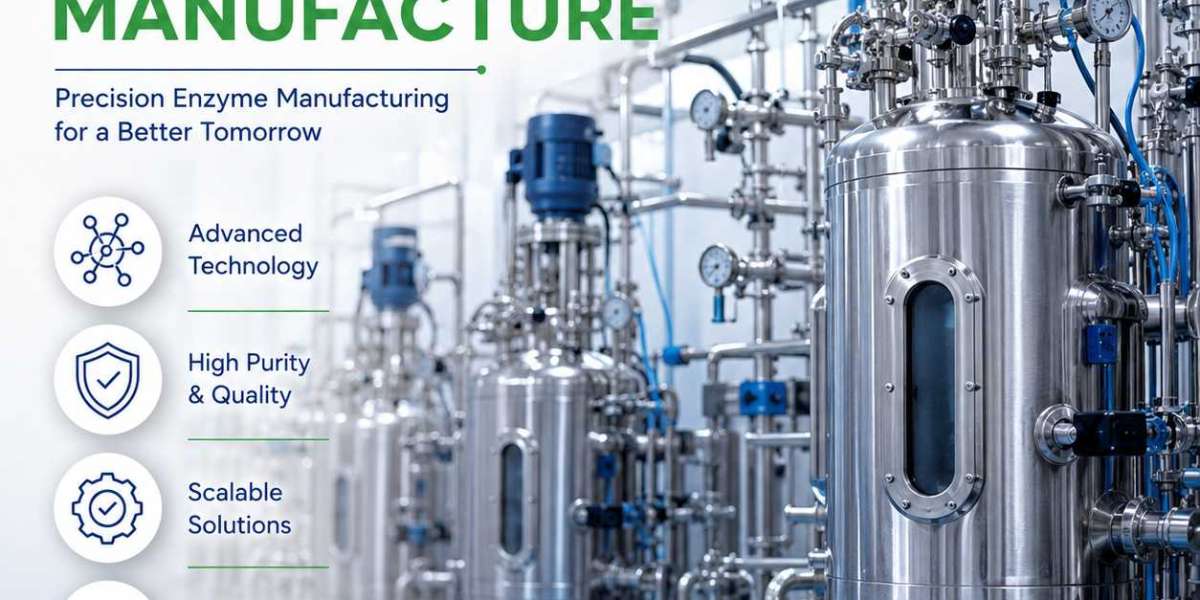
Fermentation is the core process in enzyme manufacturing. Microorganisms are cultivated in large fermentation tanks with nutrients, temperature control, and oxygen supply.
Two common fermentation methods are:
- Submerged Fermentation (SmF)
- Solid State Fermentation (SSF)
This process helps produce enzymes on a commercial scale.
3. Enzyme Extraction
After fermentation, enzymes are separated from the microbial culture using filtration and centrifugation techniques.
This step ensures the removal of unwanted particles and impurities.
4. Purification Process
Purification improves enzyme quality and stability. Various techniques are used such as:
- Ultrafiltration
- Chromatography
- Precipitation
Purified enzymes are then tested for industrial use.
5. Formulation and Packaging
The final enzyme product is converted into liquid or powder form depending on industrial requirements. Proper packaging helps maintain enzyme activity and shelf life.
Applications of Enzymes
Food Industry
Enzymes are used in:
- Baking
- Dairy processing
- Brewing
- Fruit juice clarification
They improve taste, texture, and production efficiency.
Textile Industry
Textile enzymes help in:
- Fabric polishing
- Bio-washing
- Denim finishing
They reduce chemical usage and improve fabric quality.
Pharmaceutical Industry
Enzymes are widely used in medicine manufacturing, diagnostics, and healthcare products.
Detergent Industry
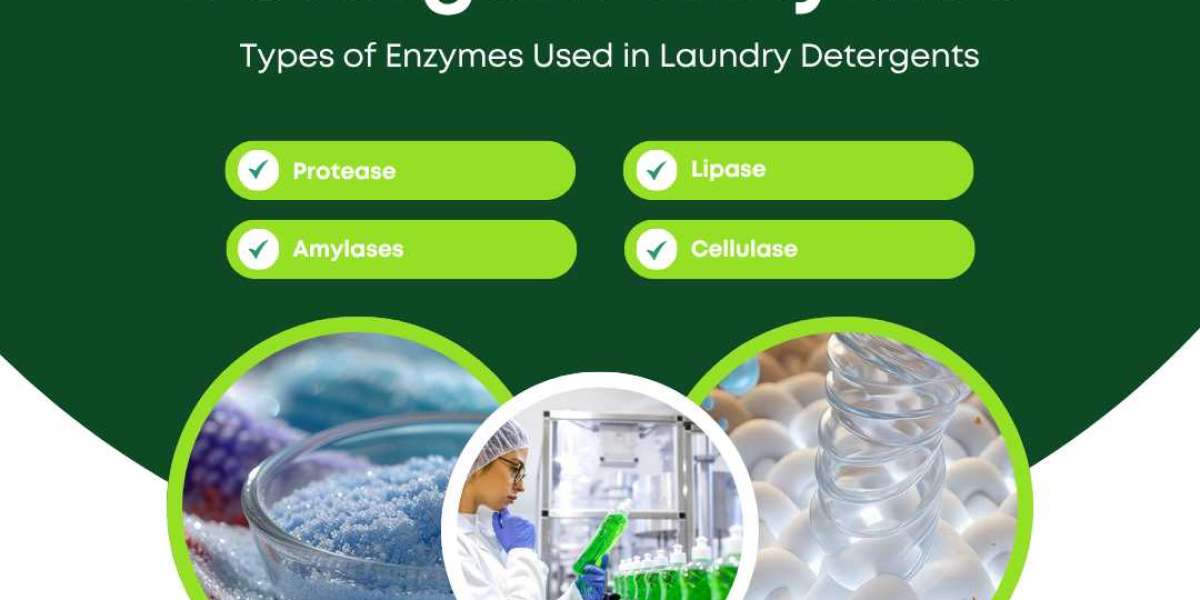
Laundry detergents contain enzymes that help remove stains effectively even at low temperatures.
Biofuel Industry
Enzymes are used in ethanol production and biomass conversion for renewable energy generation.
Benefits of Enzyme Manufacturing
- Eco-friendly production process
- Reduced energy consumption
- Improved industrial efficiency
- Better product quality
- Lower chemical usage
- Cost-effective manufacturing
Future of Enzyme Manufacturing
The future of enzyme manufacturing is growing rapidly with advancements in biotechnology and genetic engineering. Industries are focusing on sustainable and green manufacturing processes, increasing the global demand for industrial enzymes.
Research and innovation are helping develop high-performance enzymes for specialized industrial applications.
Conclusion
Enzyme manufacturing plays a major role in modern industries by improving efficiency, reducing environmental impact, and supporting sustainable production. With continuous technological advancements, enzyme production is becoming more advanced, cost-effective, and industrially valuable.
Industrial enzymes are now considered essential components in biotechnology, food processing, textiles, pharmaceuticals, and many other sectors worldwide.